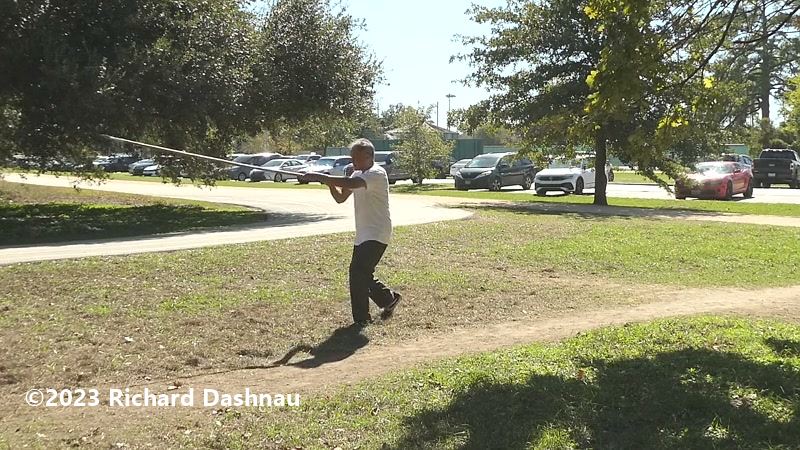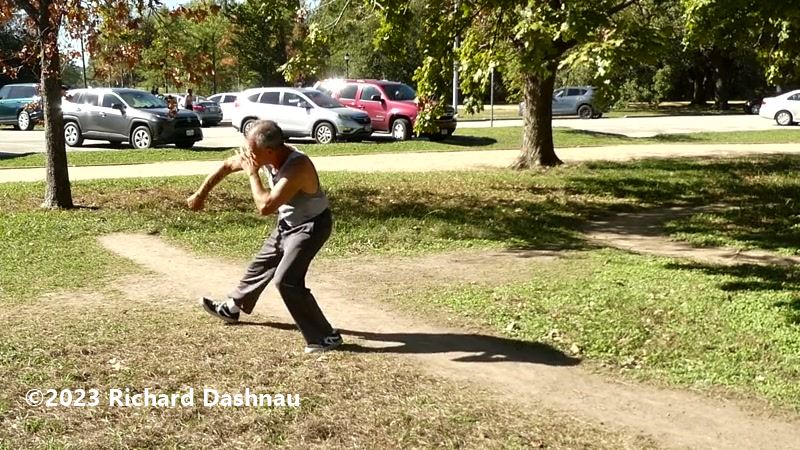
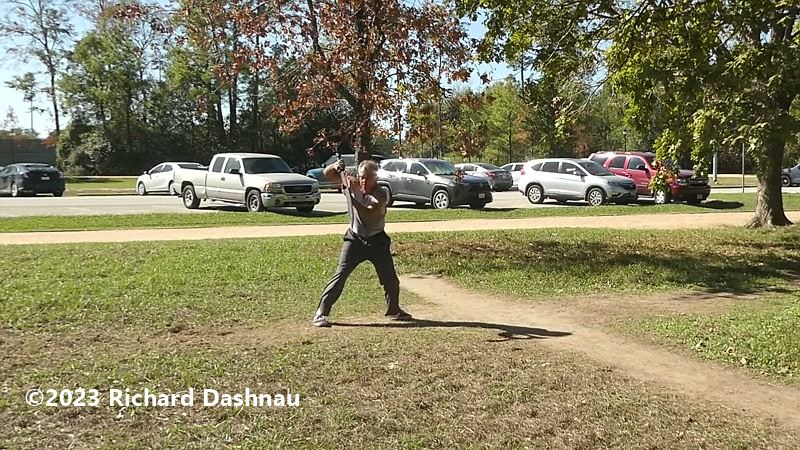
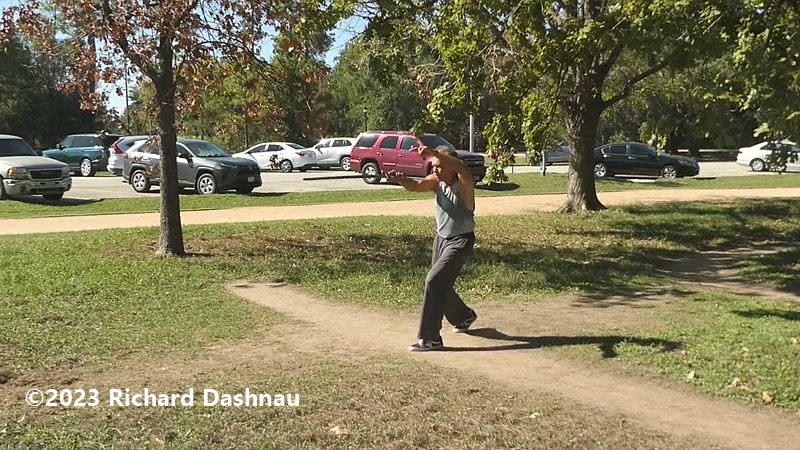

mantis external form2 tang lang zeo 1st broadsword form 2nd straight sword form 1st 6' stick (staff or cudgel) form
Go to Welcome to Rickubis.com for links to my other pages.
Go back to my RICKUBISCAM page
I'm posting the
occasional video or picture as a
record of what I can still do. What follows will be in
reverse-chronological order, with the newest stuff at the top
(or
immediately below this sentence.) It is helpful to remember
that
I stopped all formal
learning in 1996. That was about 3 years before I started my
website.
I don't post here often, but I still update occasionally.
How many people can say they have practiced any kind of exercise or sport for (today is 7/8/21-so that
makes 35 years since I started) this long?
Note (9/2/2019) It's
just over a year after my second hip replacement. For a while-at
least-it doesn't cause me discomfort to walk around. I've been trying
to
keep
a schedule of practicing/working out for about an hour every day. I
think i'm going to have to admit that I really shouldn't do much of the
external style forms any
more. They just cause me problems afterwards.
So, I'm doing more of what's on THIS page. I've been looking at
"cleaning up" some of the pakua (or bagua)
movements. I've
been trying to look at earlier videos to see if I can reclaim some of
the original movements. I started abbreviating movements quite a long
time ago,
after my knee injury. I can't do too much of the leg
rotations though (turning my feet inward or outward too much is bad for
the prosthesis). For a start, I've re-digitized
some early
movements from the original tape. I've put these at the very bottom of
this page--since the video was filmed sometime around 1999--before
the car
accident and my knee surgery. I'm going to try reclaim some of
the movements that I did then. At least this may have some archival
value. Take a look at the bottom.
Note (5/23/2017)
After all this time has passed, I have come down to practicing 4
tai chi routines and other exercises with those.
Those are: 1) 24-Movement Simplified (this was
developed in 1956, mostly from Yang style by the Chinese Sports
Committee to make tai chi accessible to more
people (according to
various sources)). 2) 48-Movement Simplified (this
was developed in 1976, and was built with techniques taken from various
styles of Tai Chi
(according to various sources)).3)
Yang Style 40-movement (this is what I've seen it called...but I can't find any other information on it. Originally, I'd
thought it was
called a 60 movement form) 4)
32-Movement Long Sword Form (this was developed in 1957 by the
Chinese
Sports Committee (according to various sources).
As
far as the Pa Kua goes....I am not sure which styles of Pa Kua I was
taught. I know that the walking "breathing" exercise sets pair with the
palm change sets, but
that's all I know. It's possible to see some
variation over time as I do these exercises...but I've been doing this
is for over
20 years. My body doesn't move like it used to.
Also, in all these
years they have become my
exercises--so any mistakes or changes are my own; adapted to suit
me.
-------------------------------------------------------------------------------------------------------------------------------------------------------------------------
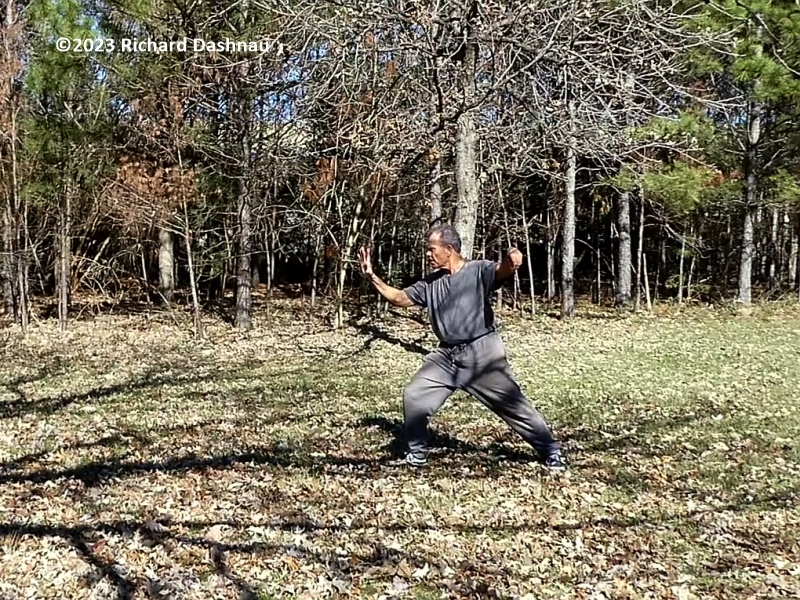
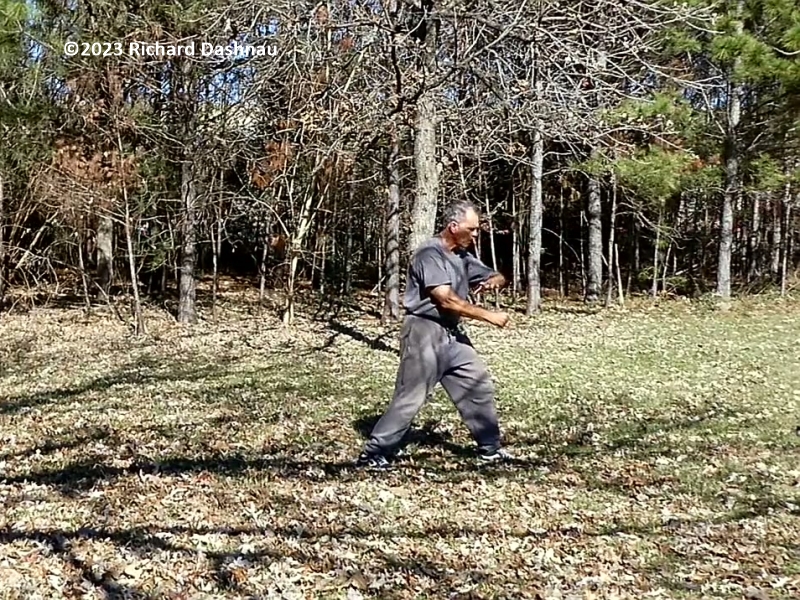
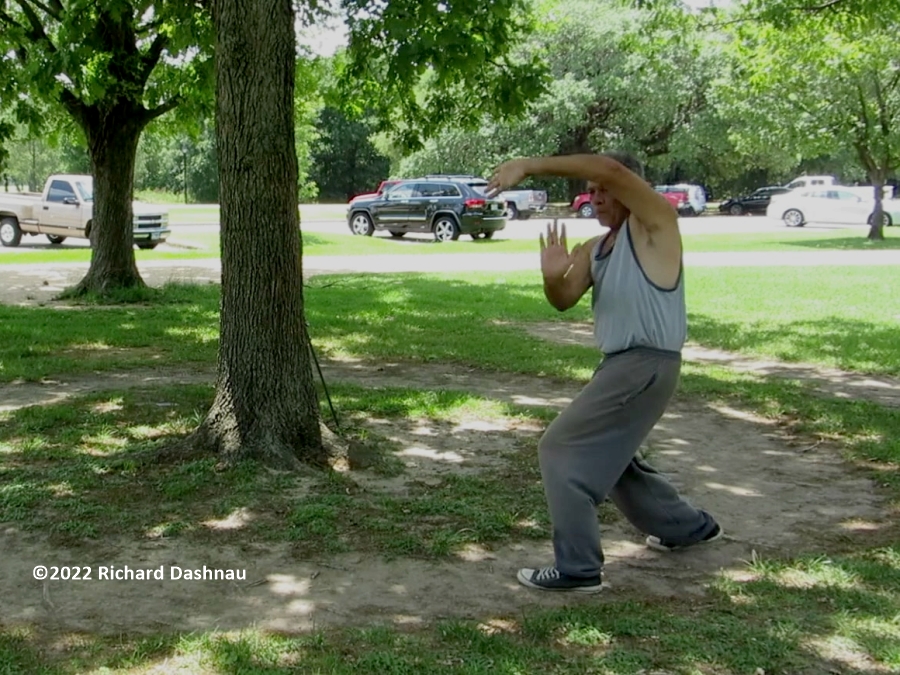
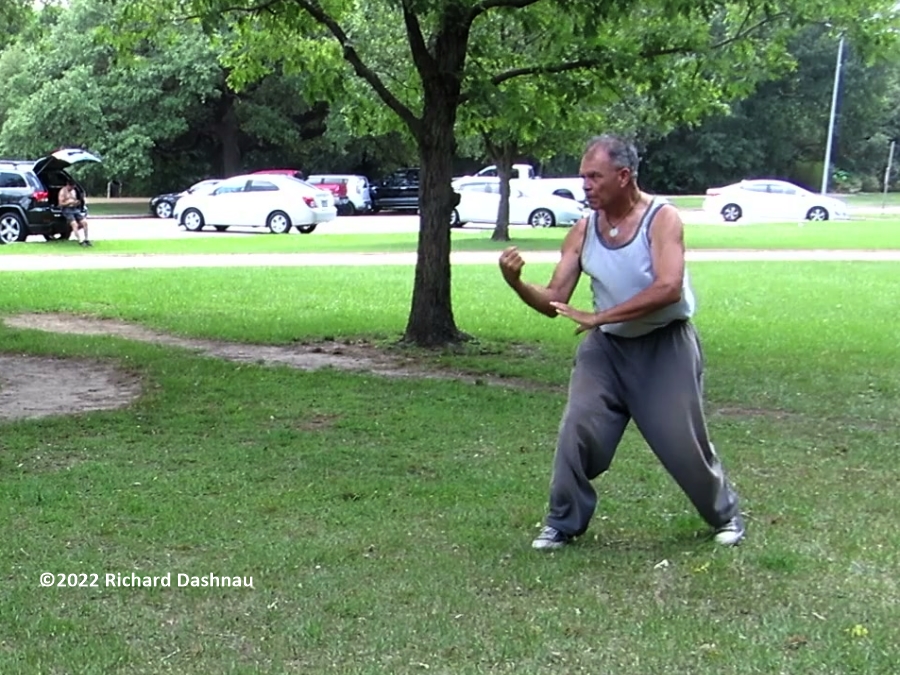
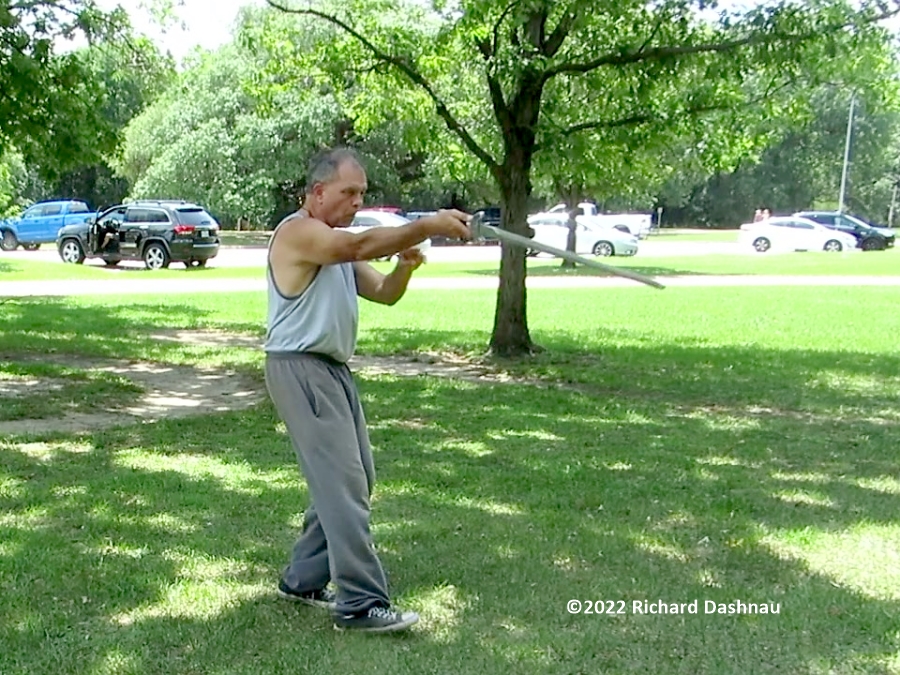
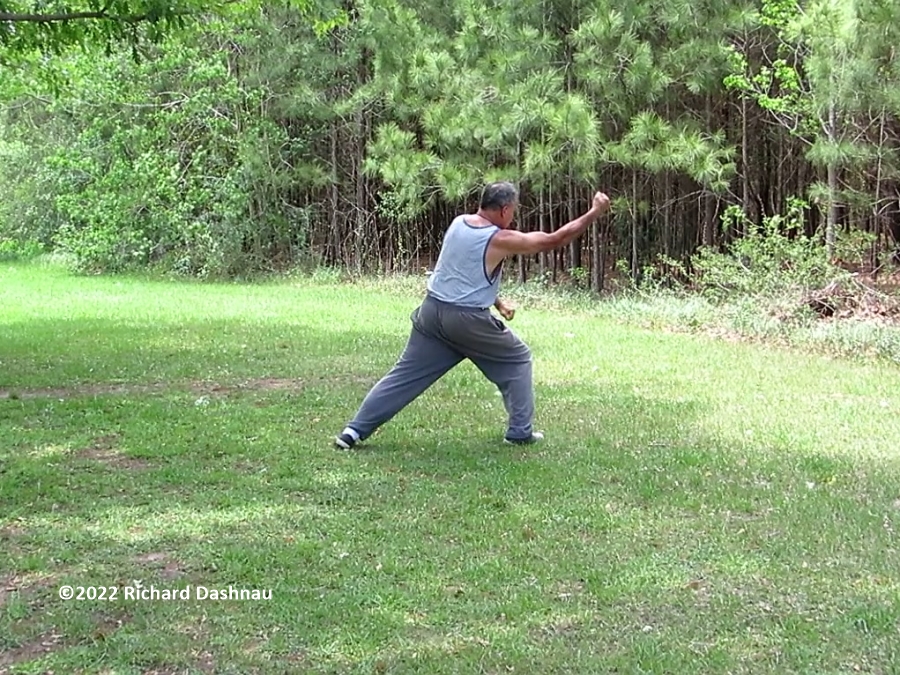
October 20, 2023-- These are some alternate sections for my exercise routine.
The images below show a frame from each video clip. The description under
each image is a link to the clip. This is an update that I added to the other page, but am copying these here; even though these are "external" forms. As mentioned
elsewhere
on this page...since I'm doing mostly "internal" forms these days for
less stress on my parts; I still like to do some external workouts to
loosen
things. At least, until I hurt something and I have to behave
myself again. :-) So I'm just posting updates here instead of on the external page.
mantis external form2 tang lang zeo 1st broadsword form 2nd straight sword form 1st 6' stick (staff or cudgel) form
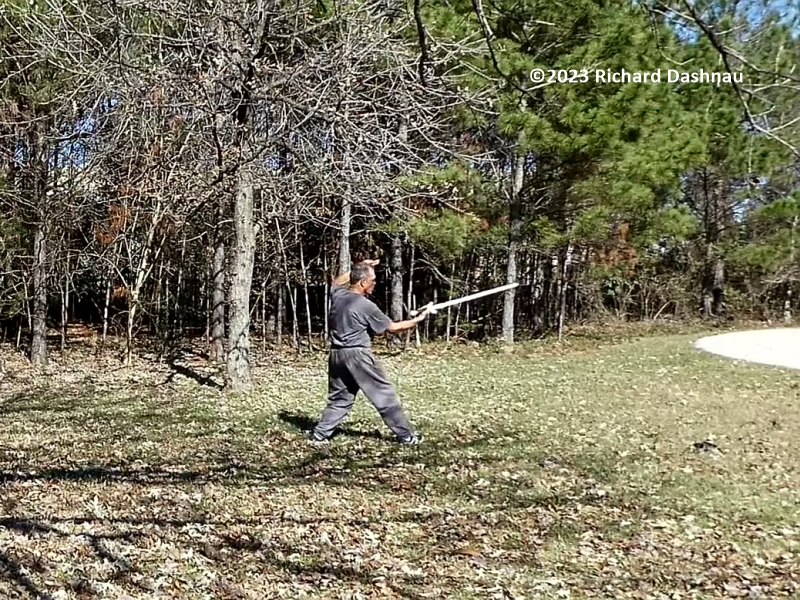
August 11, 2023-- External
kung fu stuff: I've been able to practice about 60 - 90 minutes
at least 4 times a week for the last couple years. I've noted
some of
those exercises on my other martial arts pages. But for the last
week or so, I've been working on my second straight sword (or long
sword) form.
I hadn't tried to do it for a few years, probably
because of my decaying hip (I can't remember why, but it's been about 5
years or so). Now that my hip has
been fixed I figured I could try this
form again. Of course, there are a lot of positions I can't do any
more, but it was fun to reconnect with the form. At my age
(some
years past 65), I'm just happy I can do it at all.I spent a
week going through it so that I could get video specifically on
this date. The images below
are from the video, which is at this link. And, I guess I'll be adding it to my workout routine again. The workout routine is described on this page.
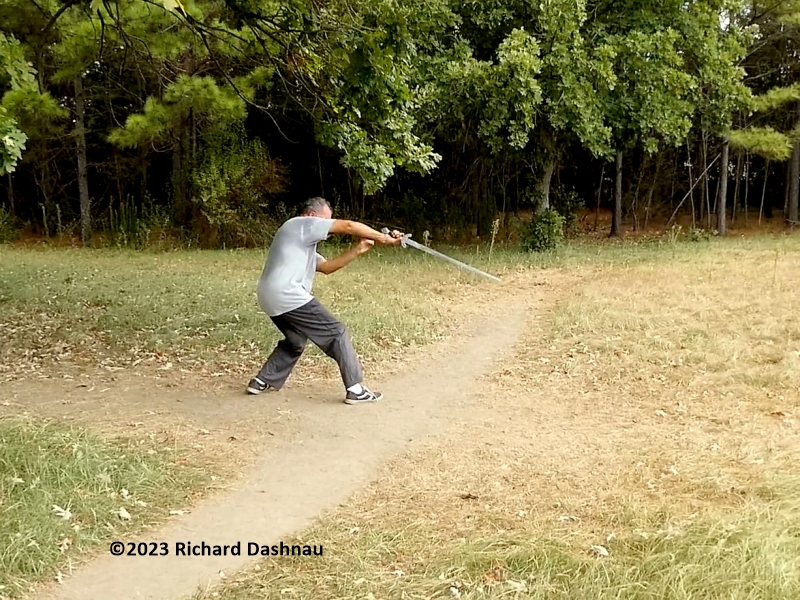
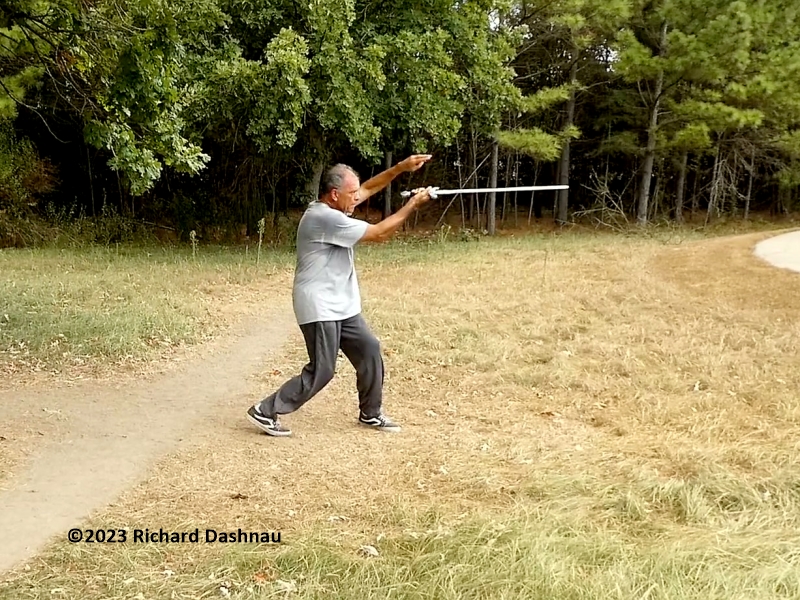
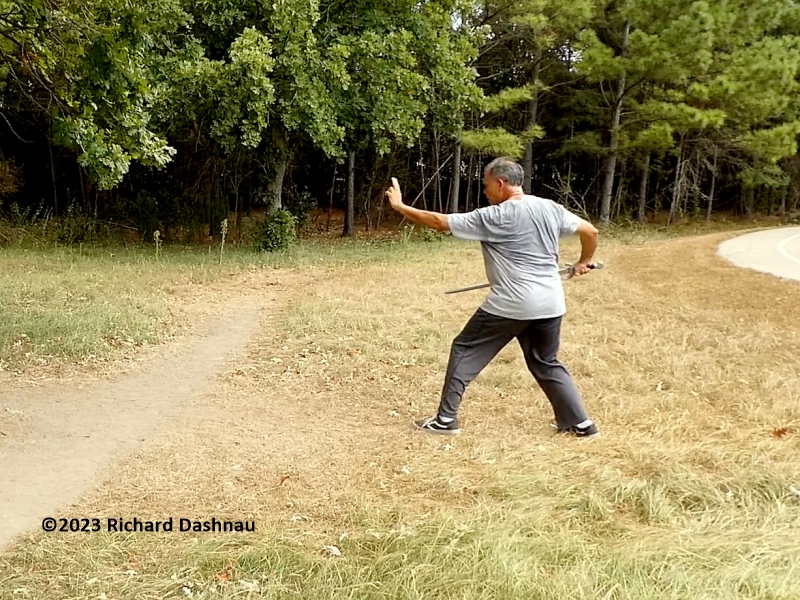
March 28, 2023 (03/19/2023)-- Just checking in. I did most of the usual forms today. But today, I only filmed the 40-Movement Simplified Yang Style Tai Chi. Here's the video.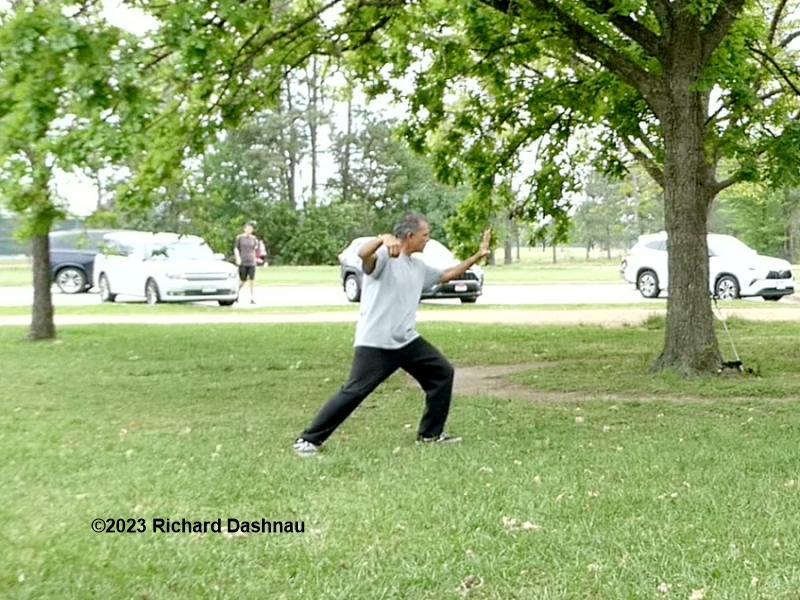
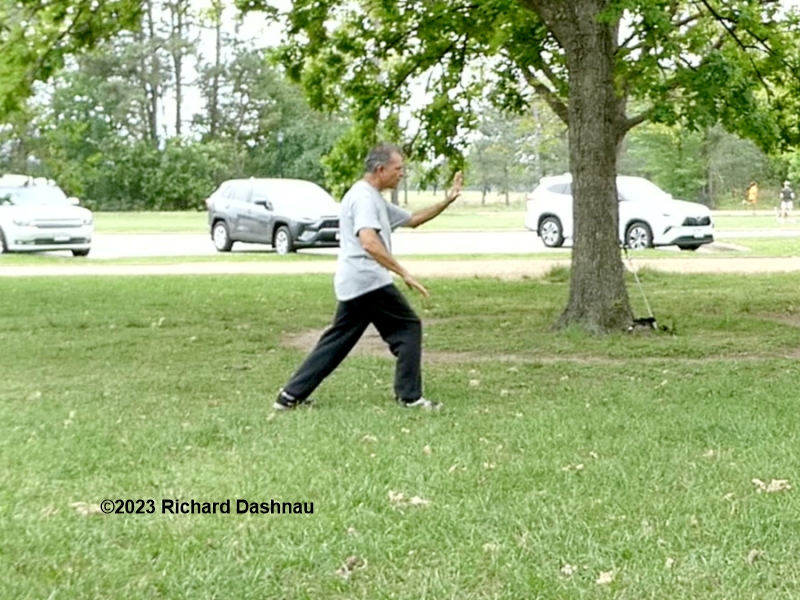
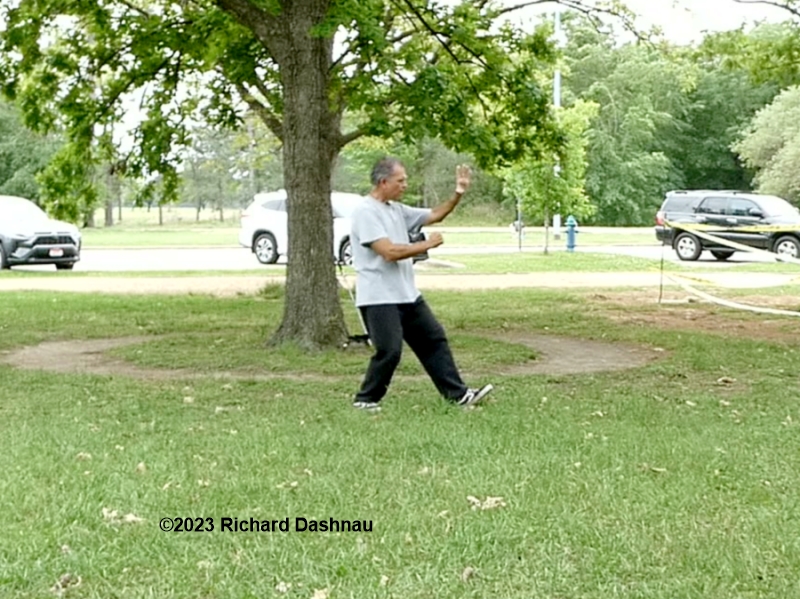
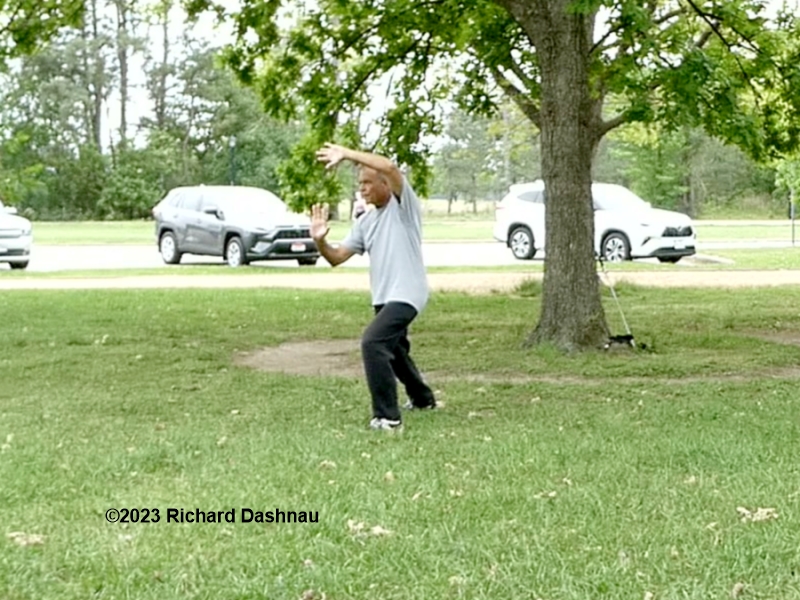
48-movement simplified Tai Chi 03/28/23
January 4, 2023 (01/04/2023)-- It's
a new year! For a little over 2 years, I've been able to practice at
least an hour almost every day. It's a great way to enjoy being outside
when
the weather is nice. But...here I am now,
past 60 years old, and doing exactly what I'd wanted to do when I'd
first walked into that school. I think that's pretty cool.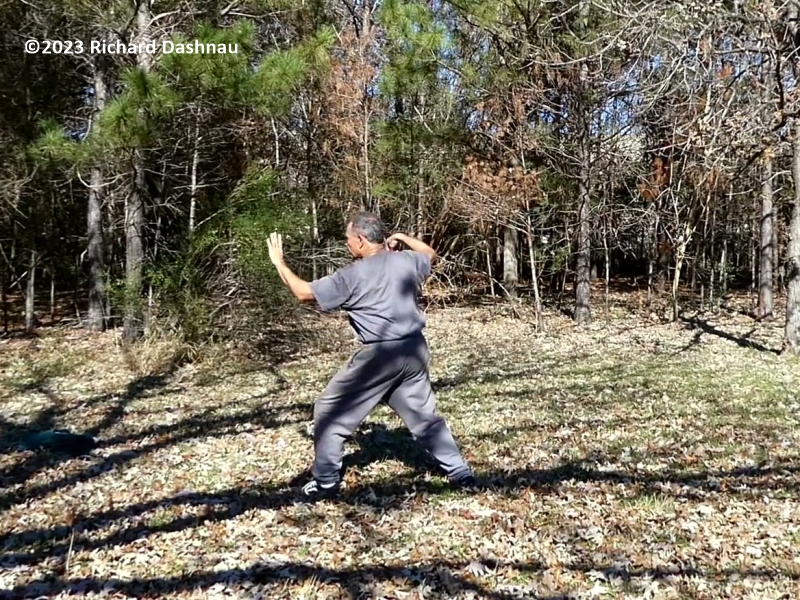
24-movement simplified Tai Chi 01/04/23
48-movement simplified Tai Chi 01/04/23 40-movement Yang style Tai Chi 01/04/23 32-movement Tai Chi sword 01/04/23
May 2nd and May 16 2022-- I'm
still practicing. Every now and then I've shot some video since last
year. Today, I had the camera there for something else, so I decided to
shoot
some video for this page, too. Nothing much has changed (which is
actually good news, I suppose). As of today, nothing hurts too much,
though I sometimes
get various arm or wrist strains (I think it's
from doing much more photography than I used to). When I walked into
that kung-fu school about 36 years ago (1986),
I'd
already had some martial arts experience (a few years of tae kwon do
mostly), and I wanted something different. I was looking for something
I could eventually
do outside; and that would allow me to enjoy the
environment. Before I could get to that point, I learned a lot of
Chinese martial arts, and enjoyed all of it. I spent
time, effort,
and money for 10 years. I worked so much because I'd intended to
teach more (aside the classes I was sometimes covering), but that
didn't work out
for a number of reasons. But...here I am now,
past 60 years old, and doing exactly what I'd wanted to do when I'd
first walked into that school. I think that's pretty cool.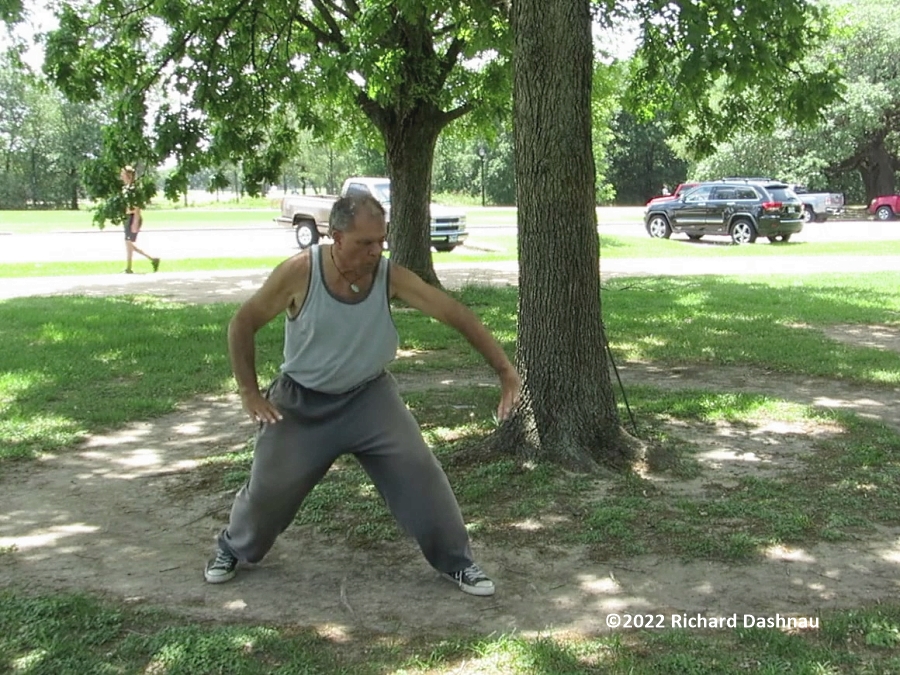
Pakua Style 2 changes 1-8 05/02/22
Pakua Style 3 changes 1-8 05/02/22 40-movement Yang Style Tai Chi 05/02/22 32-movement Tai Chi sword 05/02/22
I
still do a few of the external forms. I do them carefully. I've
pieced together information about our school from various sources
(internet, conversations with other students, etc.) Various
Chinese
masters had moved into Korea years ago. They continued teaching
there, and over time they "shared" students, so those students learned
different styles, and put them together
into their teaching methods.
I've read that a few styles of Praying Mantis were part of that
blend. Our style seems to have influences from styles of
Pa kua chang and Tang lang quan.
This form is a Mantis form, called
Tang lang zeo. I do it this way, but not exactly as I was taught--since
I'm older (with replacement joints and stuff). But, a search online
shows it performed
in many different "flavors" (this seems to be true for most styles of martial arts, by the way).
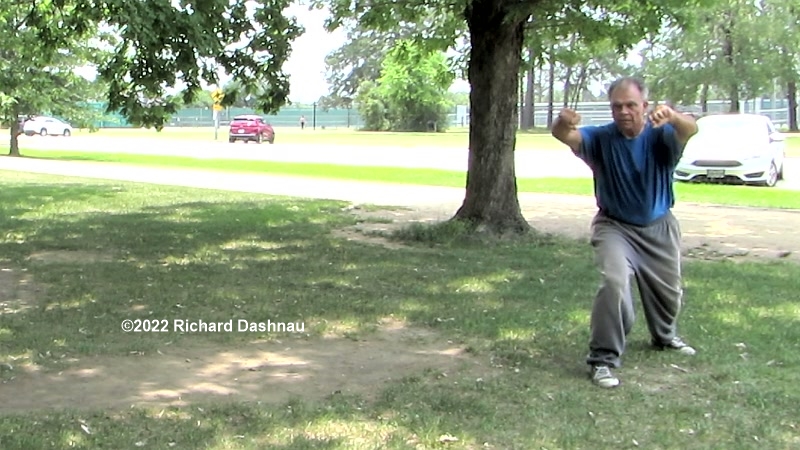
Mantis form Tanglang Zeo 05/02/22 48 Movement Simplified Tai Chi 05/16/22
August 2021-- I have turned 65 this year. I thought as a sort of celebration, I'd shoot video of most of my current exercises and post them here.
It's
an odd feeling to realize that I'm this old, and that I've been doing
these exercises since around 1986 (actually learned them1986-1996--so
about 30 years ago).
The techniques don't look as good as I'd like,
but that's what I've got. If you've found this page, and are
curious at all, the older videos (nearer the bottom) will
show more
about how they were supposed to look (and there's the other page, too).
But hey--I'm 65 years old. I did the videos at various times
through the month,
to cover different things. I haven't
trained inside a building for decades. I haven't worn a proper
uniform in decades. When I shot these videos it was August,
in
Houston--around 90 degrees with high humidity. So I'm wearing a loose
tank top, sweatpants, and converse sneakers (because flat soles). My
exercise routine
takes about 60 - 70 minutes. I do a basic set of work, and then occasionally add different forms.
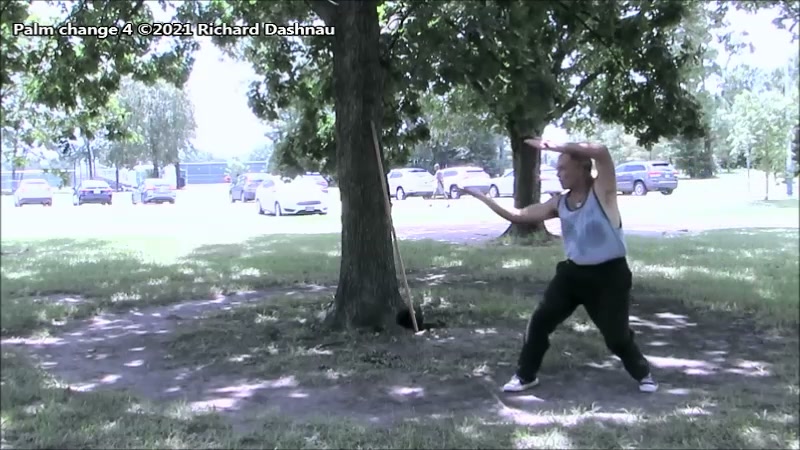
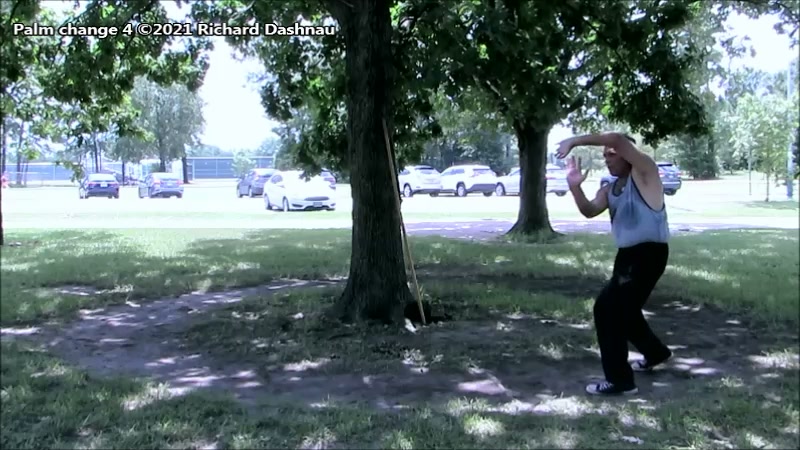
Pakua stuff: Videos 08/05/2021
I used a different camera and tried to record the entire routine
for the pakua exercises. This means I do a series of 8 "breathing
positions"
on the circle (I change position halfway around) in one
direction, then reverse and do those 8 the other way--then I do 8 palm
changes one way, and turn and to them the other.
I tried the
different camera because of the length of the video. I'd forgotten
that the resolution wasn't very good. Anyway, I did "Set 2" and "Set
3". I could have edited them to
make them shorter, but I wanted
to show what it looks like in real time. I could perform them slower, or a bit faster. Videos
08/07/2021
These show all three "sets" of palm
changes. Usually, I
start on the South point of a circle, facing West. I start clockwise
(turning right) and then do the first palm change on the East point,
then do the other 7 on
the West or East points. After 8th change,
I turn at the East point to go counterclockwise, and do the 8 changes
again. The videos I shot this day only show one set of 8 changes.
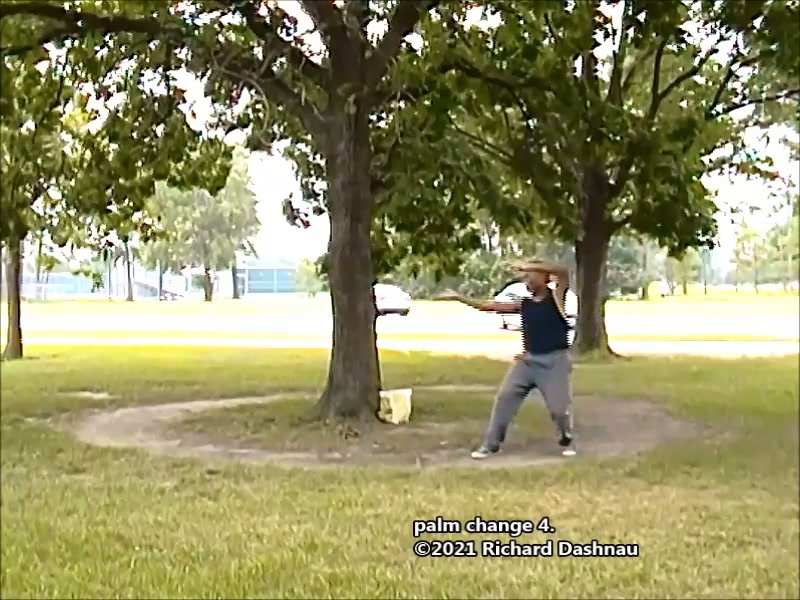
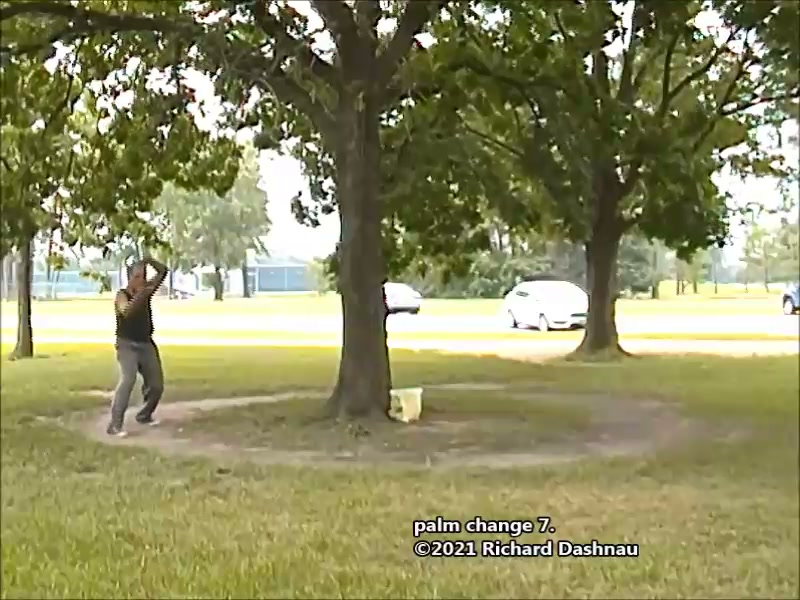
Pakua Style 2 everything 08/05/21 Pakua Style 3 everything 08/05/21
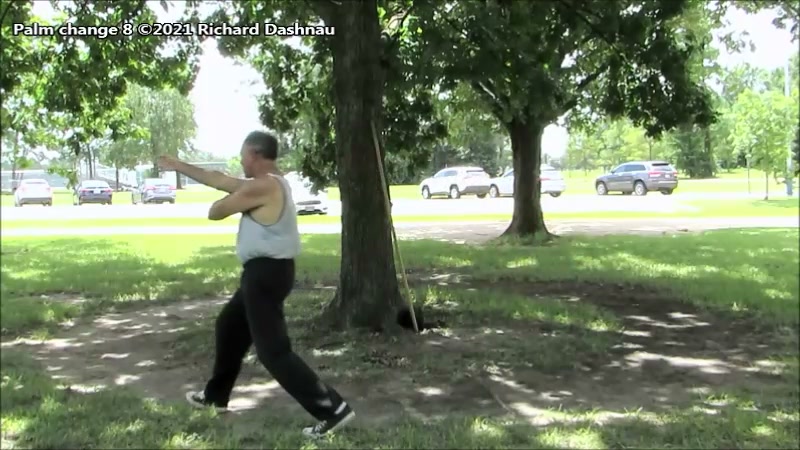
Pakua Style 1 changes 1-8 08/07/21
Pakua Style 2 changes 1-8 08/07/21 Pakua Style 3 changes 1-8 08/07/21
Tai Chi stuff: I
usually do the Pakua first. After that, I'll work on any
"external" forms that I might want to do. These days, I don't do them
regularly,
and only a few of them. I shot a few videos, and may do a few more
demos. Those will be further down the list. After any of external
forms, I do 4 Tai Chi
forms. As noted elsewhere on my pages, I
know the Simplified 24 Movement, Simplified 48 Movement and
Combination 40 Movement Yang forms (videos 08/06/21).
I also know the 32 Movement Sword Form (videos 08/07/21).
When I learned these, the internet wasn't available.
Knowledge of any of these was not easy to find. NOW
anyone
can go online
and look for any of these forms (or anything else on my pages). They'll
find many descriptions and all kinds of video demonstrations out
there.
And...there are many stylistic differences in how the movements are don.. All of that was just to say that these show how I do the forms, and there may be some
differences from what I was taught, and it really doesn't matter at this point.
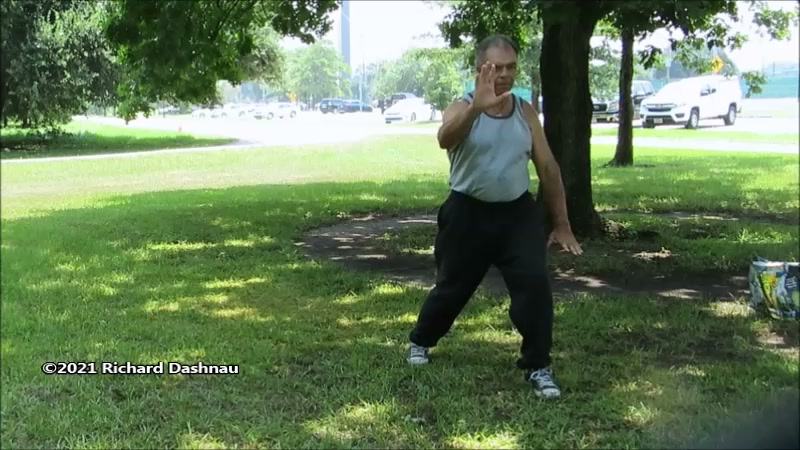
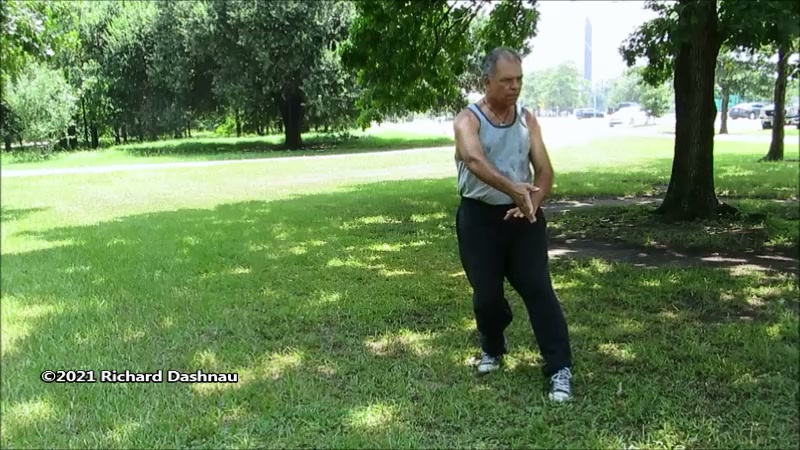
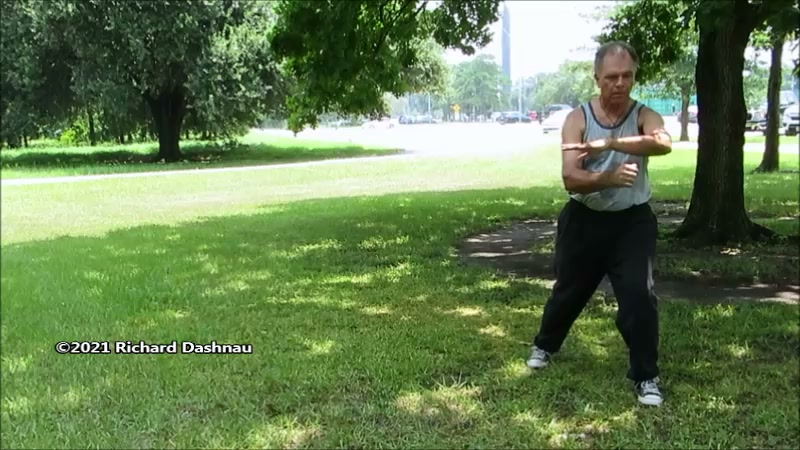
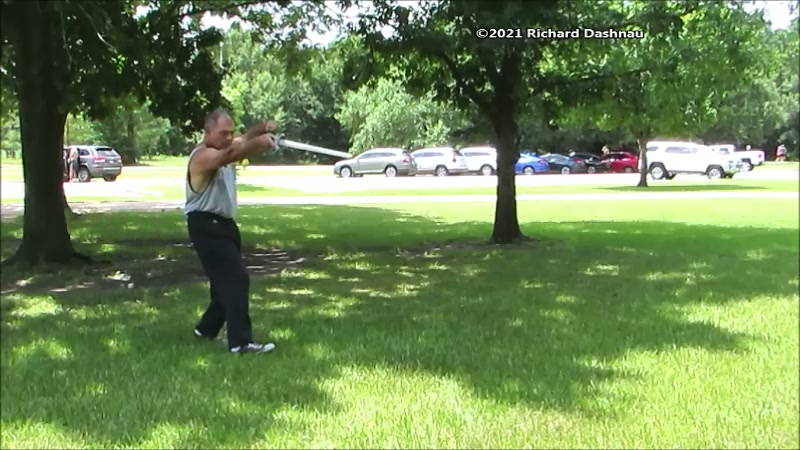
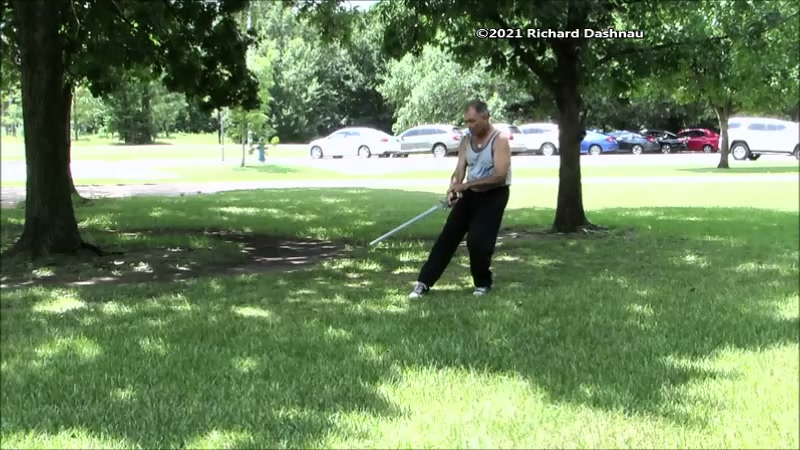
32-movement tai chi sword 08/07/21 far view 32-movement tai chi sword 08/07/21 closer view
Deep breathing stuff: (videos 08/06/21) After I've done the rest of the work out, I finish with 3 sets of breathing exercises. Any one of these would probably work
as a good exercise. Doing them all works to sort of "3-step downshift" to resting.
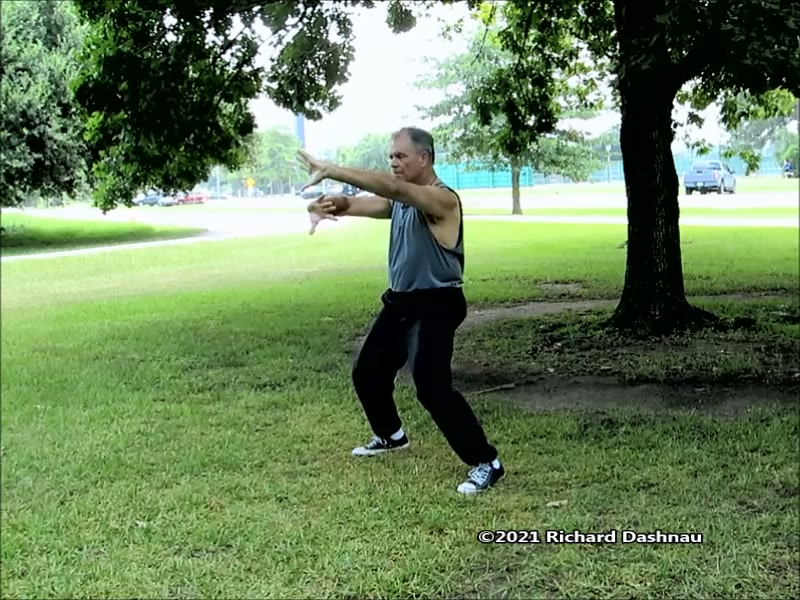
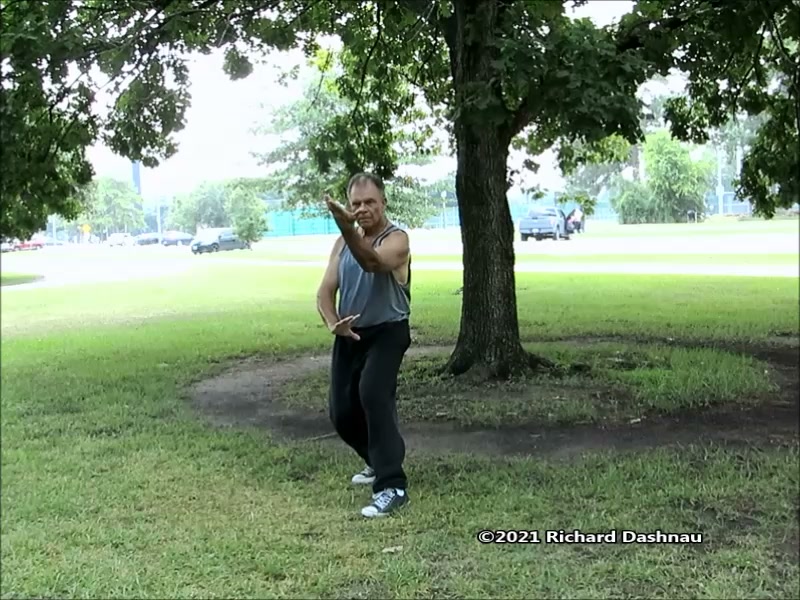
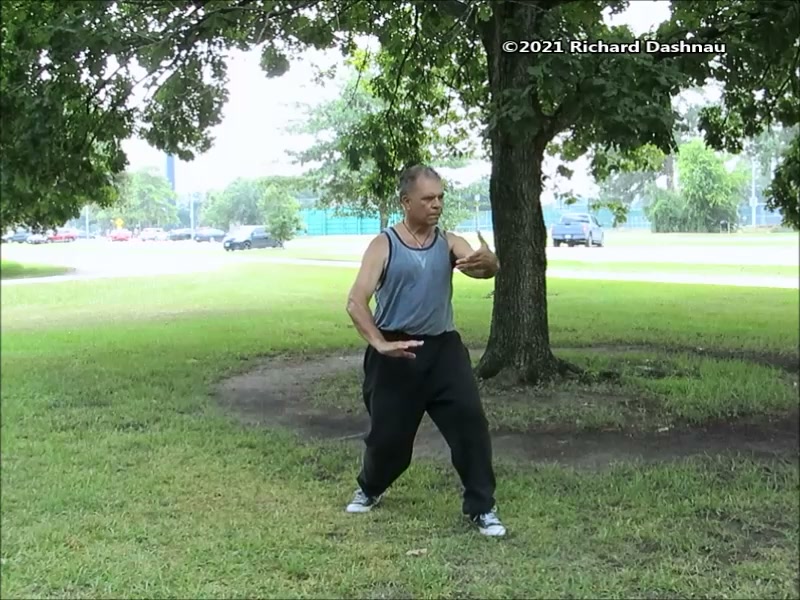
Breathing set 1 (longfist) 08/06/21 Breathing set 2 (pakua) 08/06/21 Breathing set 3 (taichi) 08/06/21
External kung fu stuff: As much as I'd like to continue doing them, I really can't do too many "external"
kung fu forms. I only do one hand form regularly, one stick form, and sometimes one broadsword form. Part of the problem
is that I just can't put the stress on my joints and back that faster movements generate. (Hey, mostly 65 years old, with two
full
hip prosthesis). I've tried doing forms slower, but they don't
feel right. So...there it is. Anyway, here are some. The
hand form was filmed 08/06 and I prefer this one because it has always had less kicks than the others. The stick form was
filmed
08/07. I did it twice, once at "old guy normal speed" and one at
"step-by-step demo" speed. I've removed parts from almost
all
of these forms. I've taken out all tumbling--such as rolling; all
high kicks, all jumping and crescent kicks. It would be too easy
to
overstress my hip prosthesises (how do you say more
than one prosthesis?). Therefore, movement leading up to and after those
were also modified.

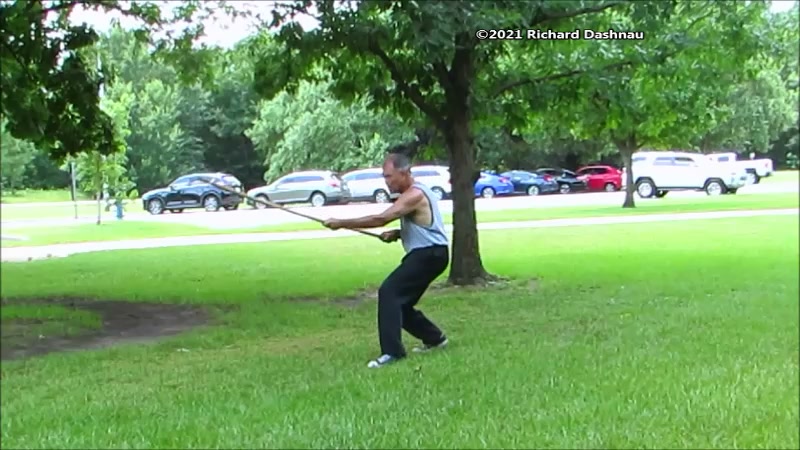
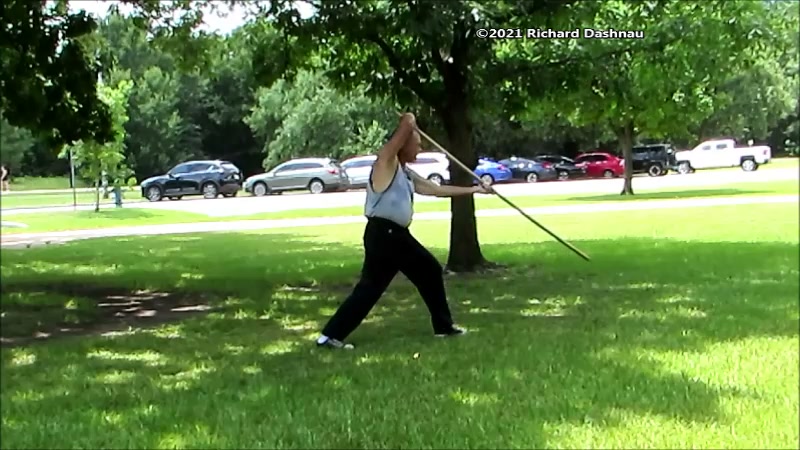
Mantis Hand Form Tang Lang Zeo 08/06/21
Stick form normal 08/07/21
Stick form step-by-step demo 08/07/21
I figured I'd add some more forms. On 09/10/21 I did a spear form and a broadsword form. The spear is shown at a "faster" then "slower" speed.
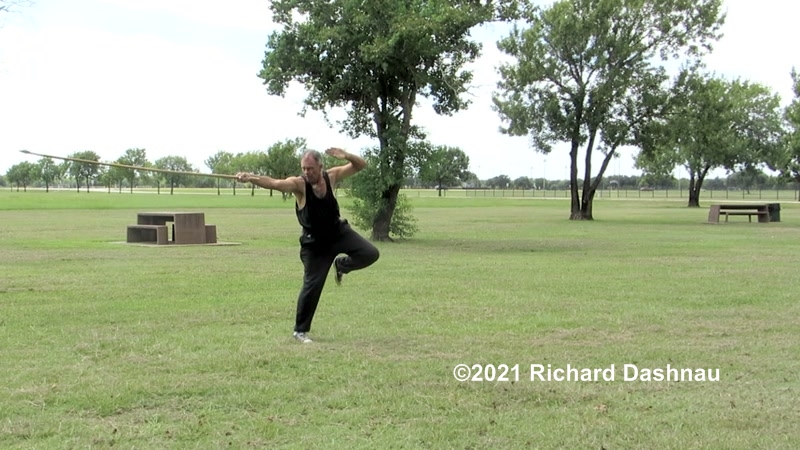

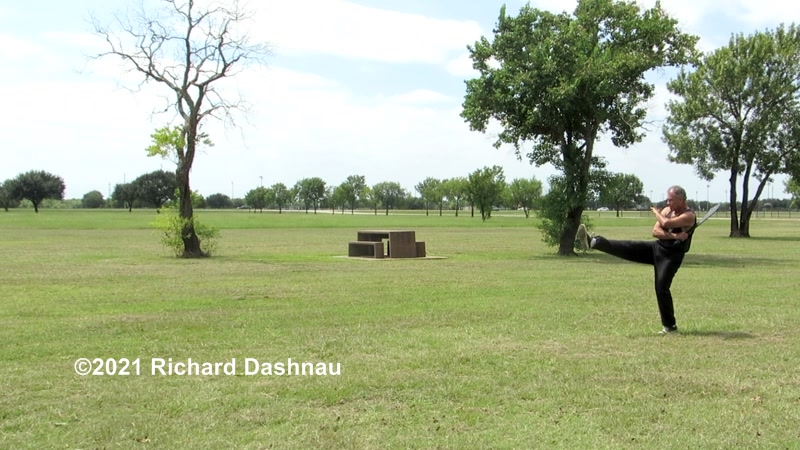
Spear Form 09/10/21
Spear Form done slower 09/10/21 Broadsword form 09/10/21
______________________________________________________________________________________________________________________
June 09, 2021-- A bit of pakua and a bit of tai chi.
I'm still doing about an hour of martial arts exercise almost
every day. Here are some clips I shot today, just to show
I'm still at
it. Links
to the clips are below the images. As I've passed 60 years old a
few years back, I enjoy every time I get to do these exercises.
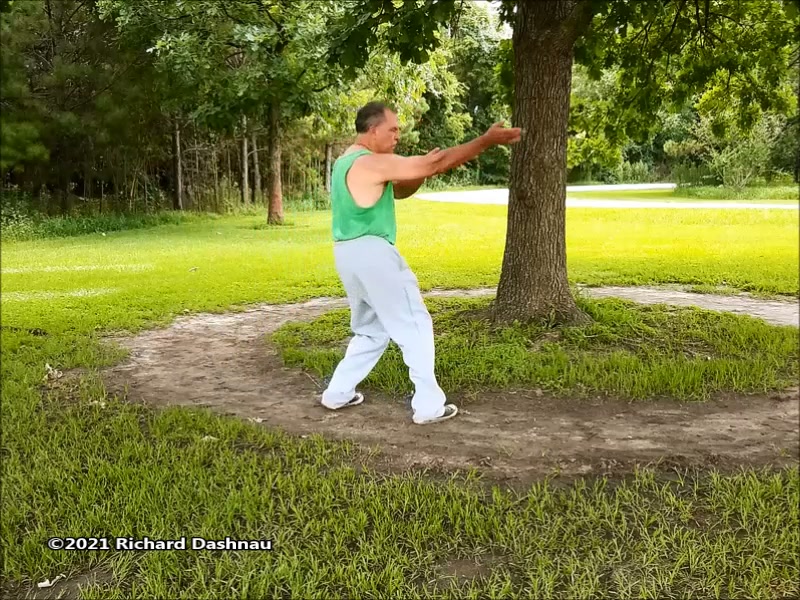
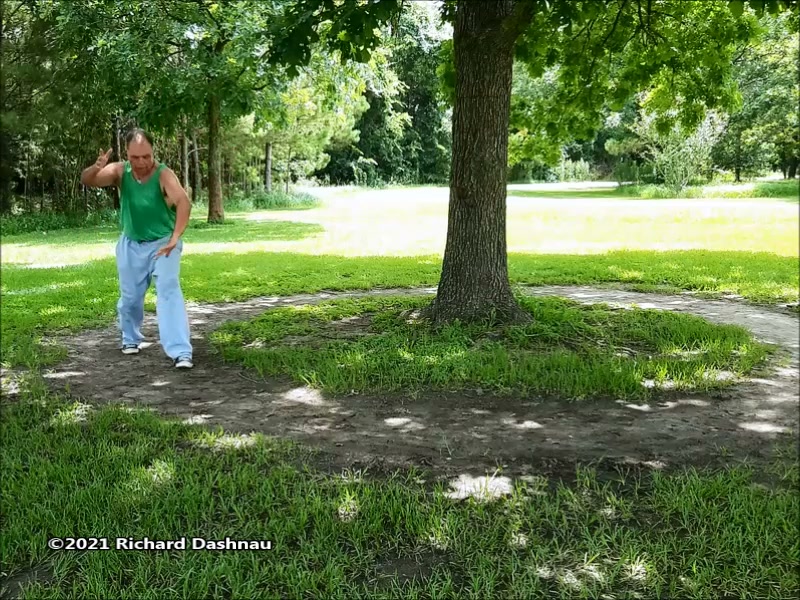
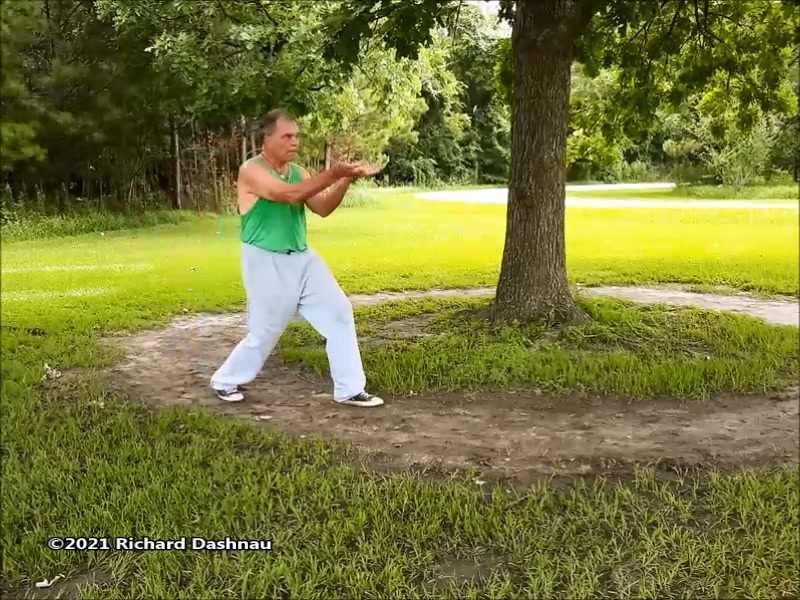
Pakua Style 2 change 3 video
Pakua Style 3 change 2 video
Pakua Style 3 change 4 video

40-movement Yang style Tai Chi video
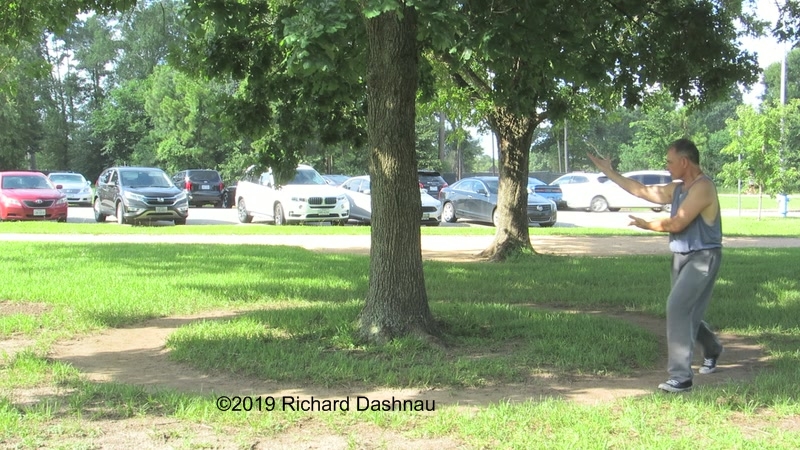
April 02, 2021-- Basic
Tai Chi Breathing and hand movements-- When I first learned Tai
Chi wepractice a basic set of hand and foot movements. Those
movements
were related to a different tai chi form and style (that
didn't feel right for me). Later, I put together this basic
movement set. This is partly to help new students get a "feel"
for how
tai chi movement should work. For that reason, I kept foot
and
leg position simple so the new student can concentrate on what the
hands and arms and upper
body are doing. I do it now so I can
remember it (in case I'm asked to show anyone) and also because I enjoy
it. As with the others, breathe along with the movements.
Generally, inhale as hands/arms move towards the body, and exhale as they move away. That means hips, knees, and ankles are
taking up the slack as you walk. Go
through
the full set of 12
positions while circling in one direction, then turn and go the
opposite direction around the center (center is on the left) and do all
12 positions.
I've made a video demo (shown below) before. I
filmed another one, but this time I experimented with filming me from
the front and from the back. To do this, I did the
routine--moved
the camera so it was behind me--then did the routine again. Then,
made a video clip that spliced the two views together. This was an
experiment, but
I think it turned out well. There's a slight
difference in timing--since I did the form twice. Here's the video clip. The image below is a frame from the clip.
November 15, 2020-- Exercising; and still
social-distancing. Nothing
especially different here, just posting for my personal historical
record. I will point out that I'm 64
years old...mostly. One
hip is 2 years old, the other hip is 15 years old. There have
been a few other artificial parts added, and a bit of trimming around
one of my knees.
Anyway, I really
enjoy being able to walk without
any discomfort. I'm doing the movements that I feel
comfortable
with. Therefore, some of these forms are going to look a
bit off, but
I've altered them to fit my capabilities.
NOTE: I've added something different to the the tai chi video clip. I thought it would make it a bit more interesting, and give some further perspective.
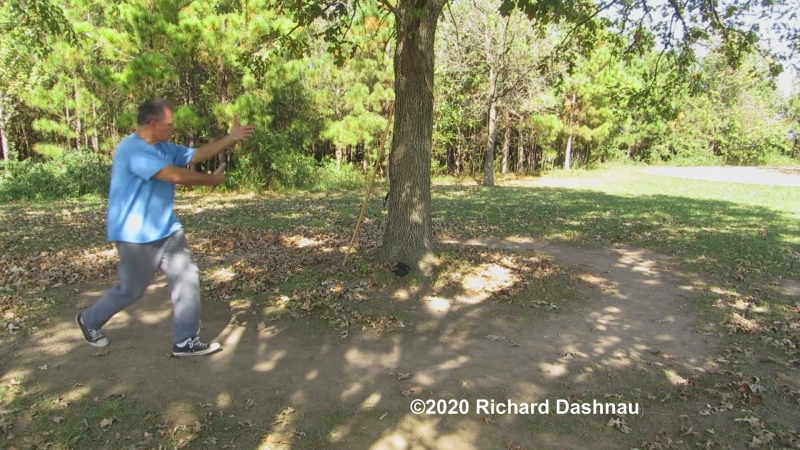
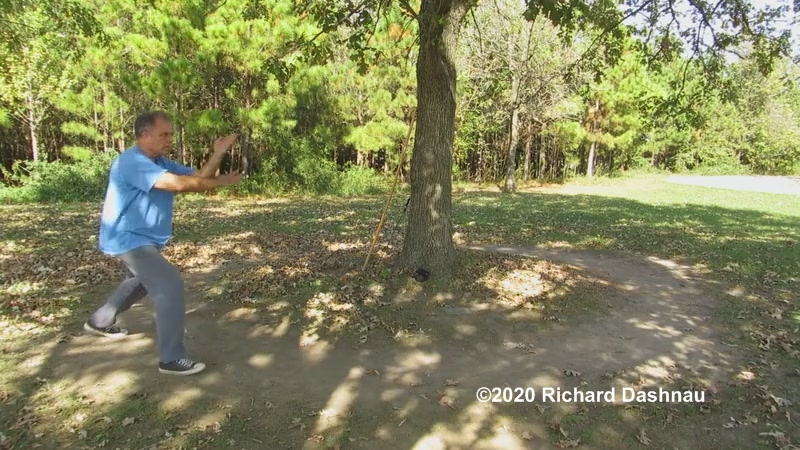
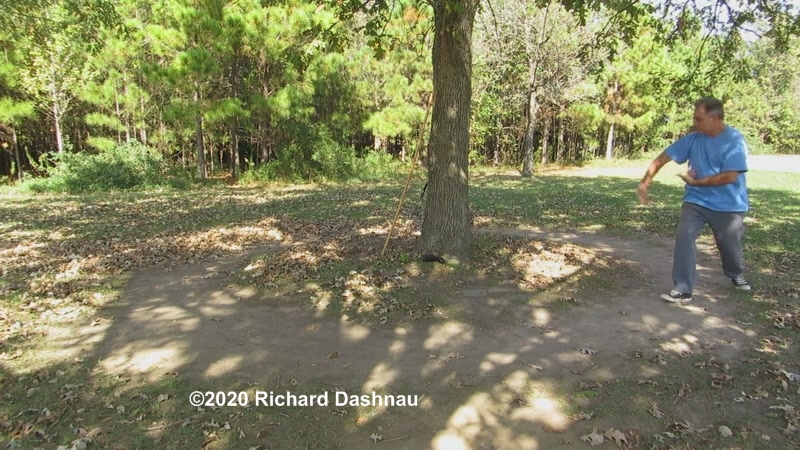
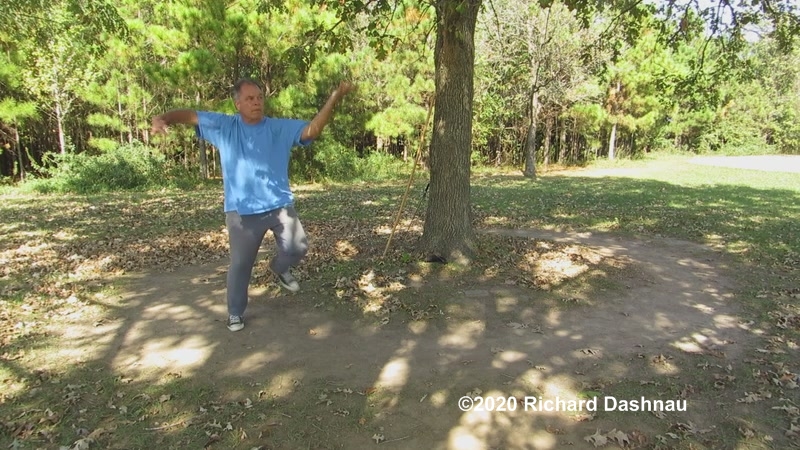
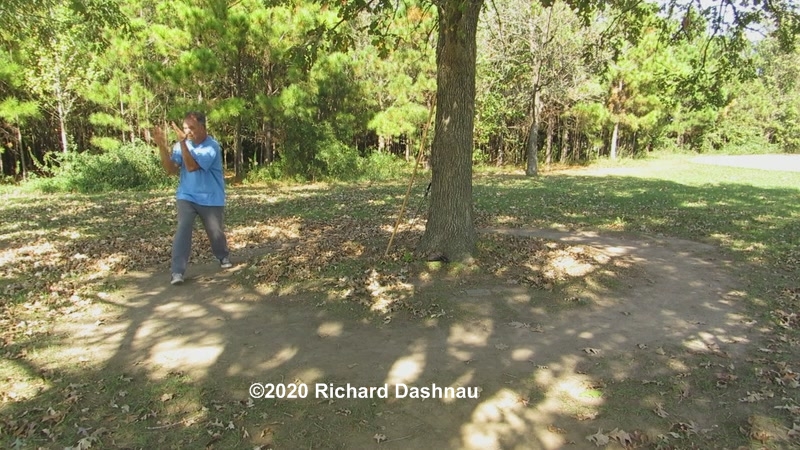
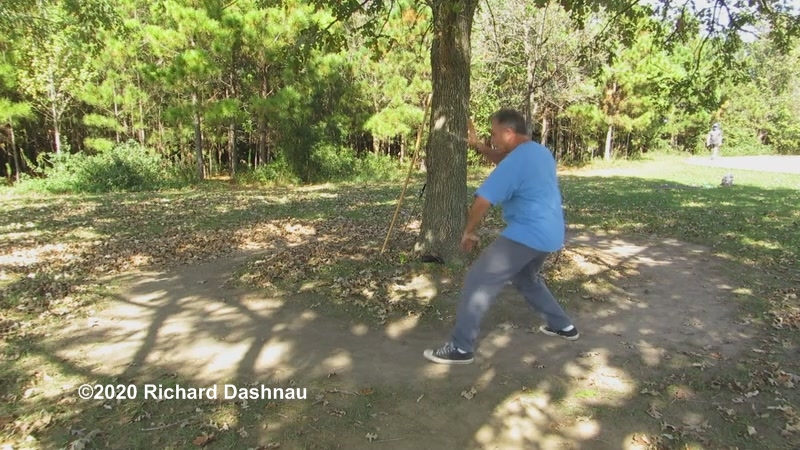
First, Pakua. Today, I recorded
clips of the "breathing exercises" that go with the three different
styles.
I don't do the sliding, flat-footed stepping, since it's
uncomfortable.
But I do lower my body and push forward with less weight. So
the
images and clips are paired, showing the breathing, and then the palm
changes.
style
1 breathing
style
1 palm changes
 .
.
style
2 breathing
style
2 palm changes
 .
.
style
3 breathing
style
3 palm changes
 .
. August 11, 2020-- Exercising; and still
social-distancing. Nothing
especially different here, just posting for my personal historical
record. I will point out that I'm 64 years
old...mostly. One
hip is 2 years old, the other hip is 15 years old. There have
been a few other artificial parts added, and a bit of trimming around
one of my knees. Anyway,
I really
enjoy being able to walk without
any discomfort. I'm doing the movements that I feel
comfortable
with. Therefore, some of these forms are going to look a bit off, but
I've altered them to fit my capabilities.
NOTE:
The
last video (2nd Image bottom row) is a sort of drill where 7 different
palm techniques are 'thrown". This one is relatively simple, with very
little
footwork. In all the years that I've been putting videos on
this page (or the other), I've only shown videos that demonstrate
striking a few times...and I deleted
those long ago. I still do some ot
these drills but not every time I exercise, and when I do them, I don't do many
repetitions.
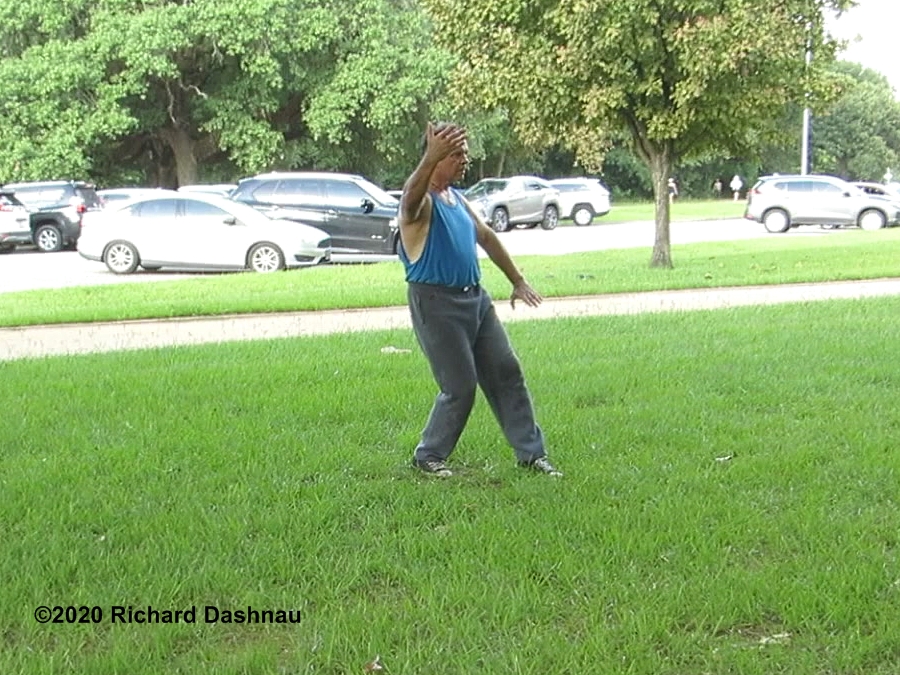
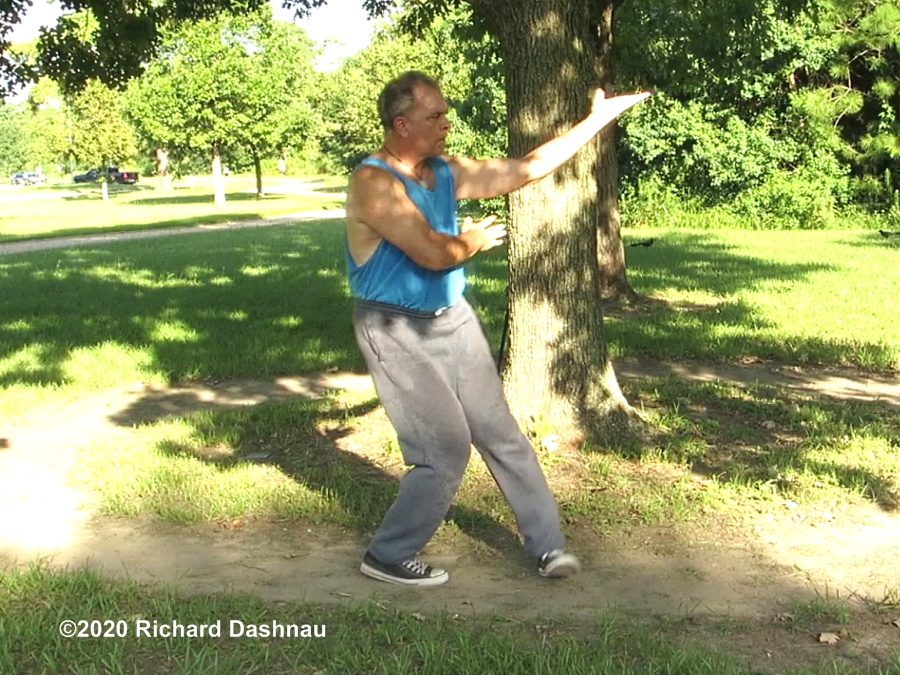
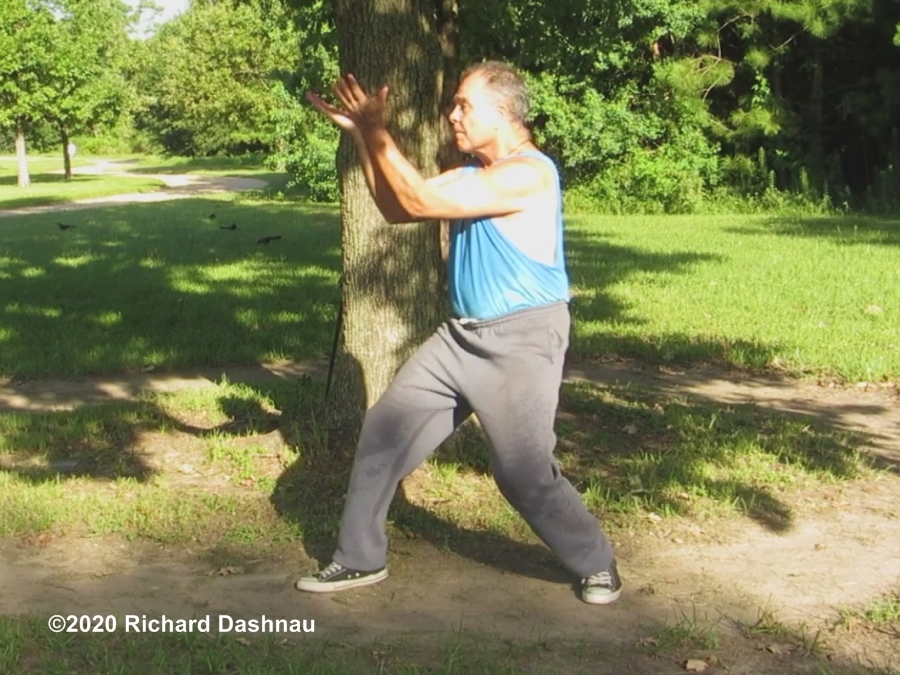 .
.
48
movement tai chi video (incomplete because battery died)
pa
kua set 2 change 5
pa
kua set 3 change 4
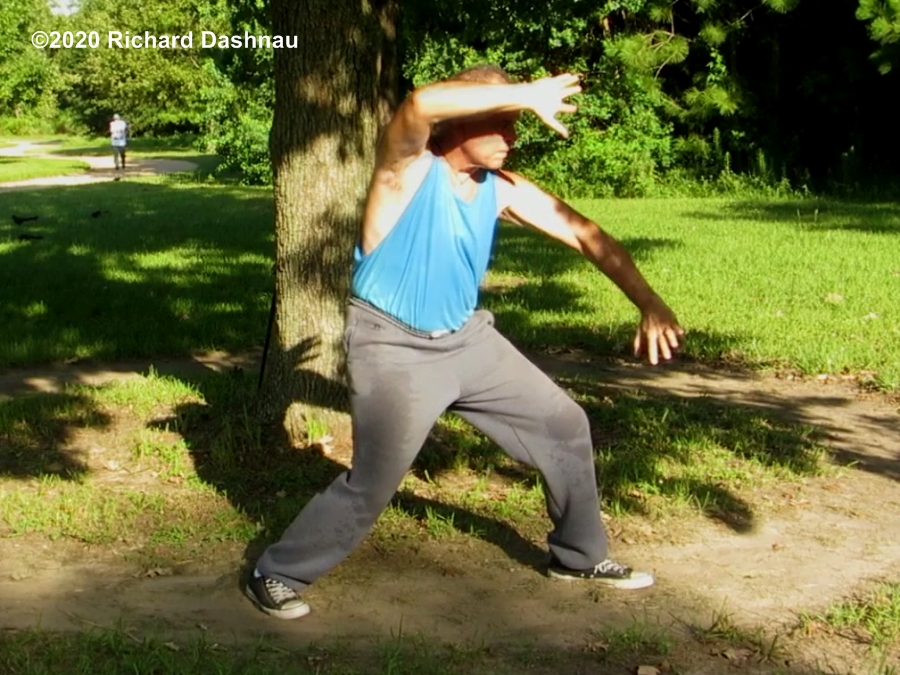
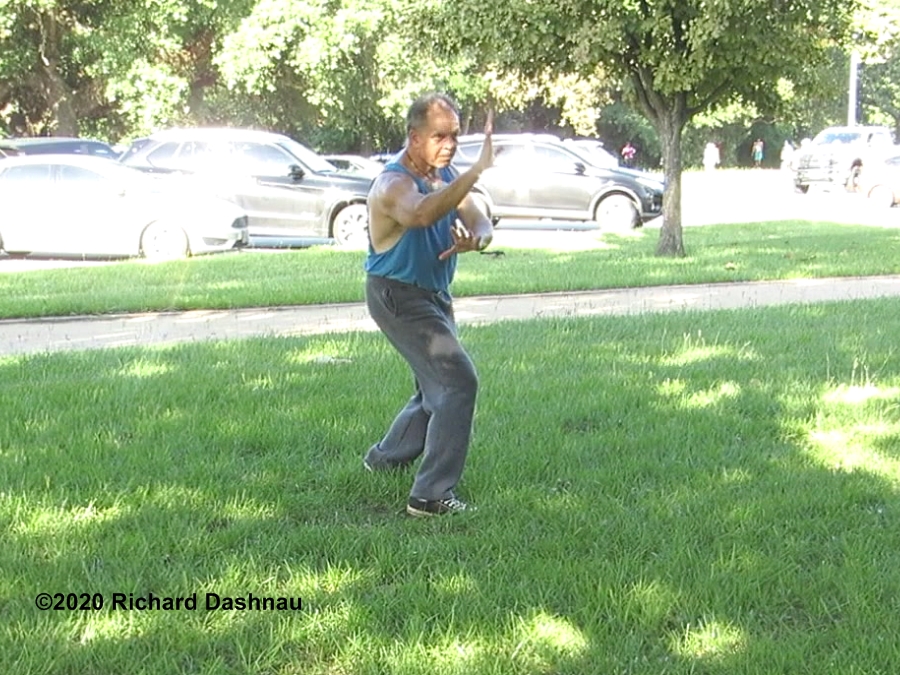 .
.
pa
kua set 3 change 7
palm
throwing drill
July 2, 2020-- Exercising during
social-distancing. Everyone
knows about the virus pandemic that has been growing since the end of
2019. Soial protocols to help slow the
spread of the virus
went
into effect starting in March 2020. During the first
month or so, I didn't try to go anywhere. But, when I checked the
nearby park, I saw that there was no
crowds of people at all, so I was
able to exercise there. I've shot a few clips during this
time...and finally decided to post something, just to show that I'm
still moving around.
I'm just happy that I can get some
exercise
in. I still do the exercises described in all the entries
below--adding up to about an hour of workout time.
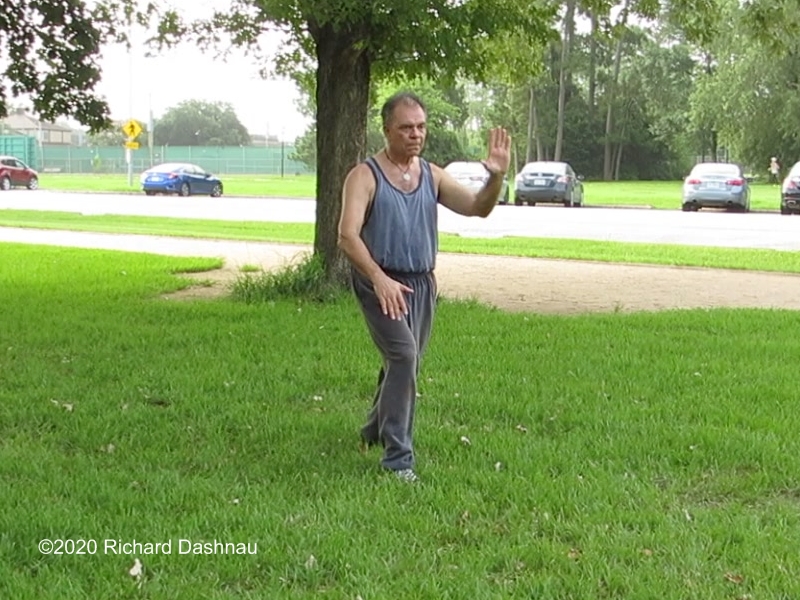
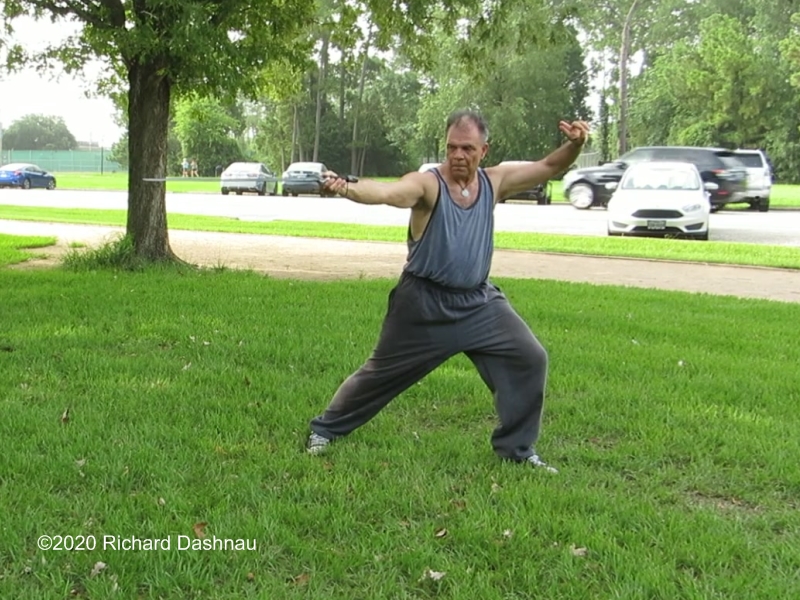
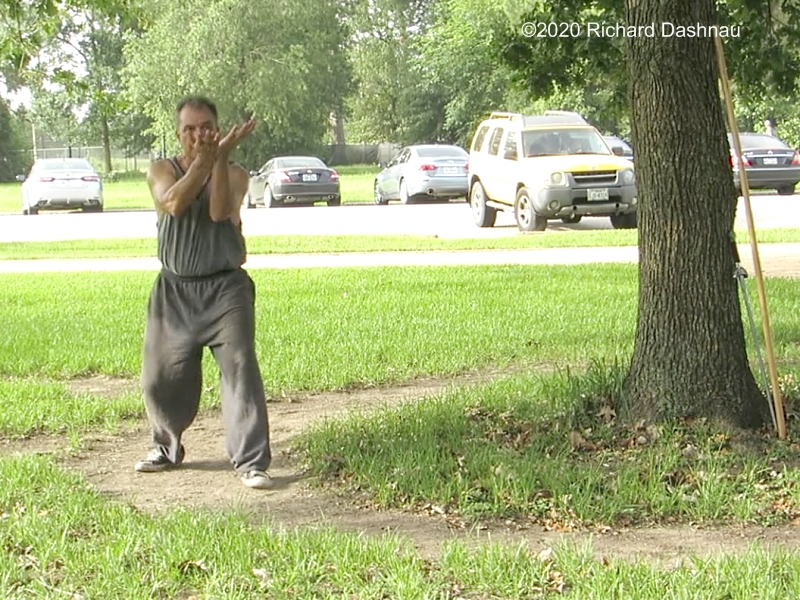 .
.
40
movement tai chi video_(full form)
32
movement tai chi sword (full form)
Pakua
change B3
Pakua change C4
Pakua change C7
Sept 28, 2019-- Pakua style B palm changes.
After
reviewing some of the videos that I did many years ago, I decided to
try doing these 2 set mores like I did in the past. I
discovered that even
though my hips have been repaired, I still cannot do some of the close
inner leg twists (and also the outer ones) that I did back then.
Anyway, I tried
modifying the movements-again-so that they were more like I did before. I think it looks a
bit different than I'd been doing over the past few years.
style B palm changes 9/28/19 Pakua style C palm changes. style C palm changes 9/28/19
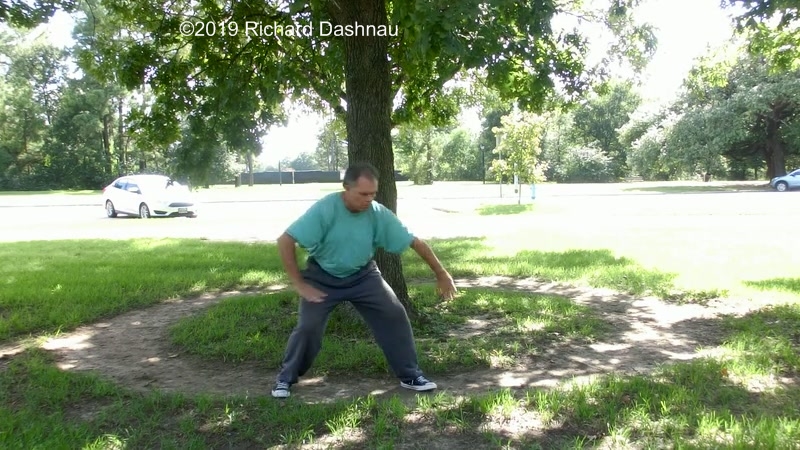
August 13, 2019-- Pakua palm
changes.. Here
is a comparison of the 4th palm change for the three different pakua
styles.
Here they are: style A palm change 4 style B palm change 4 style C palm change 4
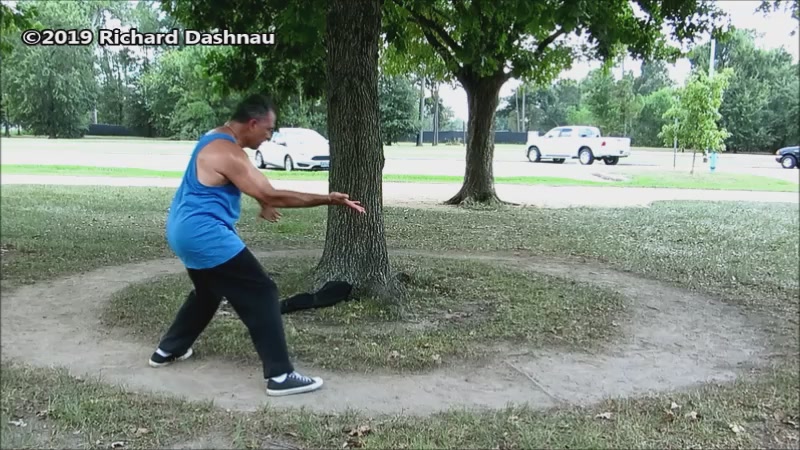
August 9, 2019-- Pakua palm changes
from style B. and the beginning of the 40 Movement Combination Tai Chi
form.
I'm
trying to do at least an hour of exercise every day
(weather permitting). There will be some minor differences (hopefully) while I try to work
back into how I first did these movements.. That means I'm going to have to
rely on the
internal
forms for my exercise. These movements can be done slower, or
lower, or with any other minor tweaks to increase the workout (or make
it easier). I try mostly for smooth
transitions. The
clips
also give an idea of about how long it can take to do these exercises.
Here they are:
style B palm change 1 style B palm change 2 style B palm change 3 style B palm change 4 style B palm change 5 style B palm change 6 style B palm change 7 style B palm change 8
August 1and 2,
2019-- Pakua basic breathing
positions and then palm changes.
I'm
trying to do at least an hour of exercise every day (weather permitting).
Unfortunately, I'm finding out
that the "external" forms that I learned
may be causing problems with my 60+
year-old skeleton. That means I'm going to have to rely on the internal
forms for my exercise. So I'm starting
with the walking and
breathing drill below, and then I'm going through all of these
breathing positions and palm changes that I was taught for the three
styles of pakua. As I've mentioned
before, I do NOT know
which
styles these are, so I call them A. B. and C. All I know is that I
enjoy doing these exercises. As time goes by, I'll try to
clean
up my performance. I've had a lot
of negative reinforcement over time
while my hips broke down, and various motions had hurt a lot--prompting
me to avoid them. It's refreshing to be able to move again.
These
three sets,
along with the walking/breathing below, and the static
breathing and the 3 tai chi forms, and the 32 movement sword
make about an hour of workout time (or more). Over these two days,
I've
recorded the entire set of exercises for each style. I don't think I'd
ever filmed this before. These movements can be done slower,
or
lower, or with any other minor tweaks to increase
the workout (or make
it easier). I try mostly for smooth transitions. The
clips
also give an idea of about how long it can take to do these exercises.
Here they are: pakua style A pakua style B pakua style C One more thing,
August 1, 2019 makes one full year with my new hip!
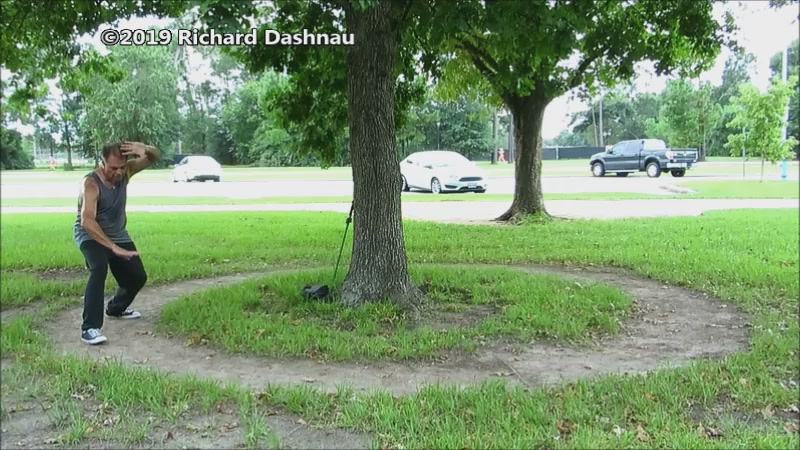
June 02, 2019-- Pakua basic walking and
breathing drill
I don't know what else to call it. This was a set of arm
positions that were taken while walking a circle. Sometimes, we'd do
this for
30 minutes or more. Walking can be slow or fast. While walking, the
legs are not rigid and the body is lowered slightly. Turn the
upper body so you're looking at the center post (or tree, or
whatever) and not looking down--keep eyes level. The pakua "sliding" or "mud
step" is normally used--where the entire bottom of the leading foot
is kept parallel with the ground surface as
it is pushed forward. Then
it is placed so the entire sole touches at once. This puts a
lot
of stress on my hips, even after the new prosthesis, so I'm not
stepping like that here. I am
sliding the
forward foot before
I step down, but heel is touching first. Try to walk with as
little "bounce" as possible. That means hips, knees, and ankles are
taking up the slack as you walk. Go through
the
full set of 12
positions while circling in one direction, then turn and go the
opposite direction around the center (center is on the left) and do all
12 positions. The video clip which is here
shows the different positions going in the first direction only
(walking so the center is on my right), and one set of loosening
exercises.

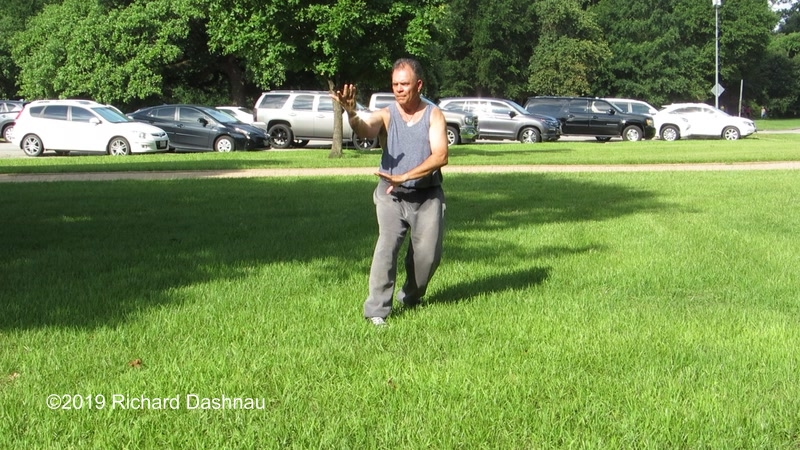
Basic Movement and Breathing
Exercises
Ok, I don't know what else to call them. These were sets of
exercises that I saw shown at the school. They weren't taught
together, or at the same time,
but over the years, I've grouped them
together. The definitions for them are my own--but make sense
considering how the movements go. For these, since there is not too
much movement, it's
possible to concentrate more on breathing, and the
pace and repetitions can be adjusted according to desired workout at
the time. Basically the movements should coincide with breathing. Slow
inhale as arms move in, and slow exhale as hands and arms move out.
A few more notes follow below. These days, I do
these as a
sort of "warm down" after the other exercises I've been trying
to do
routinely. I will have to post a video and pictures showing
the
basic positions (as I can do them now). For all of these, it
is
necessary to exhale while moving into each new position, BUT, it
is
also possible to hold each position and do a slow breathing cycle
(or multiple cycles) before moving to the next position. The links
below each image will show a video clip of the exercise.
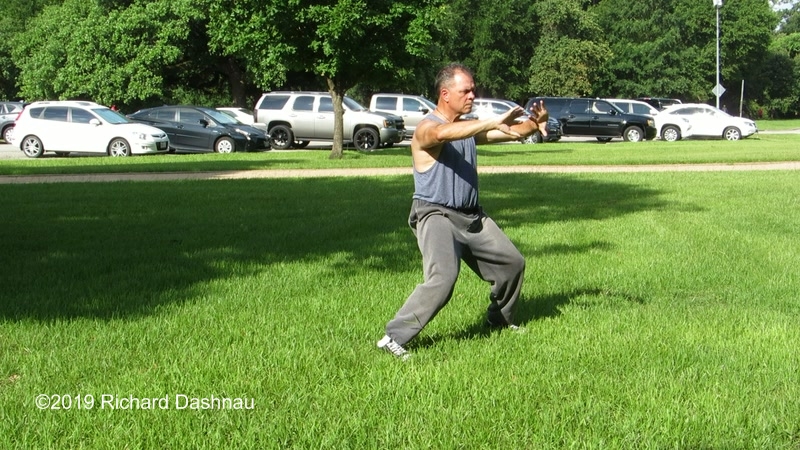
Basic
Breathing Drill-- This was done along with the Long Fist/Mantis style
training. The idea is to stand in low chair stance inhale
deeply
before, and exhale while doing the hand motions. Exhale
as long as
possible and time it so full movement is reached at the end of the
exhalation. The set includes forward movements and final
hikng
stance for the last position to the left. Then return to
beginning and
repeat to finish on the right.
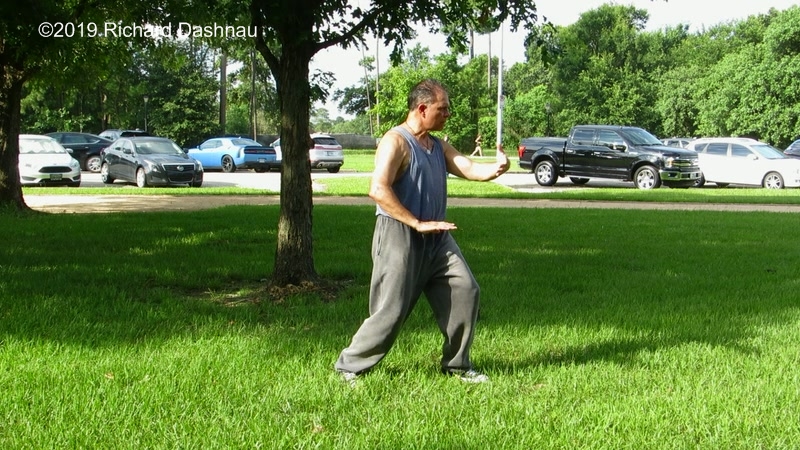
Basic
Pakua Breathing and Position--This was done associated with the Pakua
training. Concentrate on proper body/leg position and
arm/hand
position. When stepping, step smoothly and slowly.
Time movements along
with breathing. You should finish facing the same direction as you started.
Basic
Tai Chi Breathing and hand movements-- The first time we were taught
Tai Chi, we spent months learning basic movement. During part
of
that, we learned a basic set of hand and foot
movements. Those
movements were related to a different tai chi form and style (that
didn't feel right for me). Later, I put together this basic
movement set. This is partly to help new students get a "feel"
for how
tai chi movement should work. For that reason, I kept foot
and
leg position simple so the new student can concentrate on what the
hands and arms and upper body are doing. I do it now so I
can
remember it (in case I'm asked to show anyone) and also because I enjoy
it. As with the others, breathe along with the movements.
Generally, inhale as hands/arms move towards the body, and
exhale as they move away.
 .
.
Basic
Breathing Drill
Basic
Pakua Breathing and Position
Basic Tai chi breathing and hand movements
May 04, 2019--
Now that I can walk without any pain, I've started trying to regain
more different exercises that I used to do. I'm also walking a lot
more, and trying to practice about an hour each day. I still
have
to limit my some movements--after all, both hips are no longer
biological. For now, I'm happy doing what I can. For
"internal"
forms, I doing both the "walking breathing" sets (8 positions) and the
palm
changes (8 changes) for each different style (which I only know as 1,
2, and 3) going in one direction, then doing the entire set in
the other direction. I also go through the 3 tai
chi forms
I've been doing
(simplified 24 and 48; combined 40) and the 32 movement
tai chi sword. I do a few other basic exercises and drills as well. I
also try to work in some "external" forms, which I'll list on the other page.
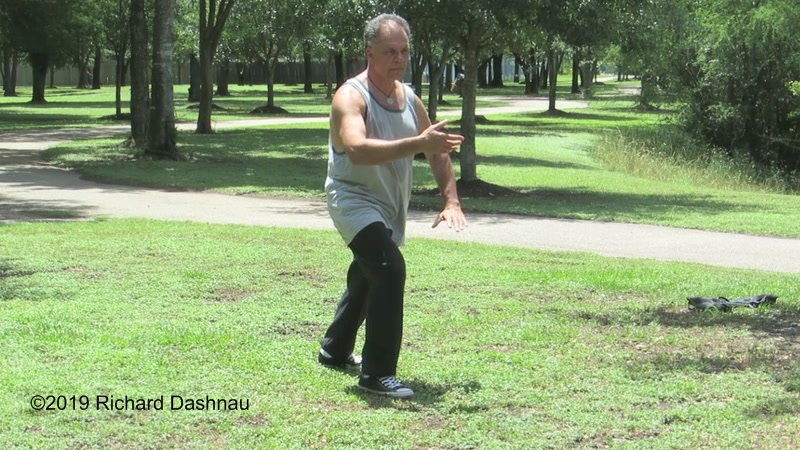
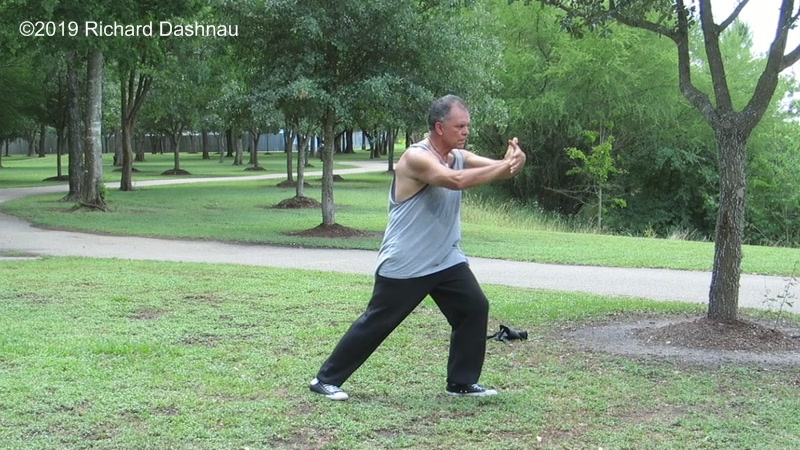
The images and
clips here show just a part of each style I'm doing now.
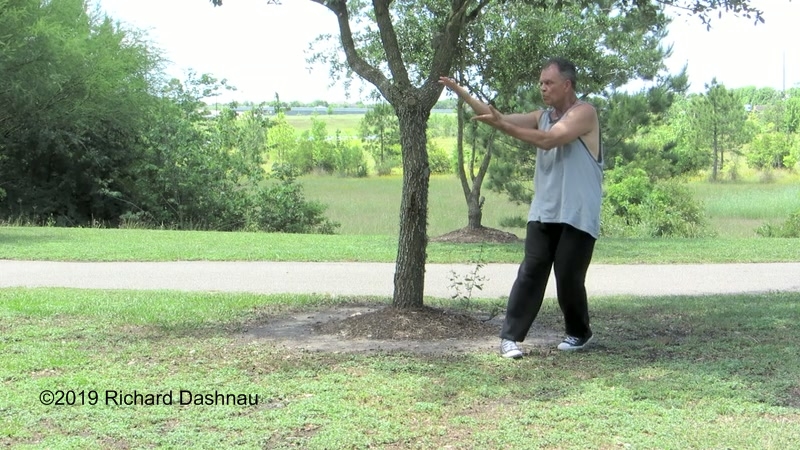
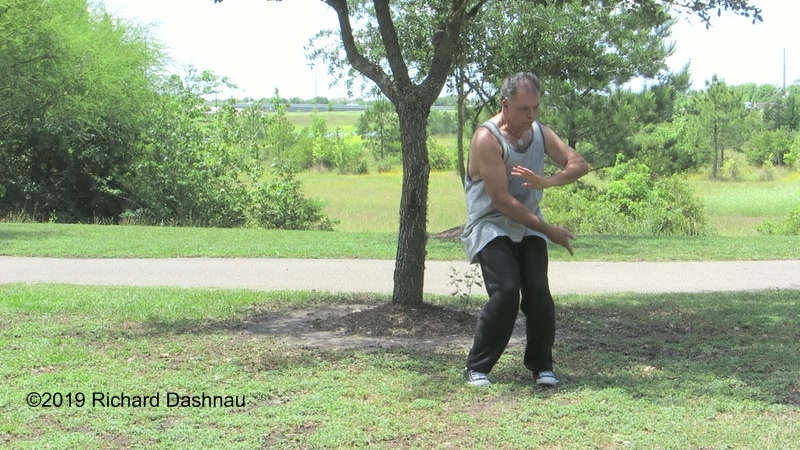
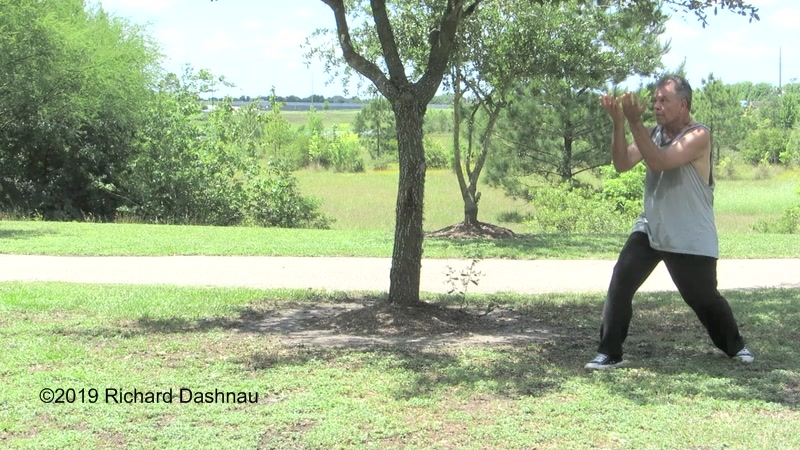
Pakua
style 1: breathing positions 1-4; palm changes 1-4
Pakua
style 2: breathing positions 1-4; palm changes 1-4
Pakua style 3: breathing positions 1-4; palm
changes 1-4
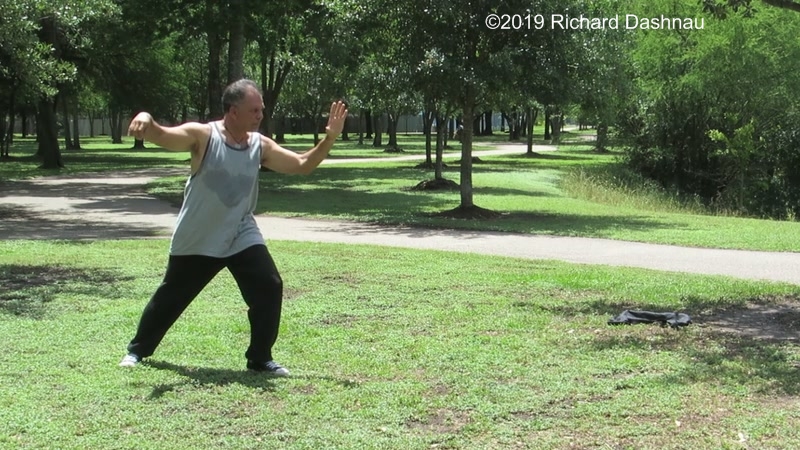
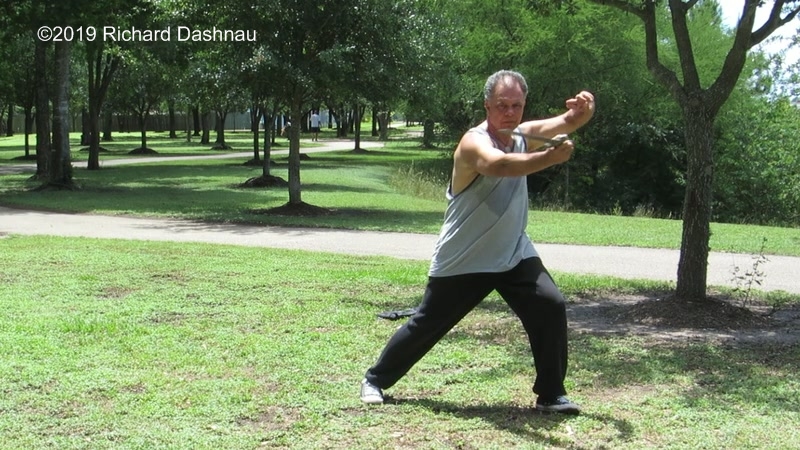
Beginning
of 32 movement tai chi sword
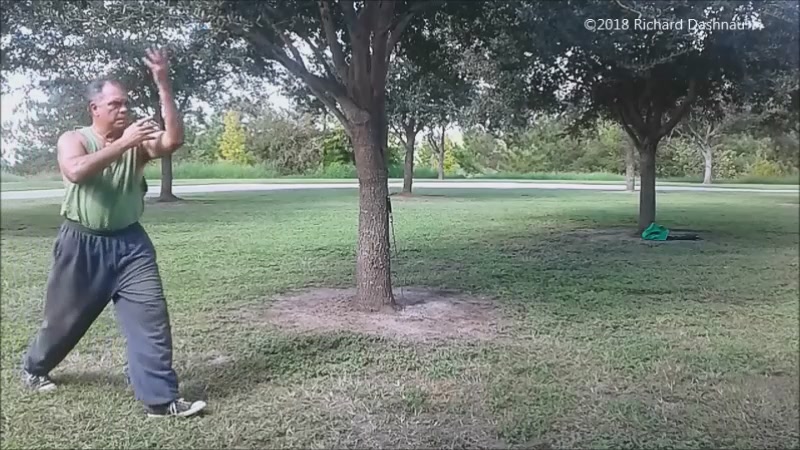
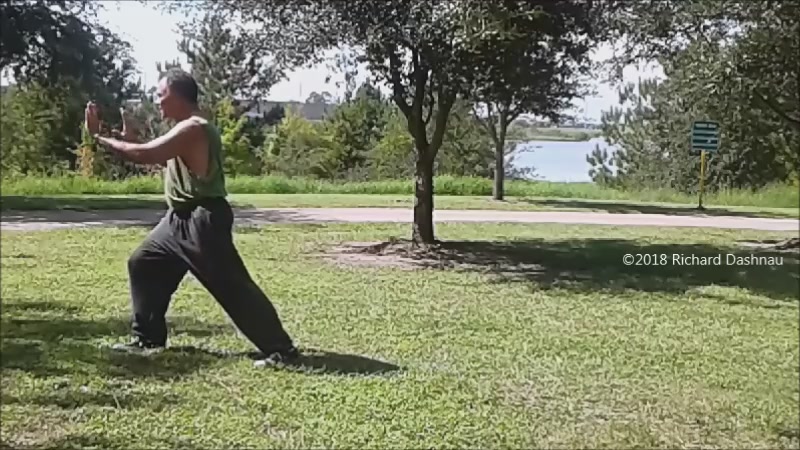
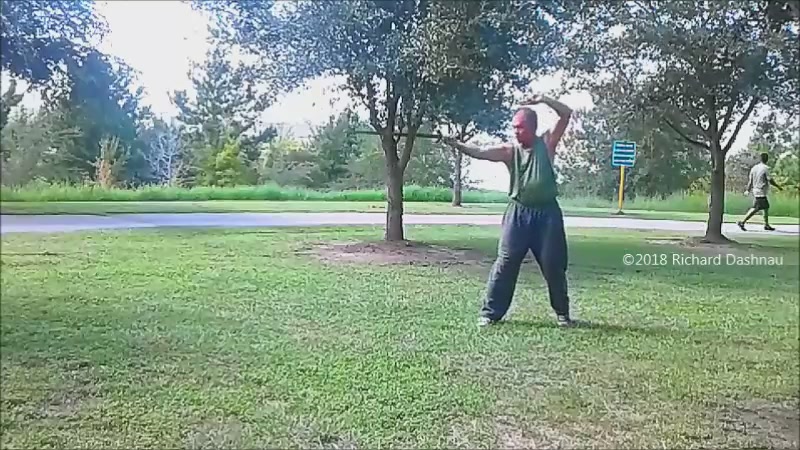
October 06, 2018-- My hip is fixed! It's so good
to be rid of that discomfort..
Today, I shot video of myself doing these forms, about 3 months after the bad hip
was replaced.
In the video clips, I can still do
the forms (with some adjustments for
age, etc.). Click the links to see the video clips. The remaining 3
pictures below are frame-grabs from the video clips.
2nd
pakua set one side 40-movement
Yang style taichi 32-movement
taichi sword. I can do about an hour and a half of
these an various other exercises. It's
really great when I can work in the session
at the same park where I
can watch all kinds of other birds the same morning...as I did on this
day.
July 27
2018--
I 've been practicing when I can, but my remaining natural hip has
finally gotten very bad. I feel that I've been able tocontinue using
it, because
these excercises have
kept
it from "freezing" or fusing. There is NO cartilage left in the joint,
as can be seen in this xray of my hip taken last April (below left).
Today, I shot video of myself doing these forms,
three days before the
bad hip was replaced.
In the video clips, I can still do the forms (with some adjustments for
age, etc.) but it's obvious that I'm having trouble walking.
Click the links to see the video clips. The remaining 3
pictures below are frame-grabs from the video clips.
2nd
pakua set one side(mp4) 40-movement
Yang style taichi(mp4) 32-movement
taichi sword(mp4). I'll see how things work after I've
healed from the installation.
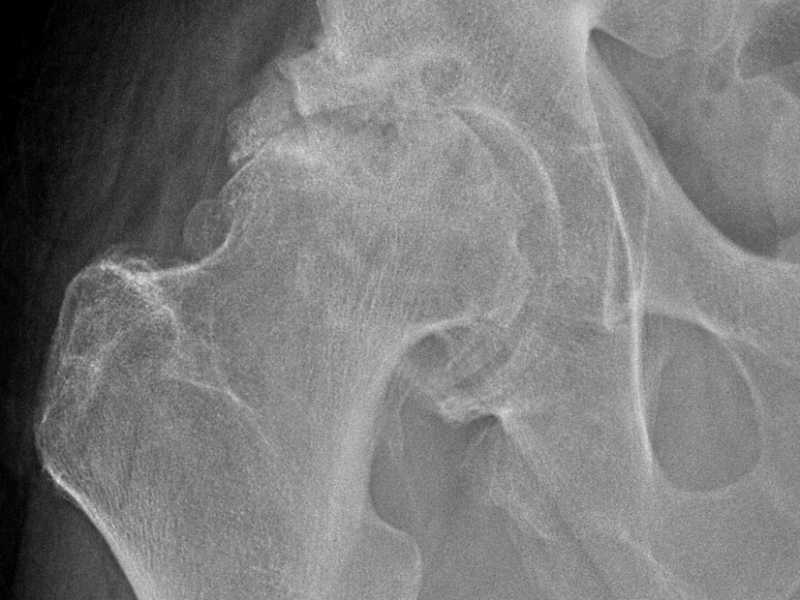
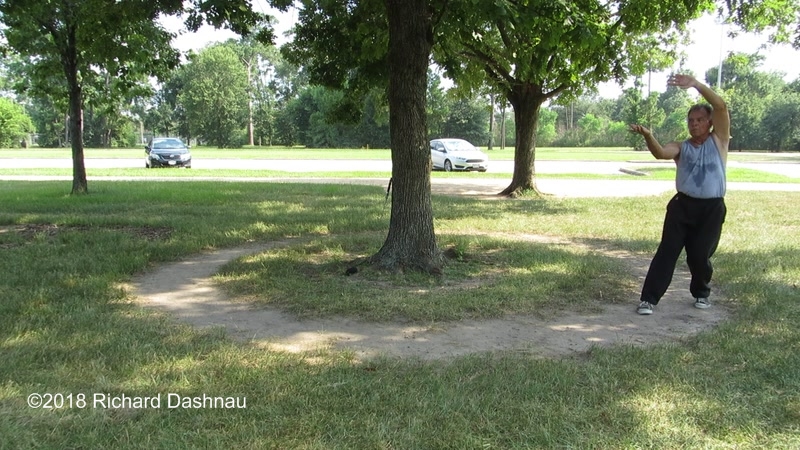
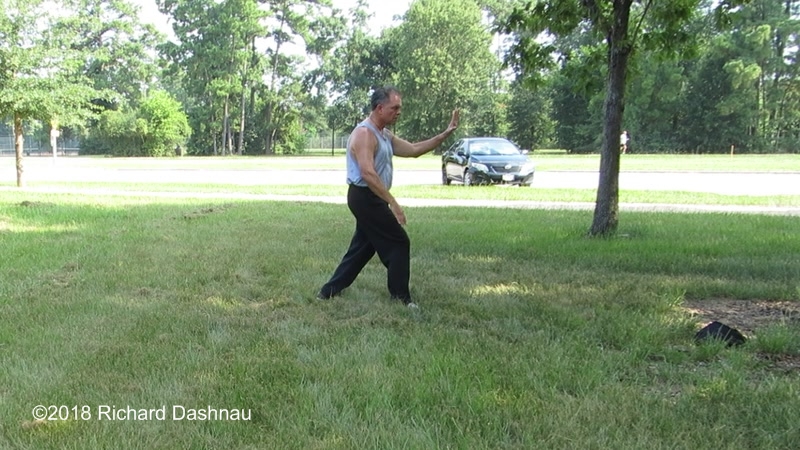
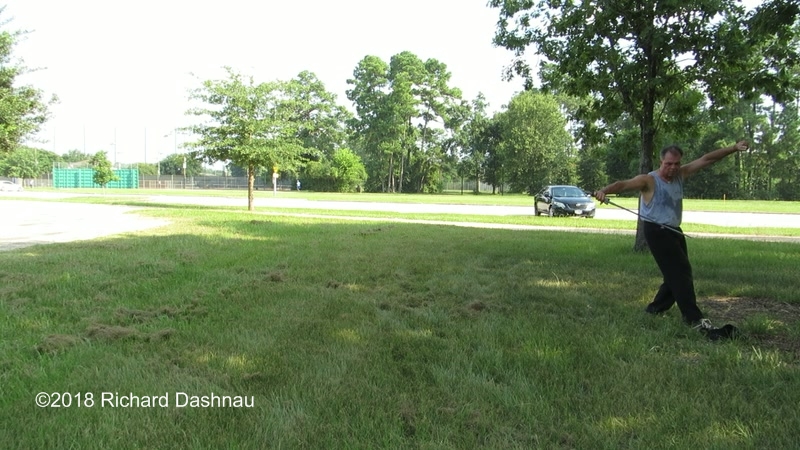
July 27 2017-- It was still hot out. This is how I'm doing the 24 Movement Simplified Tai Chi form..
24
movement simplified tai chi 7/27/17 (wmv) 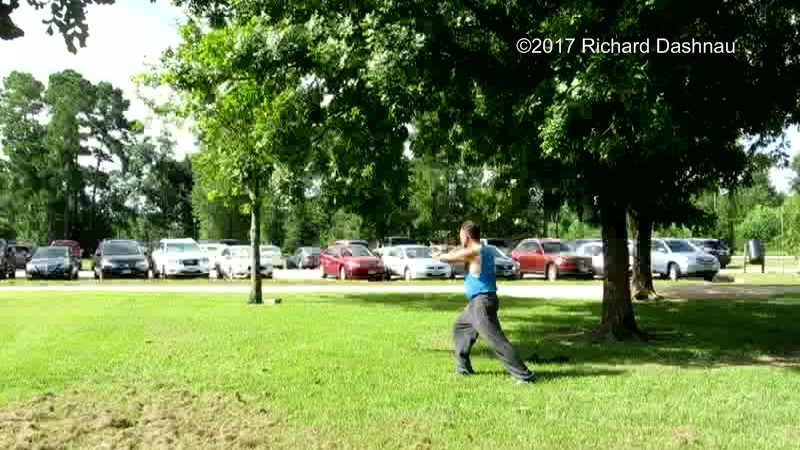
July 22 2017-- It's hot out. Here are three pakua changes. On good days I can walk ok and on bad days I can't...walk ok. This was a better day.
3
palm changes-#3,#7,#8 7/22/17 (wmv) 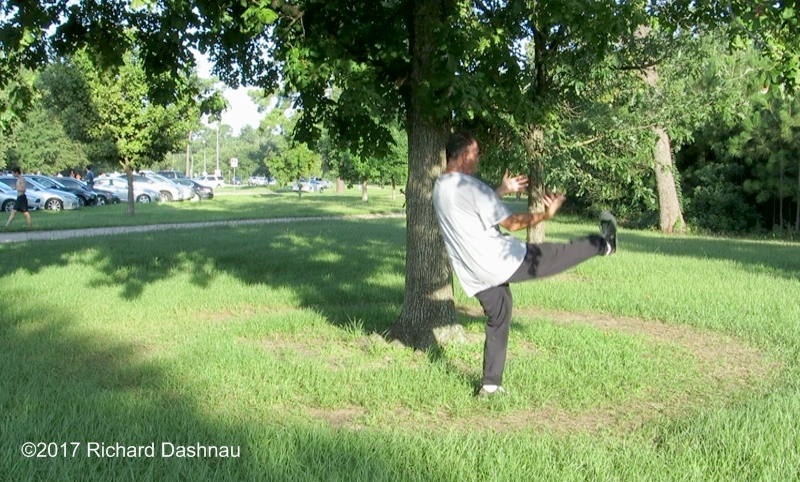
April 22 2017-- You do the math...I've gathered a lot of birthdays.. I can't do high crescent kicks any more. Still, this is the 48 movement simplified form again--without high crescent kicks.
48
Movement simplified 4/22/17 (wmv) 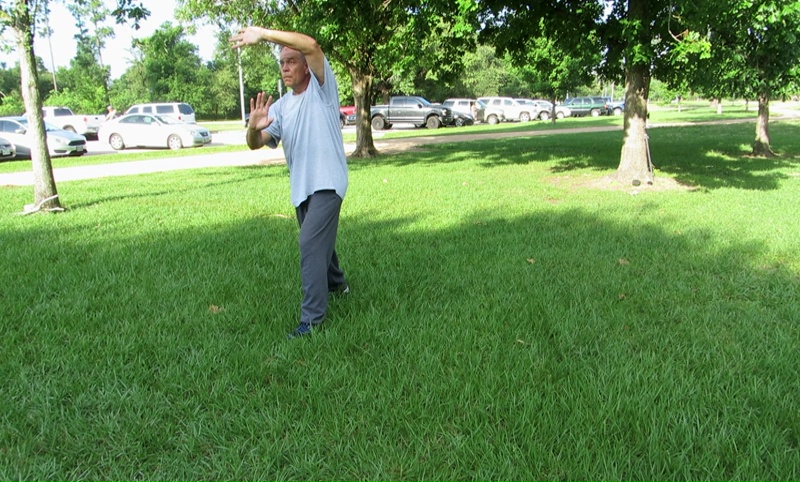
August 2, 9, 12 2014-- I'm 59 years old, that it. Some clips I shot today.
2st Pakua Set change 3 (wmv)August 2, 9, 12
2014-- I'm
58 years old, so I don't move like a youngster. . That just comes with
the territory. This week, I've shot these clips. I also shot clips of
my internal forms, and
those are on the other page.

2st
Pakua Set counterclockwise (wmv)
(mp4)
2st
Pakua Set clockwise (wmv)
(mp4)
2st
Pakua breathing set (wmv)
(mp4)
3rd
Pakua Set counterclockwise (wmv)
(mp4)
3rd
Pakua Set clockwise (wmv) (mp4)
3rd
Pakua breathing set (wmv) (mp4)
tai
chi 40 movement Yang form (mp4)
32
movement tai chi sword (wmv)
(mp4)
1st
Pakua Set counterclockwise (wmv) (mp4)
1st
Pakua Set clockwise (wmv)
(mp4)
1st
Pakua breathing set (wmv)
(mp4)
April 13, 2013-- On weekends, or with enough
free time, I've been running/walking 1/1/2 - 2
miles, then doing pushups, then a number of exercises to
straighten my spine. After that, I still do some
form work.
Here's what I filmed today (with some on the other page).
1st
Pakua Set video 12.3mb(wmv)
2nd
Pakua Set video 15.7mb(wmv)
3rd
Pakua Set video 16.7mb(wmv)
tai
chi 40 movement yang form video (mp4)
32
movement tai chi sword video 11.7mb(wmv)
September 03, 2012-- I'm still doing what I can. Now I've been running/walking 1/1/2 - 2 miles, then doing pushups, then a number of exercises to straighten my spine. After that, I still do some form work.
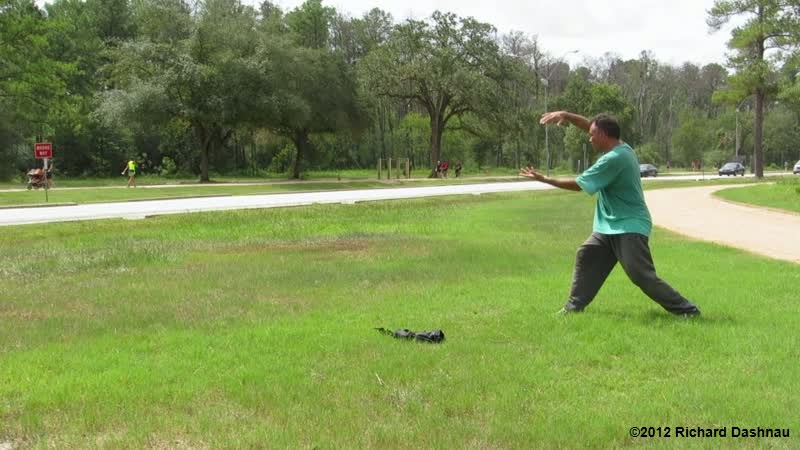
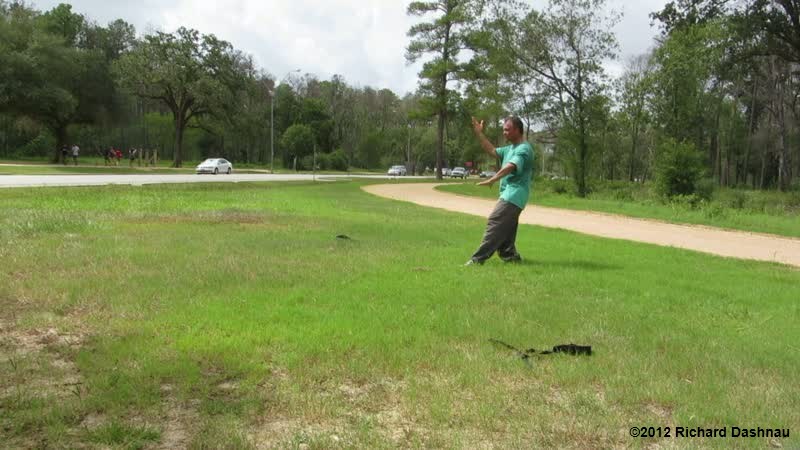
3nd Pakua Set video 16.3mb(wmv) 48 movement simplified tai chi video 43.9mb(wmv)
August 08, 2012-- I'm still doing what I can. Now I've been running/walking 1/1/2 - 2 miles, then doing pushups, then a number of exercises to straighten my spine. After that, I still do some form work.
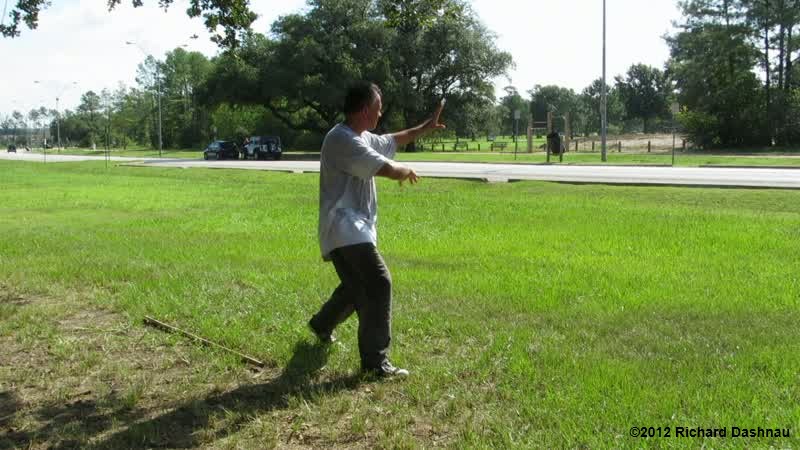
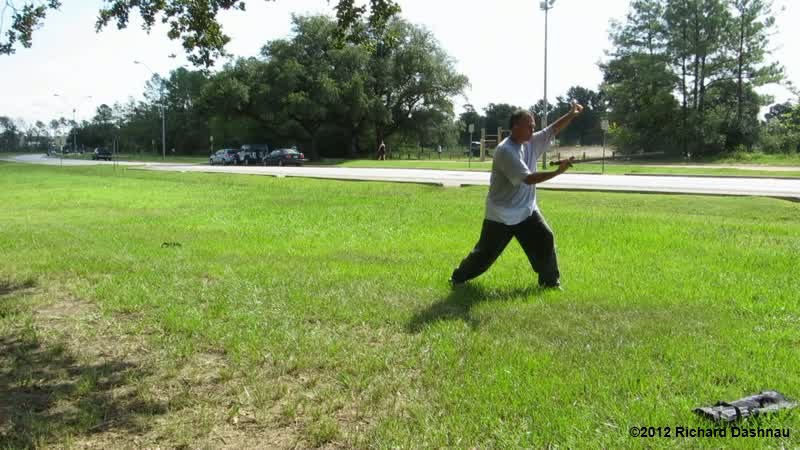
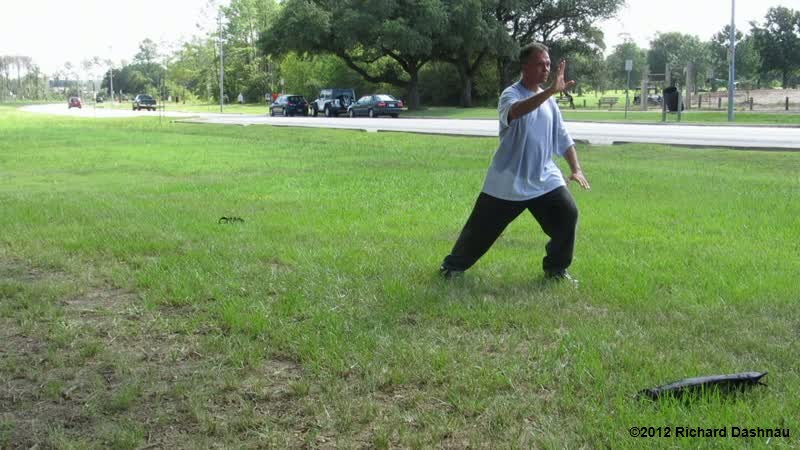
2nd Pakua Set video 15.3mb(wmv) Tai Chi Sword Form video 13.5mb(wmv) 40 movement Yang Style Tai Chi Form video (mp4)
June 09, 2012-- I'm
still doing what I can. Now I've been running/walking 1/1/2 -
2
miles,
then doing pushups, then a number of exercises to straighten
my
spine.
After that, I still do some form work.
Regardless of how they
look,
I'm still doing these 26 years after I first started learning them. I
did these all today after doing the run, etc., and after doing the
exercises on the other page.
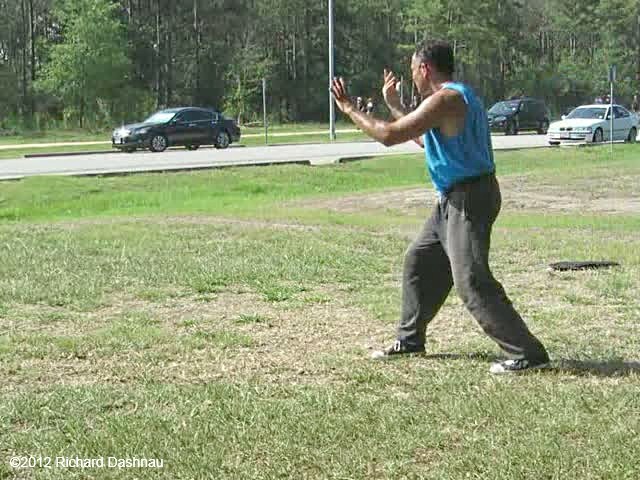
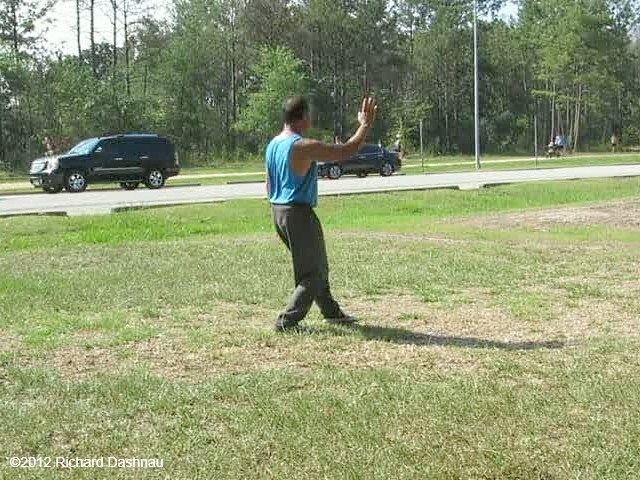
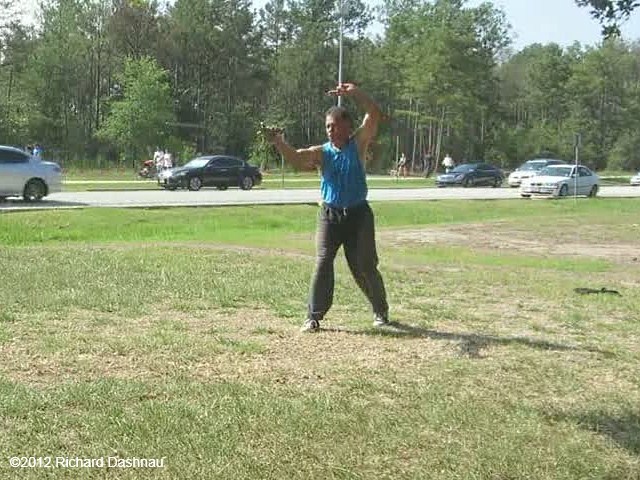
3
Pakua Sets
Combination Form Tai
Chi
32
movement Tai Chi Sword
1st
Set Pakua video 9.6mb(wmv)
40
movement Yang style Tai Chi video (mp4)
Sword
Form video 5.5mb(wmv)
2nd
Set Pakua video 14.3mb(wmv)
3rd
Set Pakua video 13.2mb(wmv)
July 30, 2011-- I
guess I've been offically put on notice. I'm not as young as I used to
be. There are some things that folks my age should consider
not
doing any more. However, there are still things
that I can
still
do, without stressing certain anatomical structures (such as cerivical
disks). I use my excercises now to maintain range of motion,
and
I can also evaluate how things are healing. Today,
I've
collected
together some of the pakua exercises that I still do. I was taught these exercises
over some years. With each "style" of pakua, there were two
sets of exercises.
First,
there was a set of walking exercises and breathing exercises. These can
be performed at whatever pace is suitable at the time. The
idea
is to walk with hands in position, then change hands to
the next
position--walk some more; and continue. One usually doesn't move
through all the hand positions quickly, but I've done so in
the
clips. Otherwise each clip would have been much longer.
Second,
there was a set of palm changes for each "style".. These were more
technique-oriented, I use them for balance,
coordination and
breathing. Like any
of what I practice, it's mine, and I can use
it as I wish. A
set
of breathing exercises matches a set of palm changes. I still
cannot be sure of the names of these styles. Any observed
lack of
form is entirely my fault. I've also made some changes
because certain
alterations of my physiology over time have made some types of movement
difficult or not advisable.
The first set:
Set 1 breathing(wmv) Set one palm changes(wmv)
The second set:
Set 2 breathing(wmv) Set two palm changes(wmv)
The third set:
Set 3 breathing(wmv) Set three palm changes(wmv)
There was a set of fixed-stance breathing exercises as well. This can be performed hips lower, or a hips higher, as long as the back is held upright. Each stance can be held for as long as needed--There was another set of breathing exercises: Static Breathing Exercise(wmv)
These are the basic positions I learned for Long Fist Kung Fu. There are a number of variations for these. I'm doing them slowly here...and like someone over 50.June 04, 2011-- Here's
the 32-movement Simplified Tai Chi sword. Sometimes I do it
slower, sometimes I do it faster. This is a bit faster. It's hard to
place the camera correctly in order to catch the
entire form and keep
me in frame. So, I missed some in the clip where I move out of frame.
32-movement
simplified Tai Chi sword (partial) (wmv 13.1 mb)
May 28, 2011--
I had bit of a scare on May 18th and I didn't feel well until
Friday, May 27th. Besides doing the exercise in general,
doing
forms can serve as a test of recovering mobility, balance and
stamina.
Today, I did two weapon forms, and these internal forms.
40
movement Yang Style tai chi (partial)(mp4) ; pakua
set 1 change 2 (wmv 1.7 mb) ; pakua set 2 change 3
(wmv 2.3 mb) ; pakua set 2 change 8
(wmv 2.9 mb) ;
pakua set 3 change 7 (wmv 3.3 mb)
December
11, 2010-- I
hadn't practiced the 48 Movement Simplified Tai Chi for many years; so
I've been refreshing my memory. I've been practicing all the way
through for a while, so I thought I'd go
through the form quickly. I
like the style of the form, and like doing the movements at my own
pace. After all, whatever I've learned is mine to use as I want. So,
I've filmed the form, so I could see how it looks,
and see what to work
on. I shot the form starting in opposite directions to try to get at
least 2 different views of the positions and movements.
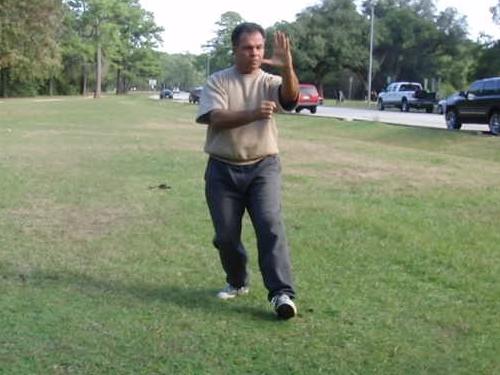
48 Movement Simplified Tai Chi(wmv 45.6mb)
48 Movement Simplified Tai Chi alternate view(wmv 42.8mb)
November
20, 2010-- I shot these video clip during
my practice
today.
These are each a quick demo of the full series of 8 changes for each
type. Normally I would walk more between changes, and also
do them from
the opposite direction. It's been 14 about years
since I've
been in a kung-fu school to learn anything--so all the mistakes are
mine..
Pa-Kua set A (wmv 10.3mb)
Pa-Kua set B (wmv 15.3mb)
Pa-Kua set C (wmv 15.4mb)
November
06, 2010-- I shot these video clip during
my practice
today.
32
Movement Tai Chi sword (wmv 9.8mb)
This is only a part of the full
form.
Pa-Kua set A Change 2 (wmv 1.6mb)
Pa-Kua set B Change 3 (wmv 2.1mb)
Pa-Kua set B Change 7 (wmv 2.2mb)
Pa-Kua set B Change 8 (wmv 2.6mb)
August
14, 2010-- I shot this video clip during my
practice
today.
40 Movement Yang Style Tai Chi (mp4)
August
11, 2010--
I shot these video clips during
my practice
today.
Pa-Kua
set B change 3 (wmv 1.9mb)
Pa-Kua set B change 5 (wmv 2.1mb)
Pa-Kua set C change 7 (wmv 2.6mb)
August 11, 2008-- I shot this video clip during my practice today. It's the 32-movement Tai Chi Sword form.
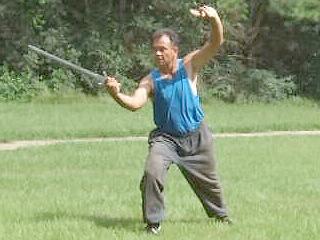
32
Movement Tai Chi
Sword
32 Movement Tai Chi Sword VIDEO(wmv 14.5mb)
March
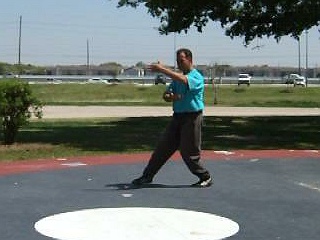
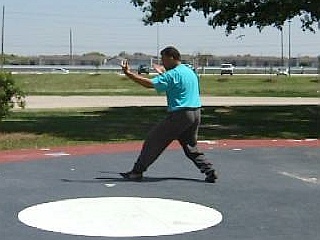
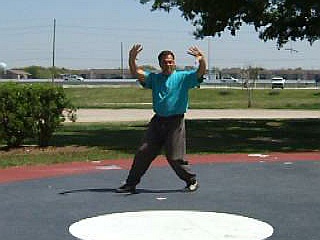
27, 2008-- The
images and clips below were taken on March 24, 2008. As mentioned above, I learned 3
"styles"
of palm-change forms, and 4
styles of walking breathing exercises. I've only
attended one school
for these styles. Each of the pictures below represents one of four
breathing
styles (which I cannot identify). Below each image is a link to a short
video of me walking through a series
of 8 changes starting in one
direction. I tried to set the camera so that I could fill the frame.
So, I tried to stay within frame when I'd change direction. I numbered
them in the order I learned them. However,
the first set of breathing
exercises goes with the second
set of palm changes above (March 17 sets); and the second set of
breathing exercises goes with the first set
of palm changes
above.
 --
-- ---
--- ------
BREATHING SET 1
BREATHING SET 2
BREATHING SET 3
SET 1
VIDEO(wmv
5.3mb)
SET 2
VIDEO(wmv 6.4mb)
SET 3
VIDEO(wmv 5.0mb)
March
17, 2008--GOOD NEWS!! I've had my hip replaced in
2005. Now, I
can do a lot of what I used to. For now, mostly "internal" style. I've
been practicing the forms I can remember, and as I've
rehabilitated my
leg. Details of the hip repair, and then the following healing with
exercise can be seen on this page.
The
images and clips below were taken on March 15, 2008. Any
mistakes or poor form are entirely my fault, as I haven't had any
formal training since 1996, when I left my martial arts school after 10
years.
That's 12 years of practice on my own, less about 4 for hip and
knee problems. Still, I don't think I'm doing badly for someone over
50.
As mentioned above, I
learned 3
"styles" of palm-change forms, and 4
styles of walking breathing exercises. I've only attended one school
for these styles. Each of the pictures below represents one of those
styles (which I cannot identify). Below each image is a link to a short
video of me walking through a series of 8 changes starting in one
direction. I tried to set the camera so that I could fill the frame.
So,
I tried to stay within frame when I'd change direction.
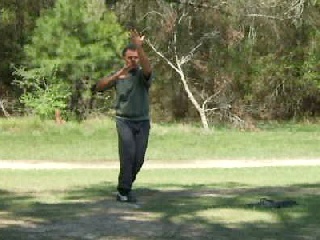
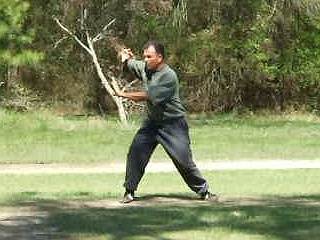
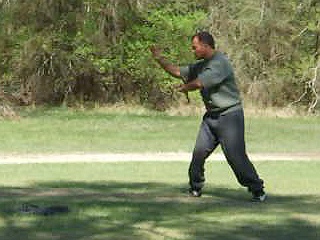 --
-- --
-- ------
STYLE A
STYLE B
STYLE C
STYLE
A VIDEO(wmv
10mb)
STYLE
B VIDEO(wmv 18mb)
STYLE
C VIDEO (wmv 17mb)
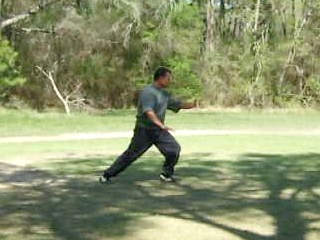
Here
are some links to
some video clips I shot in 2000 and 2001. There's nothing different
about them, except that they were taken some time after my knee
surgery. I'd
taken links to them off the page,
but decided to put them back (it's
June 6, 2010), just as a record of how long I've been practicing the
same exercises. I learned three different sets of changes,
which
I call "A", "B", and "C". I don't know
for sure where each originated.
By the time these were shot (2000), I'd been practicing on my own for
about 5 years (I'd left the school in 1996)--so any lack of technique
should be my fault.
----------------------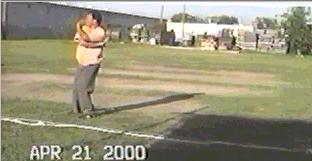
pa kua zhang
In July of 1999
I had to get knee surgery due
to injuries from a car accident. As a result, I've lost some function
of
one leg, and so may not be able to do ALL of the exercises I used to
do.
As of 2004,
the knee hasn't improved much, and there has been some
damage
to the hip as well. That certainly puts a kink on my practice schedule!
As time has gone on, I've had to curtail
quite a
bit
of this activity.
Special
Note 09/02/2019
Here are links to
some video clips that were filmed sometime around 1999. I don't know
the exact date--but the first digital formatted files I have show they
were made in 1999.
I've found the video tapes from then, but there's no
time stamp. I've re-digitized the tapes and have
higher-resolution digital files. But they're from old tape so
they aren't great. This is all eight palm changes,
and not too
long after I'd left the school. After my knee surgery, I couldn't do
the drastic leg twists as shown here...so that's when I started to
abbreviate the movements as shown in the later clips above.
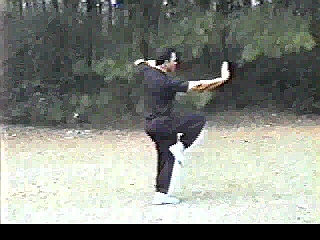
This
is the second set of Pakua that I learned. The viewpoint of the camera
is looking out from the center of the circle.
----------------------
pa kua set B
Note: I first wrote this section
some time in 1999 (I've made minor edits since then). Master Maing Yul Jung
also taught me
various
styles of tai chi and pa kua internal martial arts. Tai Chi
Chuan
(taijiquan) is becoming popular in this country as
an
alternative
exercise.
Unfortunately, as with anything that is not well known, a lot of untrue
claims about it are
being made. It
IS a very good form of
exercise. But "slow moving" does not mean
"without
effort". As with any exercise, it requires sweat and perseverance to
yield
any major health benefits. Tai Chi Chuan was originally an
effective
martial
art, that
is
to say, it was used to
fight. The original forms of the art were very strenuous, and had
combinations
of fluid slower movement and explosive quick movement. Over time
various
students came
up with "different" and "simpler" styles of tai chi.
Also,
certain
Chinese
physical education
organisations tried to develop standardized forms that would make the
exercise
aspects more accessible to a
wider variety of people, further moving
away
from the practical fighting aspects of this martial art.
------ ----------
 -------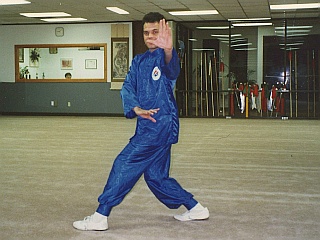
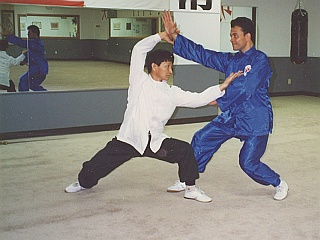
Master
Jung and I
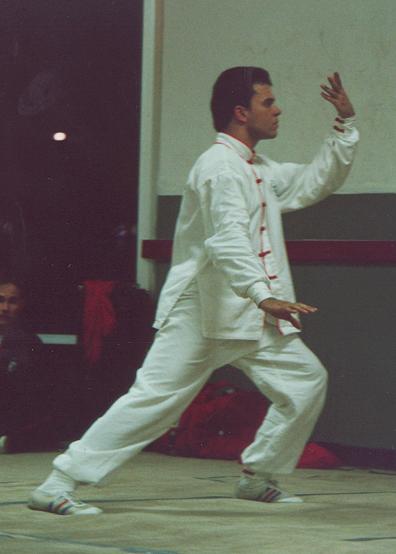
figure 17 tai chi
chuan
figure 18 pa kua zhang
Figure
17 shows
me
performing the 24 movement simplified Tai Chi form during a test at my
school.
Pa
Kua Zhang
(baguazhang)
has been called the last truly unique martial art. It is the youngest,
but it is entirely different than other martial arts in movement and
technique.
The primary offensive weapon
is the palm (zhang) and the movements of
this
art are mostly circular. There are many different variations of this
art,
however, as in tai chi and other martial arts. So, there are
some
styles called "pa kua"
that look more similar to other, more
traditional
Chinese fighting styles. Figure 18
was taken at the
school I attended.
-----------------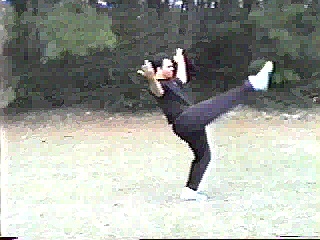 ----------
figure 19 pa kua
zhang
figure 20 pa kua zhang
There are two short
examples
of one style of pakua here. These are from a series of 8 different
changes.
Here is change number three
(FIG.19 mp4 video) , and this is change
number eight.
(FIG. 20 mp4 video ) During
my time at the
school.
I was shown many different excercises in Pa-Kua, and a few different
styles.
Pa Kua, Tai Chi, and
Hsing Yi are
the 3 major
"internal" Chinese martial arts. Sometimes,
too
much emphasis is placed on what defines "internal" from "external".
Sometimes,
too much emphasis is
placed on what "this" style is compared to "that"
style. Currently, in this country (USA), there is a lot of interest in
Chinese philosophy, spirituality, medicine, and martial arts. Since the
"spiritual" aspects
of life are hard to quantify in a hard, scientific manner, these elements can easily be used to mislead or cheat
people.
A lot of the foundation for this interest, I believe, is the mistaken
belief
that one can
get something (like good health, or physical strength, or
self-defense ability) for nothing, or almost nothing. It is NOT going to a one and a
half hour class 3 times a week and eating pizzas on the
weekends.
It is NOT attending a one week seminar, or even a 3 month seminar
once--or once a year.
\Note: I first wrote the above
some time in 1999. I've left it here because gives some idea of why I started this page.
Click
here
to go back to the home page of this....this....whatever the heck I'm
doing.