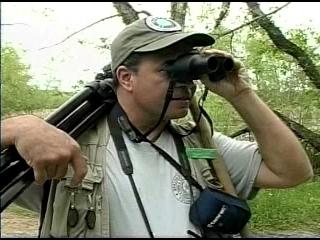
That's me on a trail at Brazos Bend State Park (BBSP), sometime in 2004.
----------------------------------
That's
me on a trail at Brazos Bend State Park (BBSP), sometime in 2004.
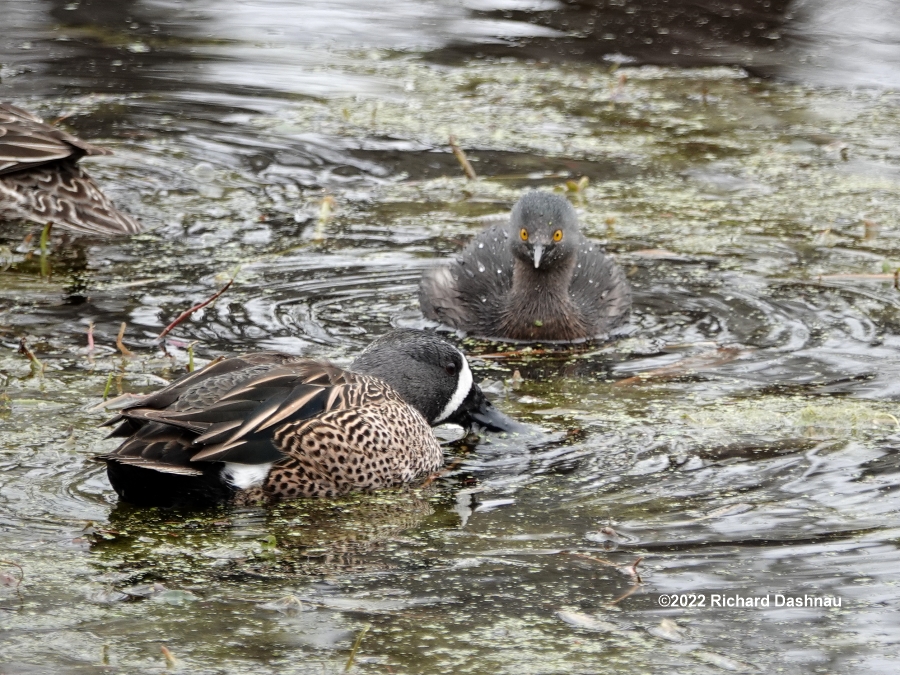
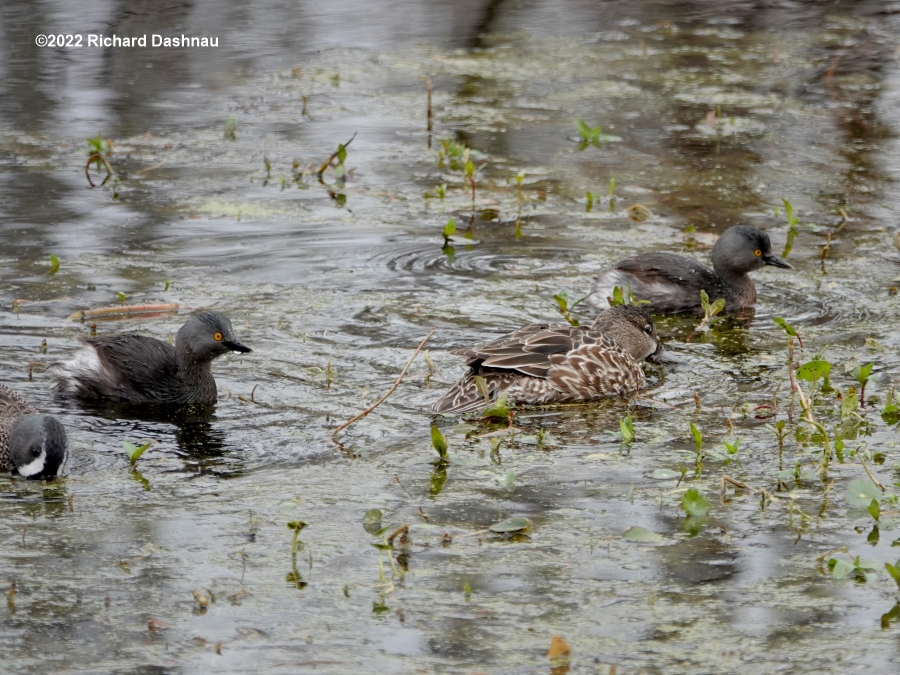
02/27/2022. I'd gotten
word that there were now two
Least Grebes East on the Spillway Trail, so I went to look for them.
They were near Elm Lake, and I watched them from 10:15am - 10:40am.
A
Least Grebe had been seen at different places along the trail for
weeks. Today, there were two, and they were staying near some
Blue-winged Teal. I only have one picture showing both of
them,
because they wouldn't cooperate and stay together. Those
wonderful eyes!
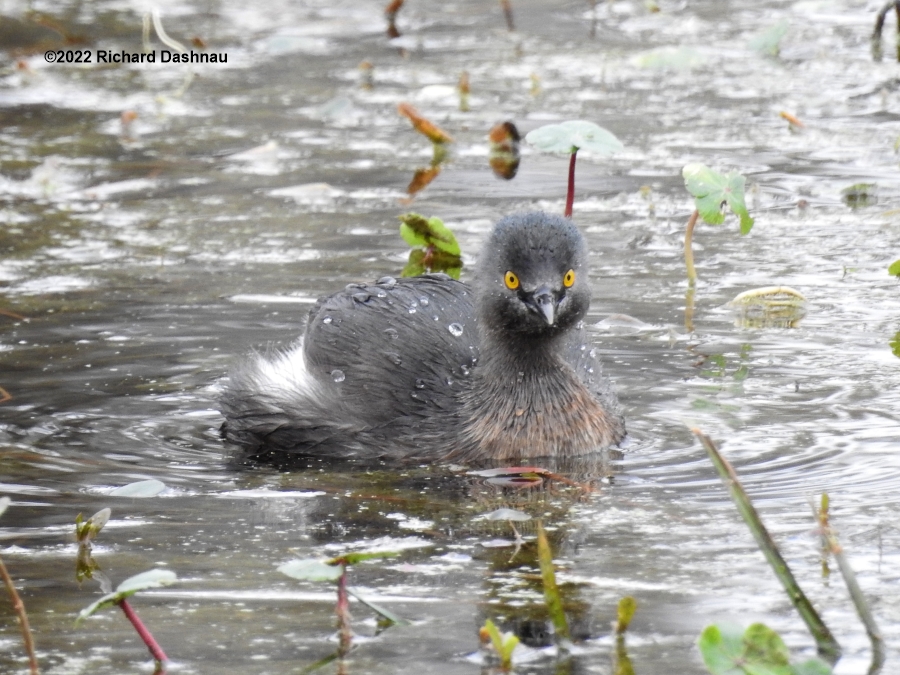
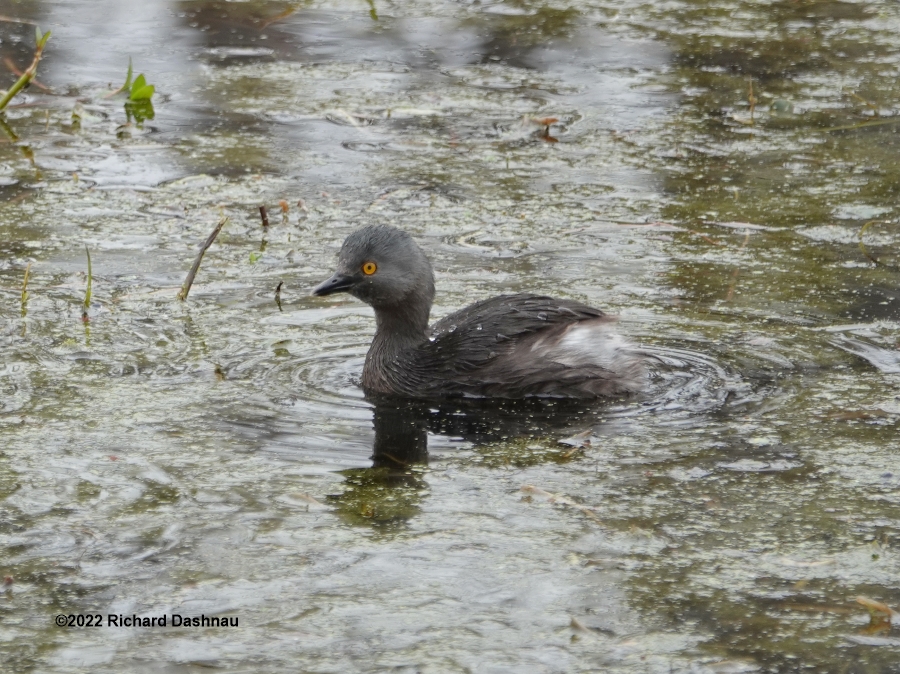
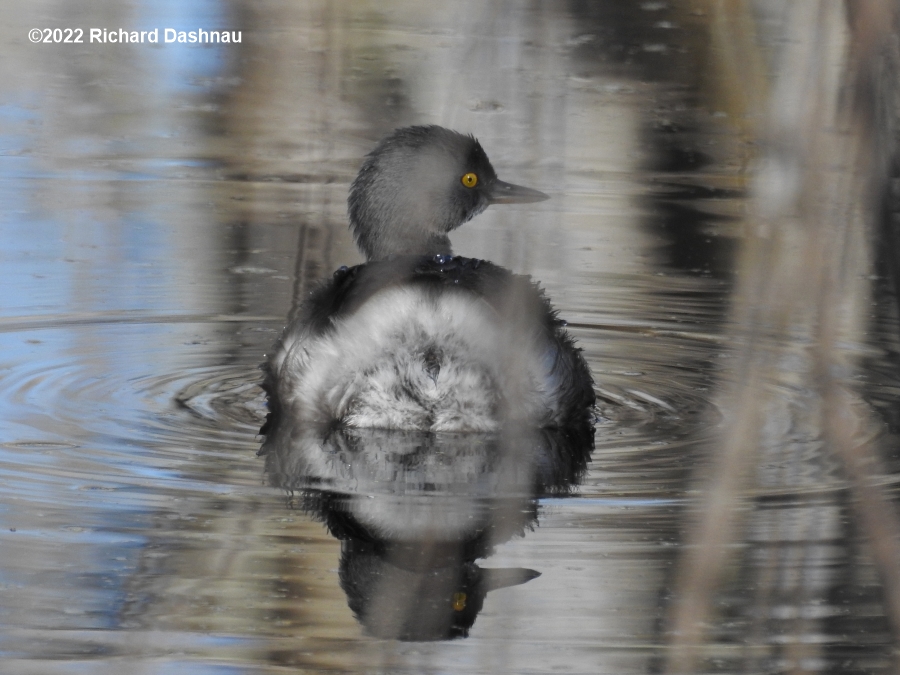
At BBSP on 01/30/2022.
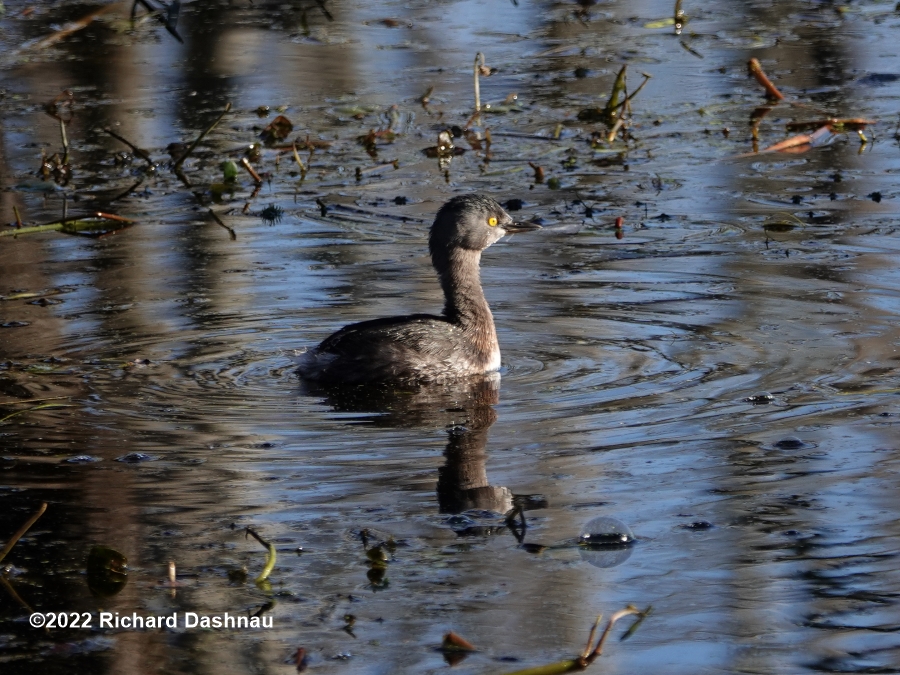
About 50�F Brazos
Bend State Park when I got there. I headed right to Otter
Island, but didn't see any Otters during the
few hours I was there. However, I was treated
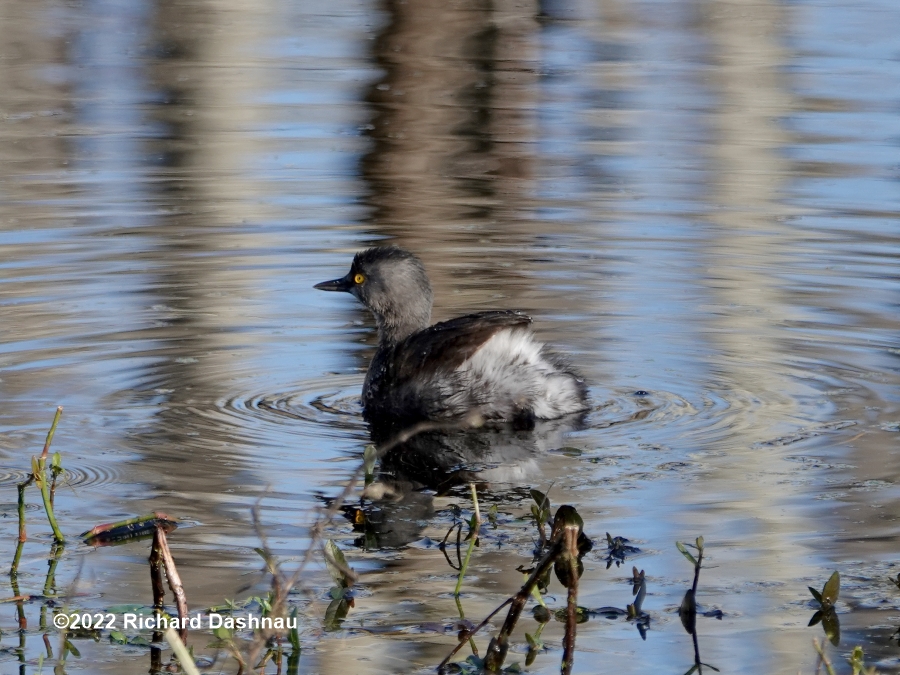
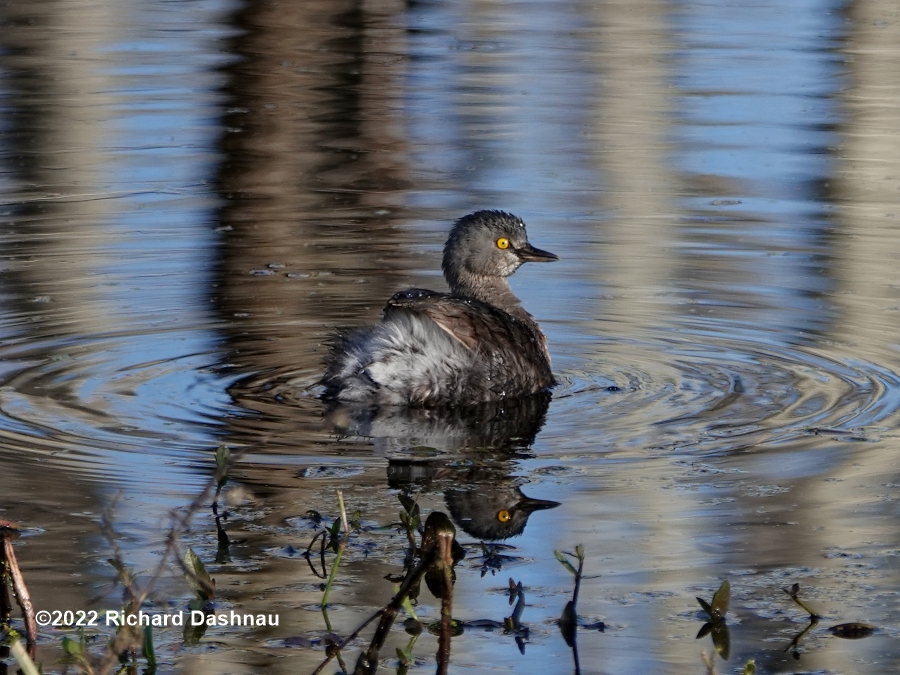
to a visit by this Least
Grebe (Tachybaptus
dominicus)that swam
by--right in front of me. I'd seen it at different places from the
Observation Tower to the Spillway Bridge over
the last couple
months. Now, it was East of the bridge. That brilliant
yellow eye glinted in the morning sunlight, as the Grebe
turned the
dark skin on its backside towards the sun to warm itself.
Like
almost everyone these days, I've been staying inside. I have
stopped driving around outside
for...recreational purposes.
BBSP
is just too far away, AND, entrance protocol to the park has changed
dramatically (even for volunteers). So...I haven't been going there.
So,
this is some video I filmed 02/08/2020
at Archbishop Fiorenza park.
I had been watching Pied-Billed grebes (other videos of them
have
been posted before).
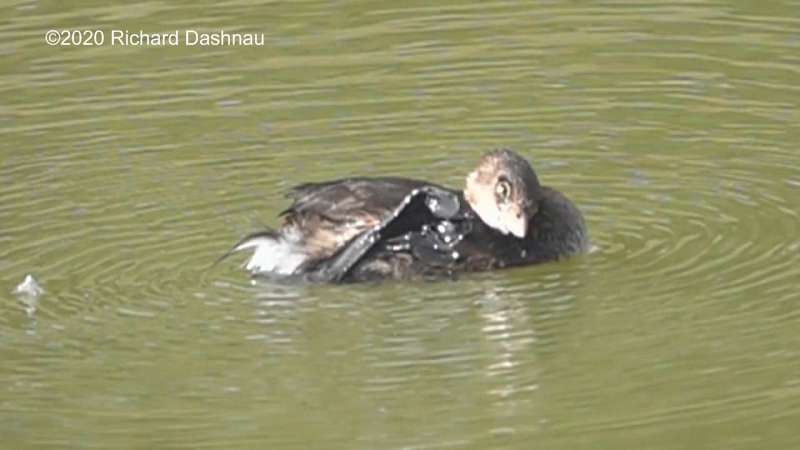
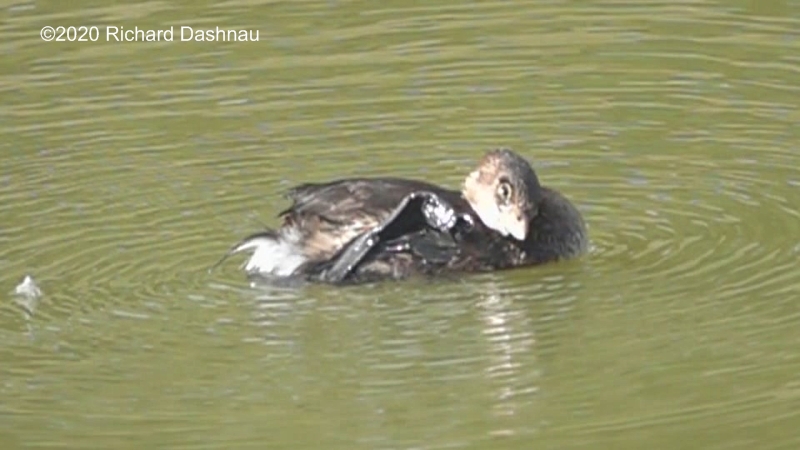
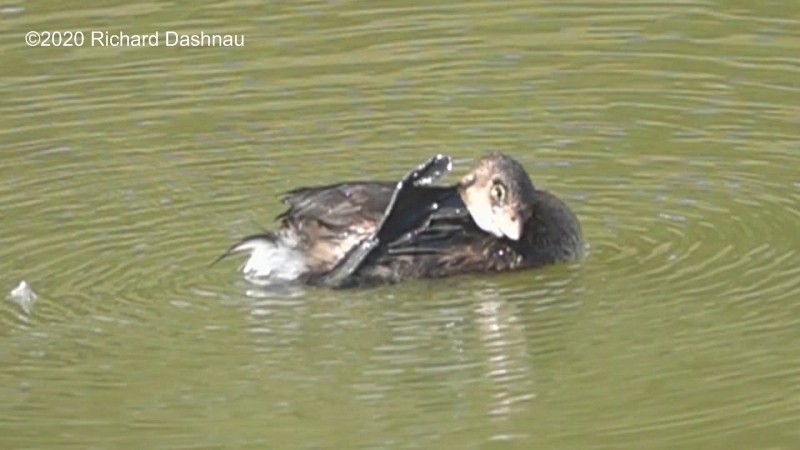
This time, I watched a grebe scratching its
head. Grebes are well-adapted for swimming. Their legs are set further
back on their body than on other birds. But the
most obvious
tool is their amazing feet. Unlike the webbed toes of ducks,
each
of a grebe's toes is a separate, large, paddle. This makes a huge,
floppy foot which is great
for swimming. But, it's probably not so
great for scratching. I shot some high-speed video (480 fps)
of a
grebe scratching its head. It is being playe back at 60fps...or 8x
slower.
The images below are frame grabs from the cropped video...which is why
they aren't too clear. The video works, though. That video is here.
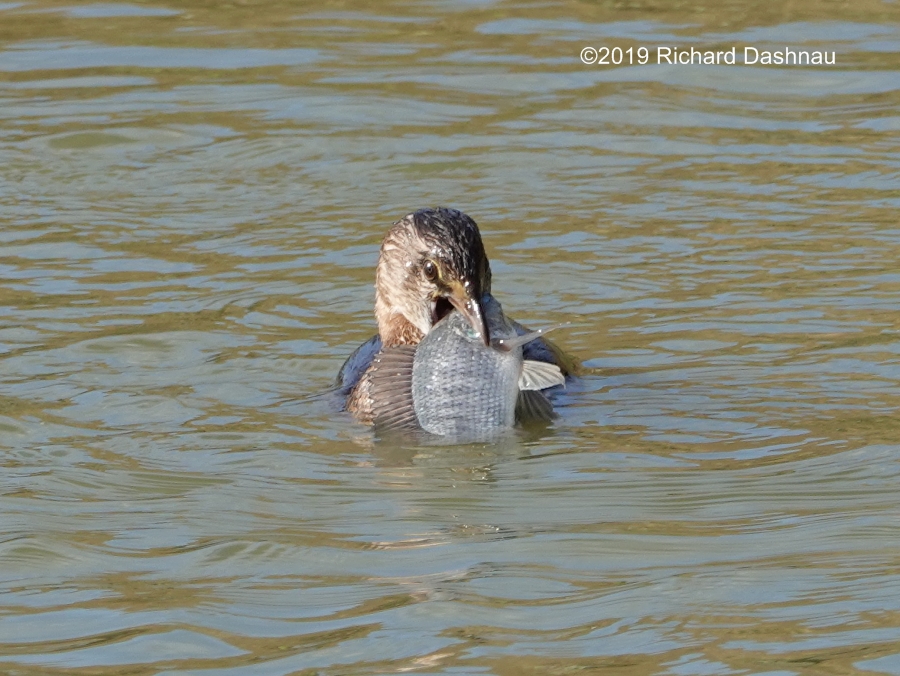
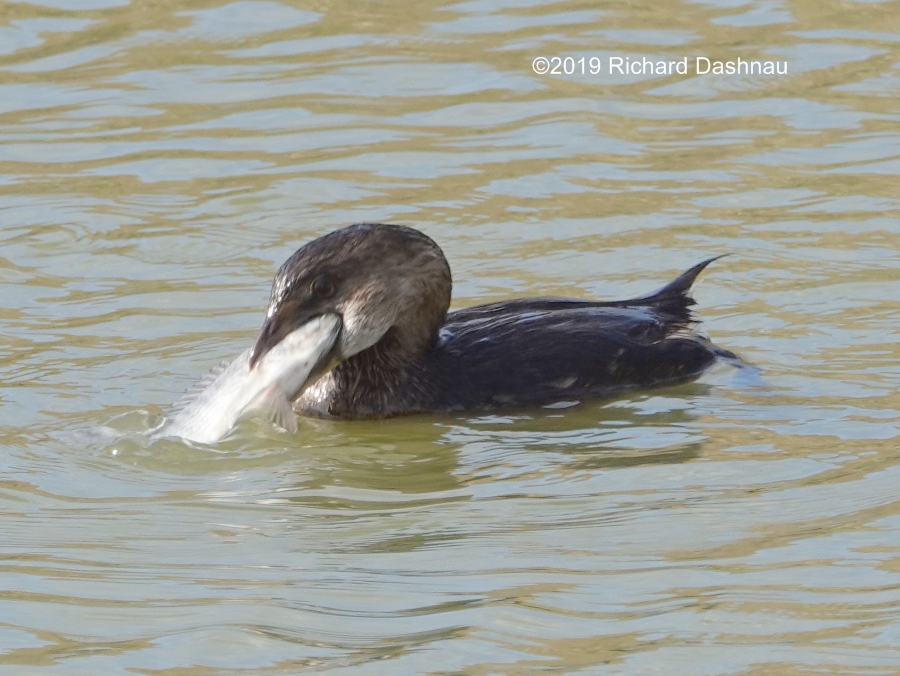
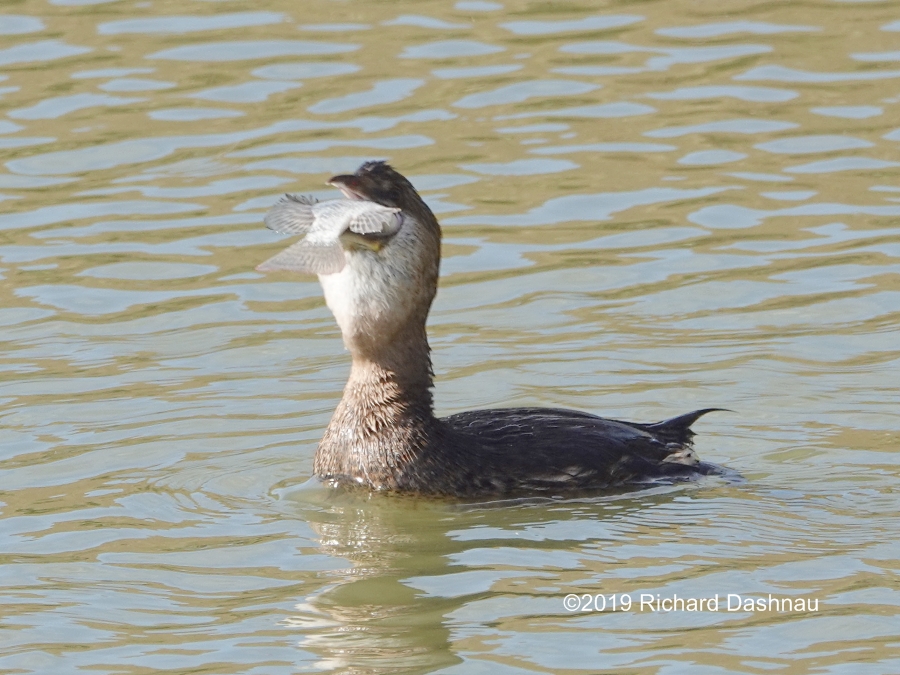
12/25/2019
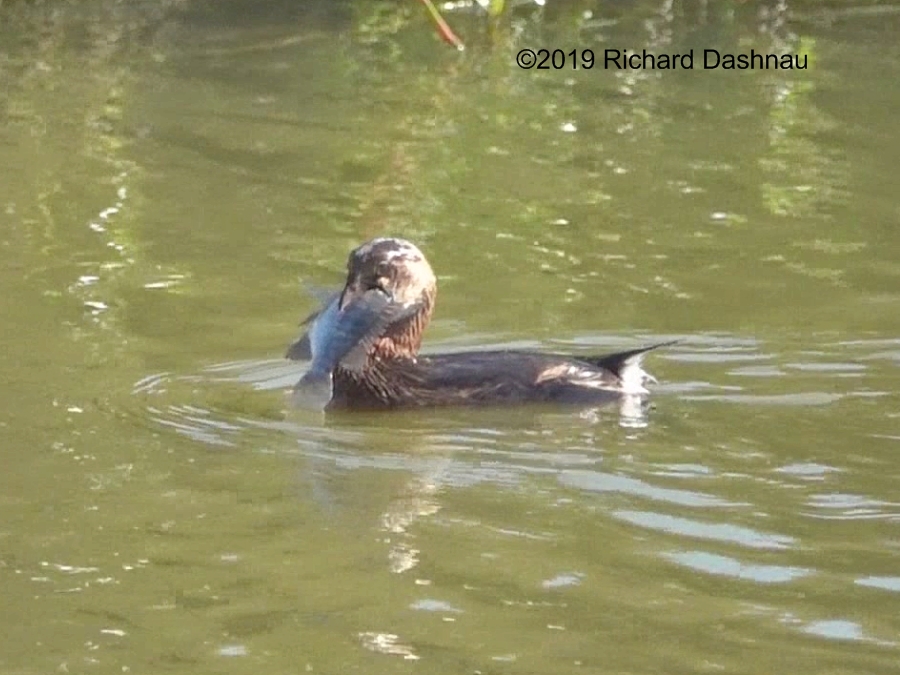
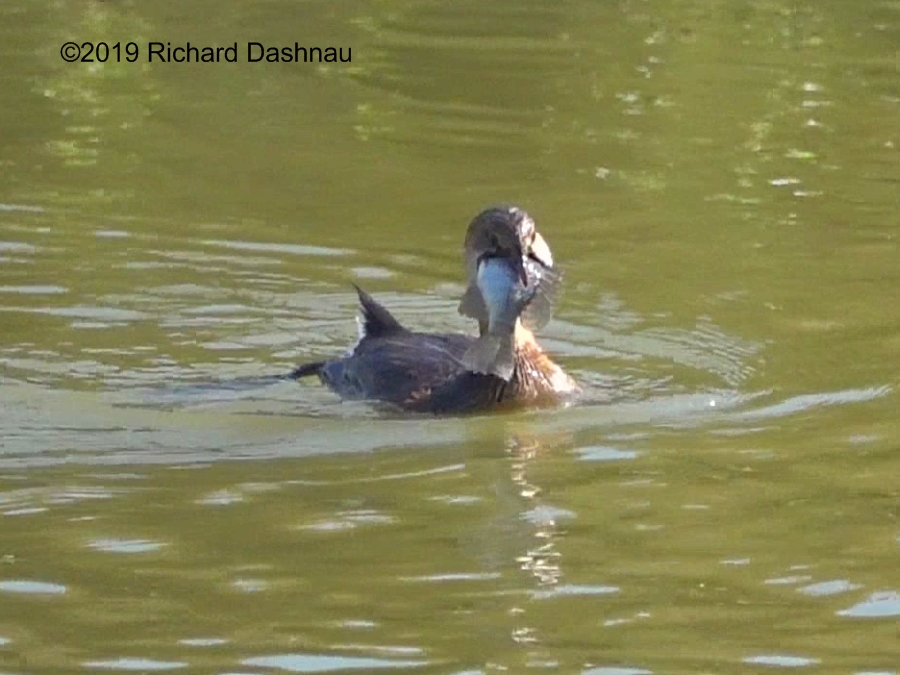
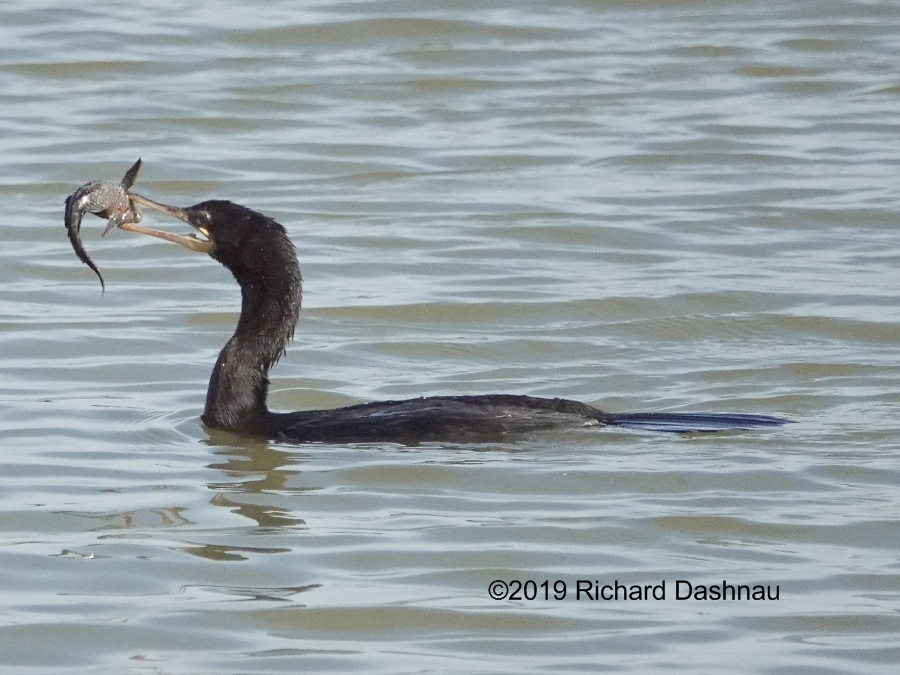
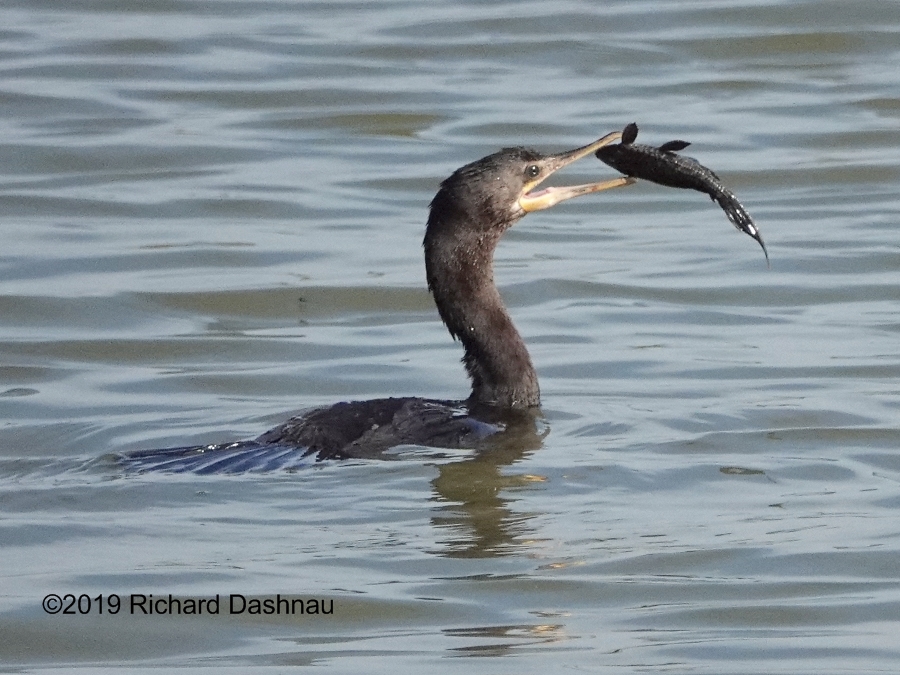
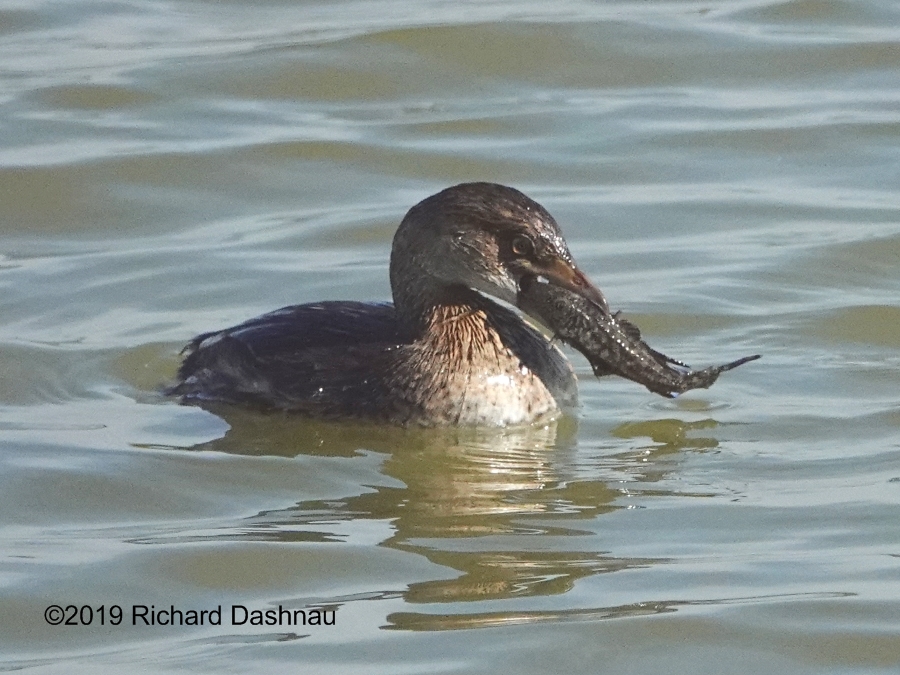
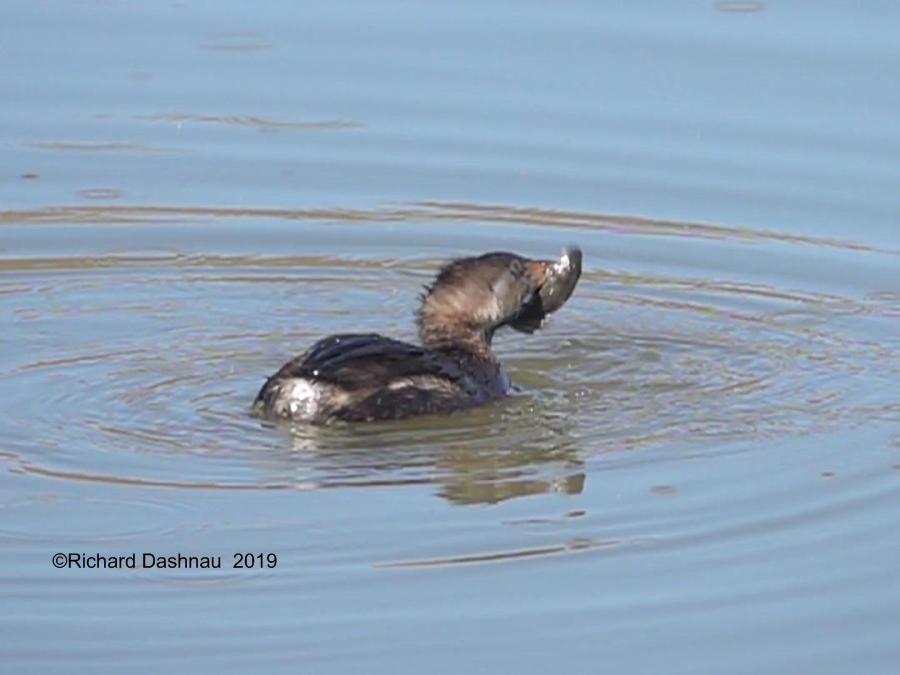
I returned to Fiorenza Park and tried to catch more video of the
pied-billed grebes breaking off fish spines. I did observe them
catching armored catfish, and other
fish.
They definitely use different feeding techniques, depending
on
the type of fish they've caught. These images show a couple
different grebes that have caught fish which may
be blue tilapia (Oreochromis aureus)--at least going by the shape and
the long spiny dorsal fin.
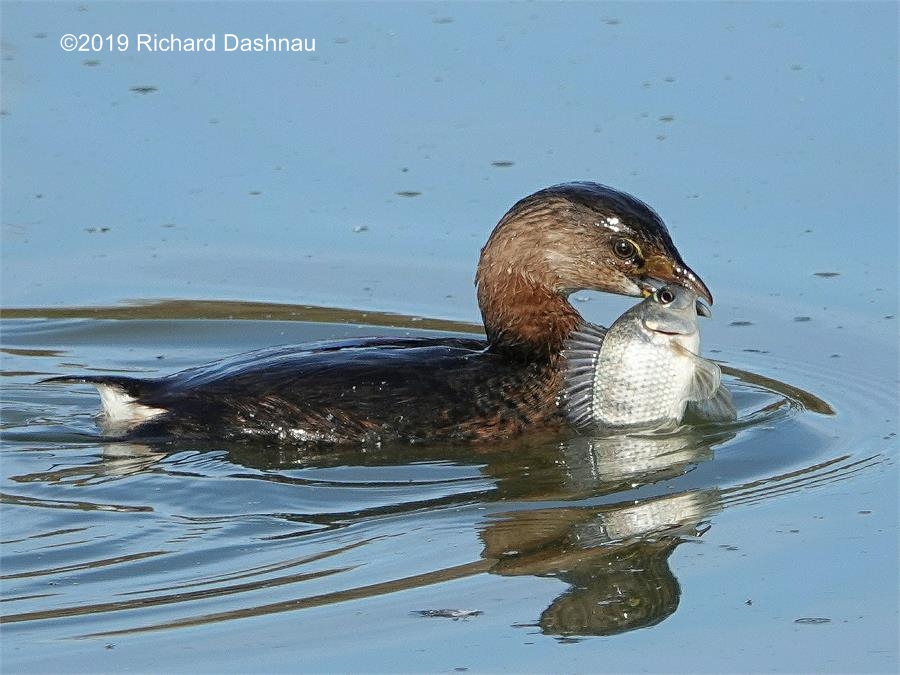
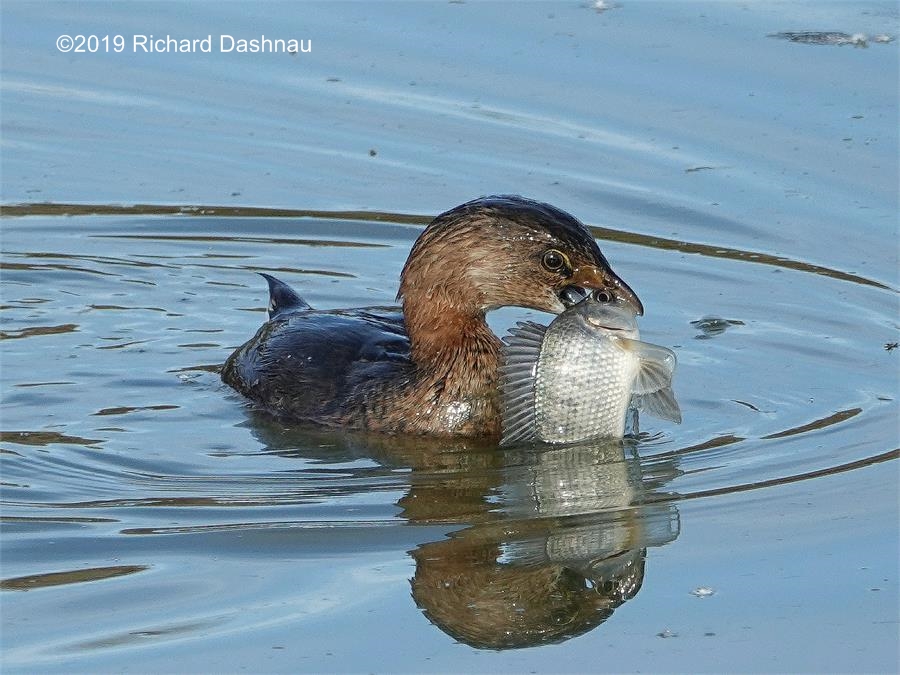
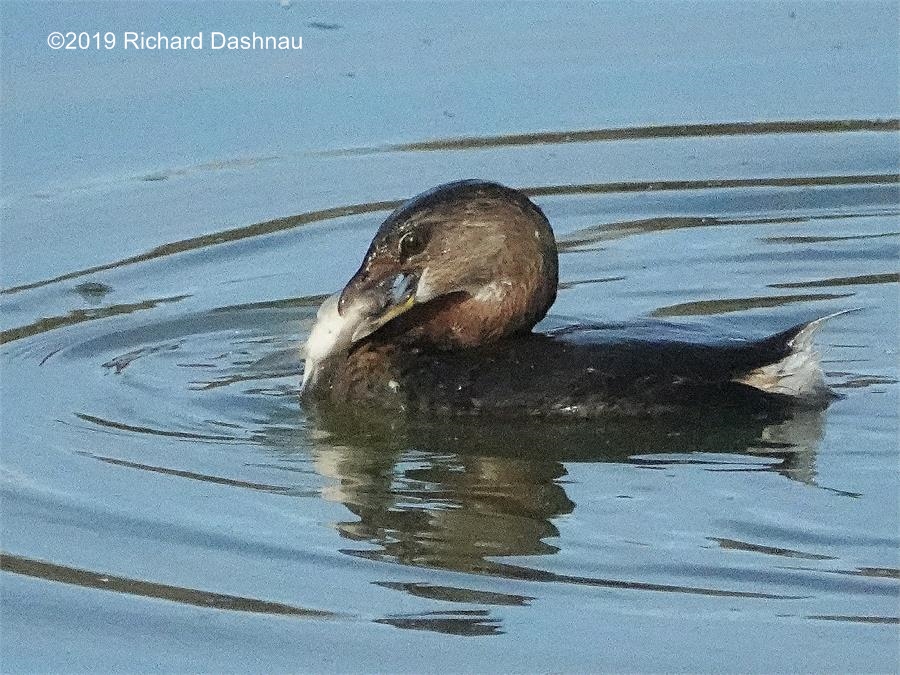
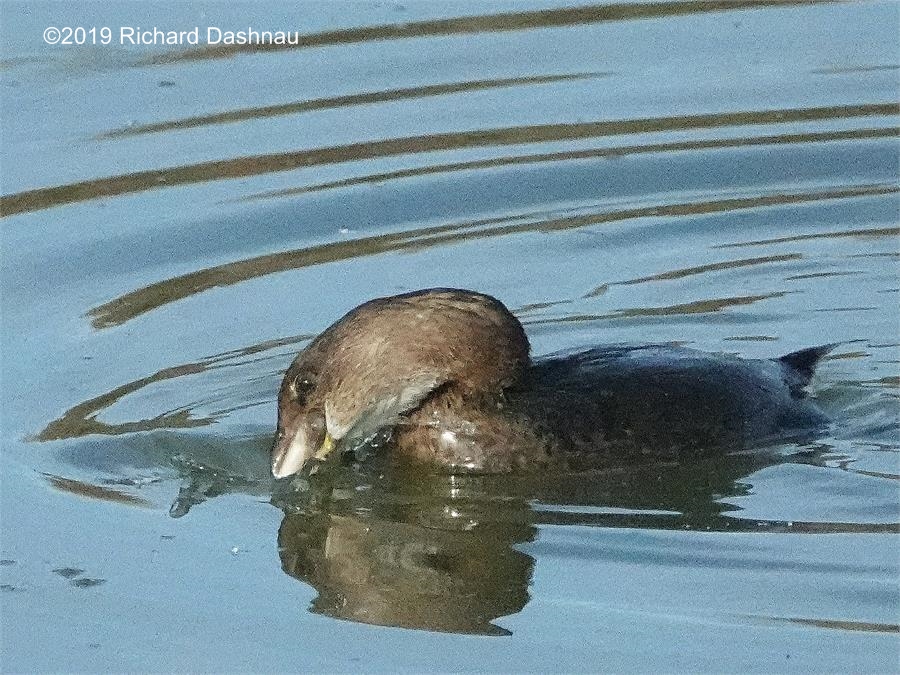
The
grebe in the pictures below is a different one than in the pictures
above. And for a video demonstration of one of the grebes
swallowing a tilapia, click
this link.
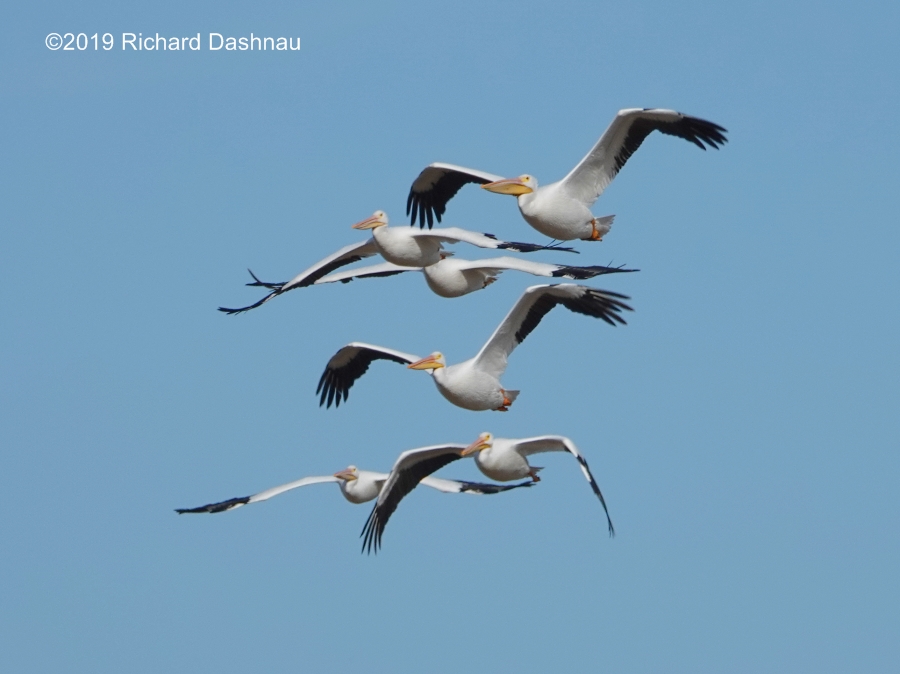
And,
just because they look wonderful, the picture below shows a flock of
White Pelicans that flew over me.
12/07/2019-12/14/2019
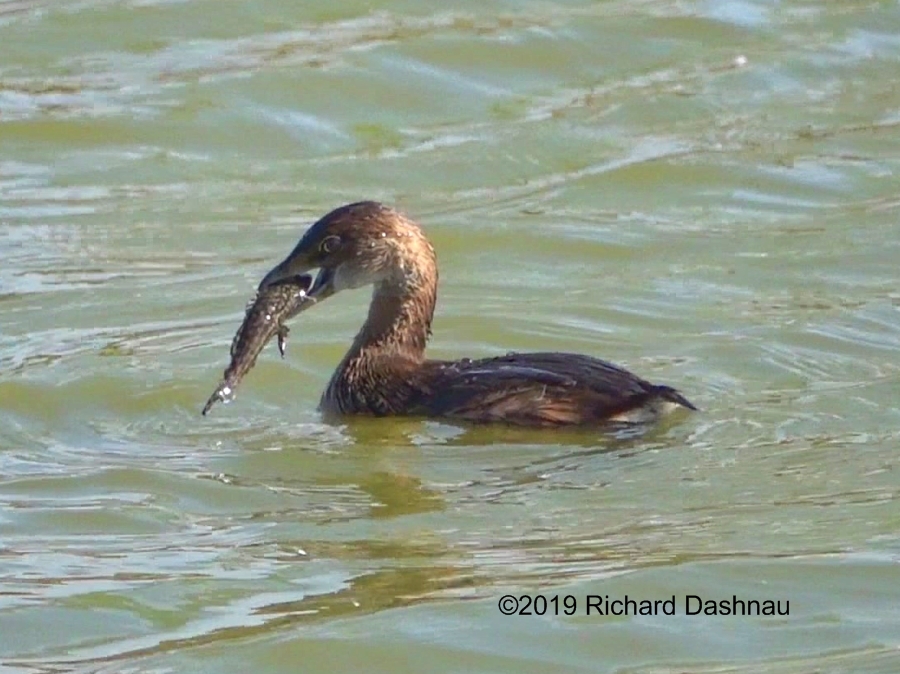
I was at Fiorenza Park last weeked. I noticed some Pied-Billed Grebes
hunting, along with the usual Cormorants. After a while, I noticed that
the grebes started catching fish.
One of them caught and swallowed a
nice-sized fish (some kind of crappie, or maybe a tilapia, I
think). Then,
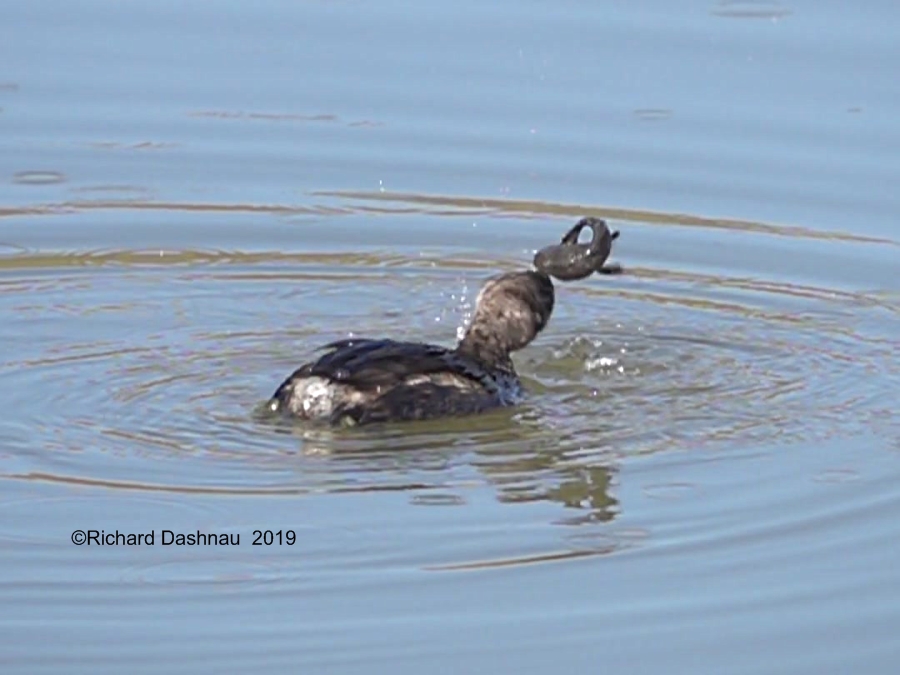
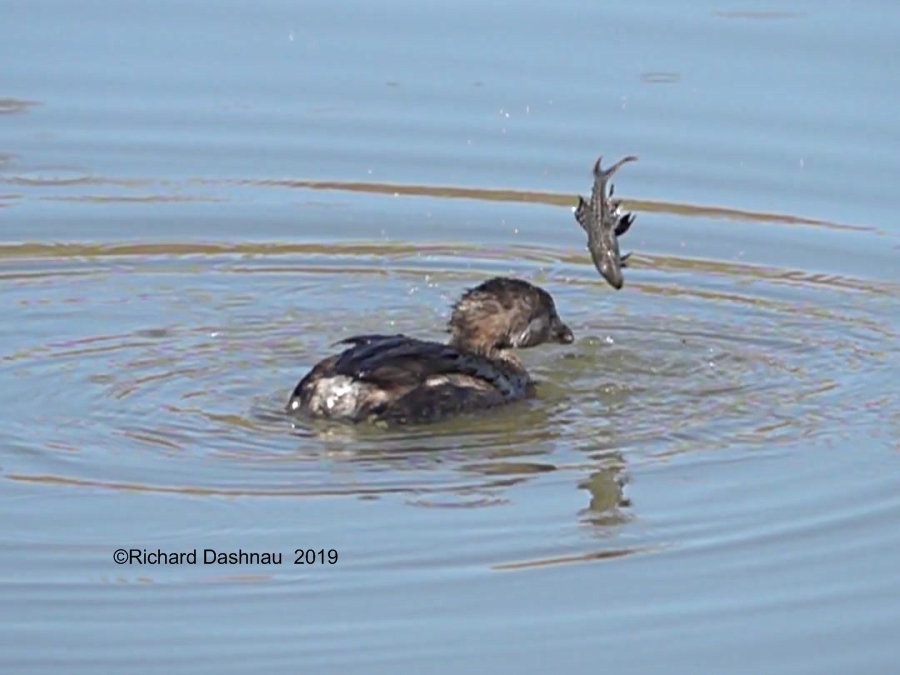
I was surprised to see them catching and eating armored catfish! I
caught some of
this on video. Some of the attached images are frame
grabs from the video, and some are just photos. While shaking
and
"juggling" their armored catfish, it seemed that the grebes
were
handling them by the fins, and violently shaking them by twisting their
heads. I've seen Yellow-crowned Night Herons use this shame technique
while breaking off the claws and
legs of crawfish. Perhaps the
grebes were trying to break off the sharp "barbs" on the fins of the
fish before they ate them. It appeared that the grebe would lift the
fish by one of the barbs,
then
violently shake it. I couldn't see
for sure if the barbs were breaking off, though. Then, I
returned
to the park on 12/14. This time I caught some video that
shows
that the grebes
are
breaking
the sharp spines
off of the catfish!
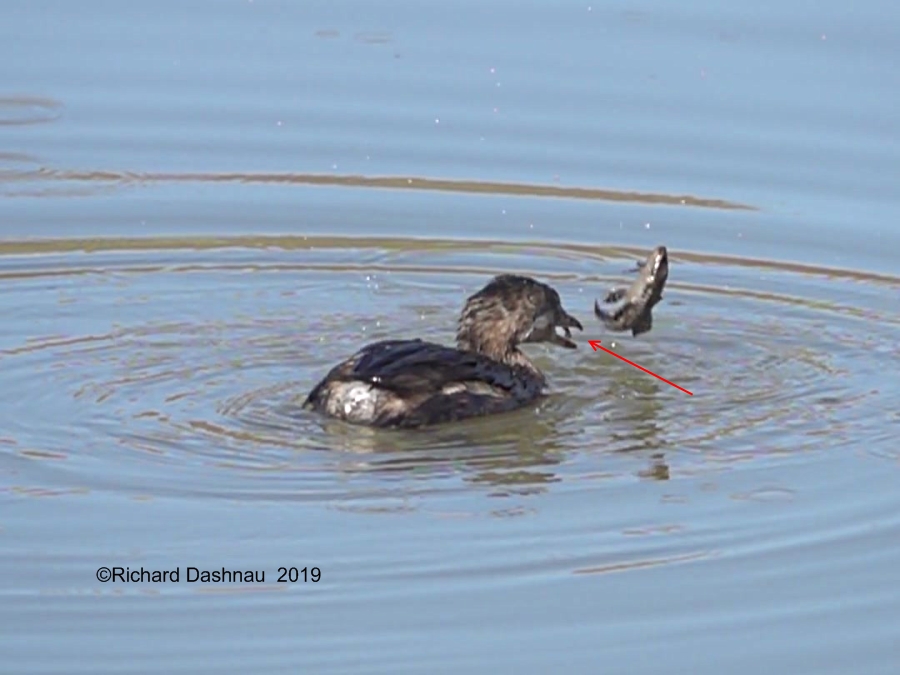
I've added that clip to the edited video. The 4 images on the
bottom row below are frame-grabs that show when the spike has been
broken off. The arrow in
the last image is pointing to the spike in the grebe's beak. I've
edited the clips together into this video showing the
differing techniques.
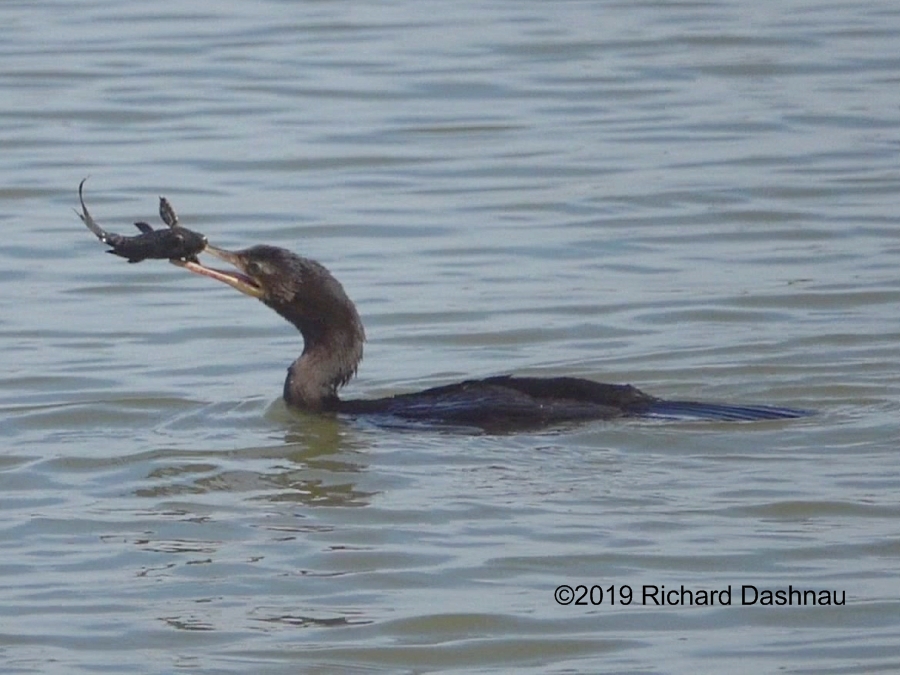
The
cormorants used a different technique to subdue their
fish. Their method employed the sharp hook at
the tip of their top beak (upper mandible). The Cormorants tossed their
armored fish
until
it was upside-down. This exposed the fish's softer
underside to that hook. Then the cormorants forced the hook into the
fish (by violent shaking)--most likely doing major damage and causing
the
fish to weaken and relax its spines. This is all guesswork
driven
by what I can see in the video clips. I've edited them
together
into this video
showing the differing techniques.
About the armored catfish....
I've
been calling these fish plecostomus for a long time. I was aware that
there were a few different species of these in local bodies of
water--but I had read somewhere that
calling them all "plecostomus"
was acceptable. Just recently, I've finally found some information that
may help tell these species apart. From the sources I can find, it
seem
that the most common armored catfish are one of two genus:
The
Hypostomus genus and Pterygoplichthys genus.; with the two most likely
species as Hypostomus plecostomus
and Pterygoplichthys anisitsi.
(that's pronounced ter-go-plik-thees according to this source
listed ). The clearest descriptions I've found online were in
this document on the Edwards Aquifer website:
https://www.edwardsaquifer.org/wp-content/uploads/2019/02/2005_Howells_SuckermouthCatfishes.pdf
or, if that document gets moved, here is the page with the link:
https://www.edwardsaquifer.org/doc_publications/exotic-suckermouth-catfishes-family-loricariidae-in-texas-waters/
04/09/2018 and
05/27/2018 Alligators
move through a busy environment at Brazos Bend State Park. Alligators
are aware of many of the animals around them--and the animals around
are also aware of the alligators. It may surprise some (it surprised me that
some of these animals (such as some birds) may actually make use of the
presence of an alligator. I've watched
Grebes
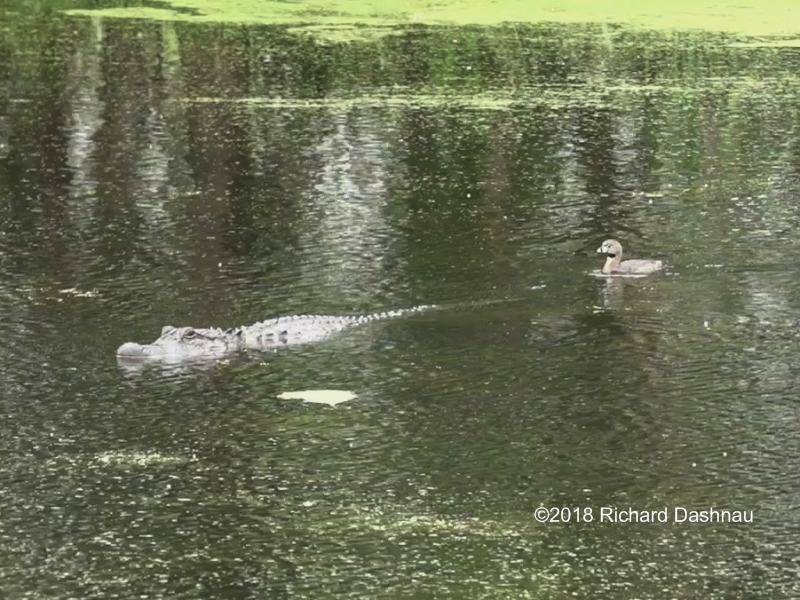
follow alligators many times. This Spring, I was able to capture this
on video. In one clip, there are two Pied-Billed Grebes following an
alligator. In the other, it is a Least Grebe
that follows an
alligator. I suspect the the grebes are following along to
catch
any prey that the alligator may flush out as it moves. Both species of
grebes are shown swimming after
with their face in the water--a
behavior sometimes called "peering" or "snorkelling". This allows them
to see under the water. In the clips, it's obvious that the grebes are
actively pursuing
the alligators.
The two images below are frame-grabs from the clips. The
edited video is here.
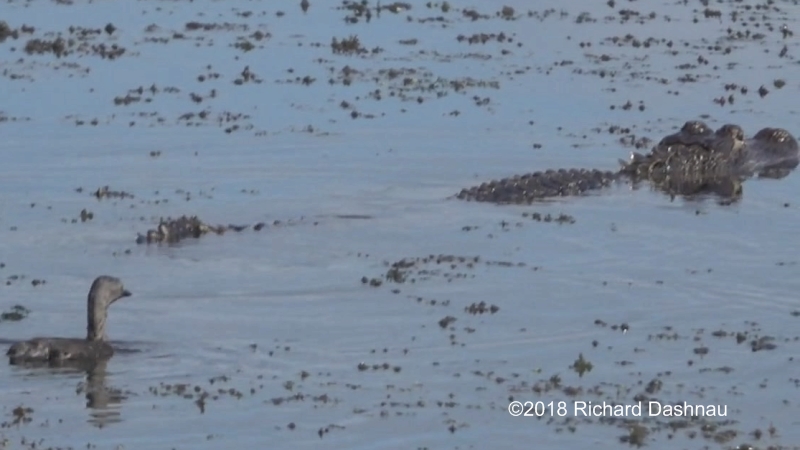
PIED-BILLED GREBE CHASING GATOR
LEAST GREBE
CHASING GATOR
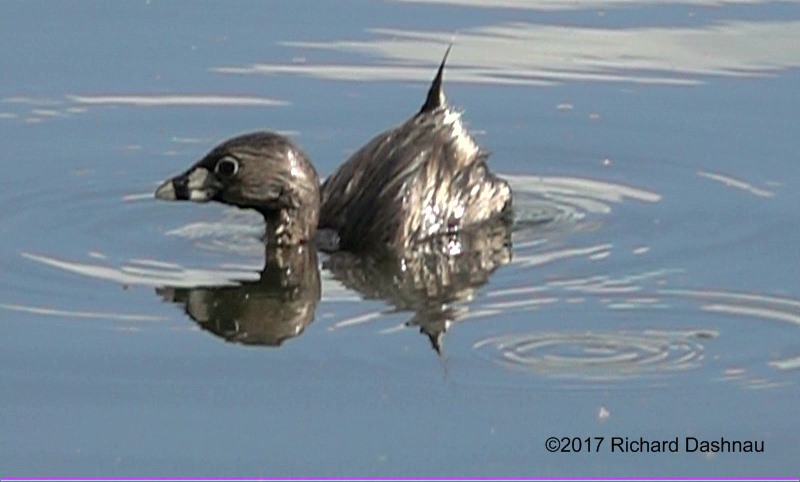
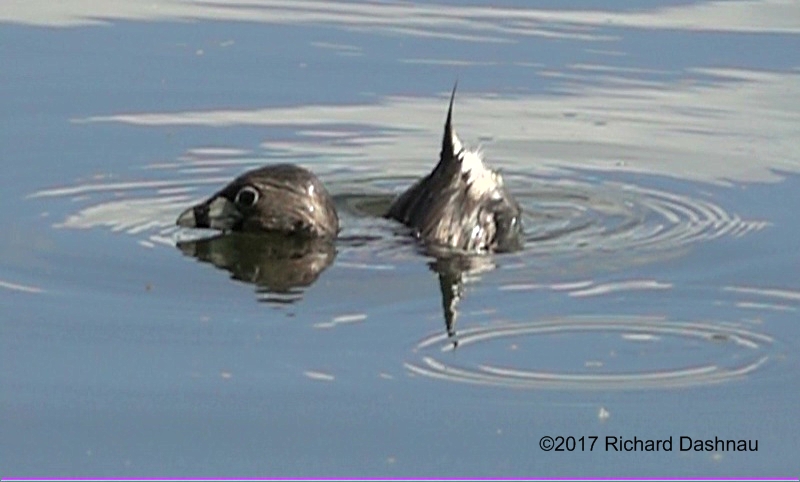
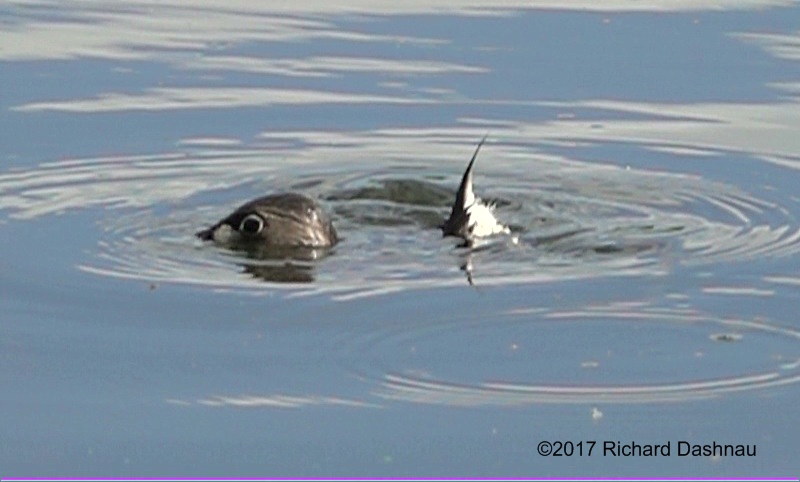
Pied Billed Grebes--04/09/2017 I'd
heard (from various "birder" friends)
and read (in various places) of how grebes can control their bouyancy,
and sink slowly, or even
swim partially submerged. However,
I've
rarely seen grebes do it. Most of the time, I've seen them dive as
in shown in other clips and photos on this page. But, I've finally
caught
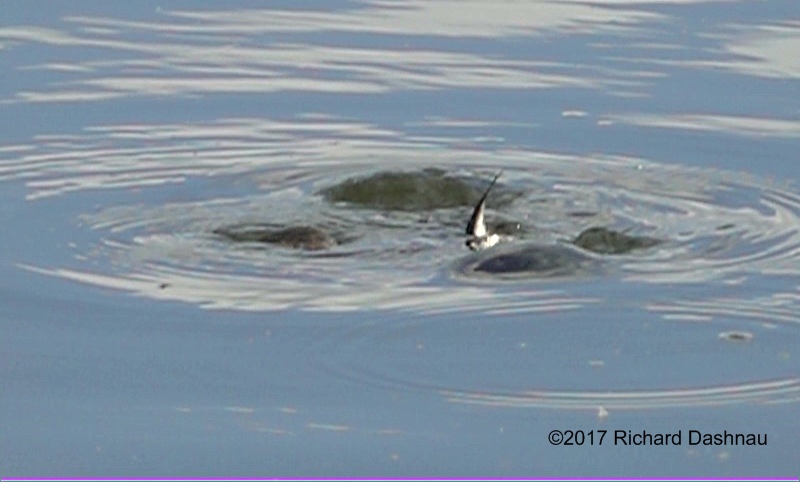
some good "close" video of a grebe "sinking". The
images
below are frame grabs from the video clip which I filmed at 480
frames per second--and then save at 30fps (16X
slower). I've
uploaded an edited version of the video that can be seen here:
Grebe
sinking. At
the end of the edited video is very
short version of the same clip played at
"normal" speed. Below
is the sequence of frame-grabs showing a Pied Billed Grebe
sinking.
 -
- -
-
- -
-
More Least Grebes--12/20/2009
Today was the first bright, sunny Sunday we've had in almost a month. I
didn't spend as much time out around the bigger lakes as I'd like, but
that's just
how it is sometimes. I decided to go to Creekfield Lake and
see if any otters would show up. No, they didn't, or at least I didn't
see any. But staying by the lake, and watching is just a lot of fun.
When
I got onto the long pier, I came upon one of our park visitors
photographing
the Least Grebes. They were very close to the pier, and obviously
didn't
mind people near them. The water
was crystal clear.
I
moved
closer to the Grebes, and started taking pictures of them, and they
submerged
as usual. But today, they were easily visible while under the clear
water!
A small
group of us watched as the Least Grebes paddled around, and
when
they submerged--we could all easily see them poking around on the
bottom!
It was *really* quite exciting. I shot for
slow-motion, hoping to slow
my jerky camera movement as I tried to track them underwater. I shot a
few clips--some nice dives, and a few surfacing Grebes. These events
were
very, very
nice when you can see the Grebe under the water. But, I got
one nice continuous clip of a Grebe diving, foraging, and surfacing all
in one go. At the adjusted slow-motion frame rate, the clip
is about 2
minutes long (but actually happened 7 times faster than that). I've
edited
it a bit (I did some enhancement of the underwater sequence to try to
minimize
surface glare). Here's the
first
clip (wmv 18.8 mb).
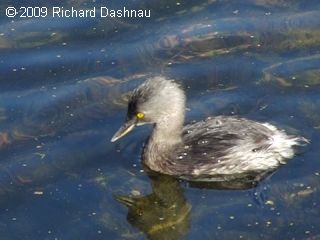
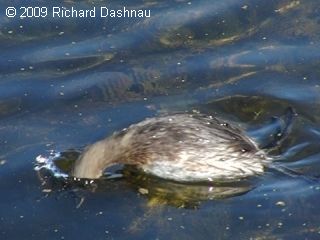
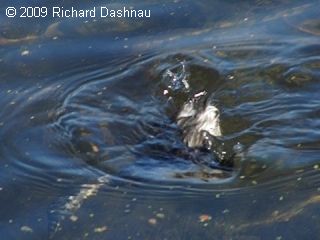
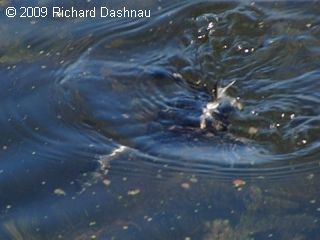
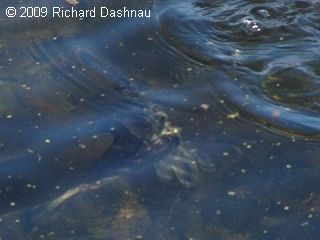
Below
is a sequence of frame-grabs from one of the clips showing a Least
Grebe
diving.
 -
- -
-
- -
-
The
2nd
clip is compiled of a number of short segments of the three Least
Grebes
(someone
told me one parent and two young) diving and surfacing. I put these
together,
and am passing
them on because it's so much fun watching them. Click to
see the 2nd
clip (wmv 18.7 mb). I noticed that the Grebes
seemed to keep
their butts turned towards us most of the time. Not
only that, but they
appear to open the air-gaps between the feathers so that it appears (to
me, anyway) that bare skin is visible. Today's RICKUBISCAM shows a
Least
Grebe in that
position. The sun is generally behind me when I'm
watching
the Grebes. Is it possible that they are trying to catch some solar
heating
on the bare skin back there? The under-feathers are
brightly-colored,
and
not dark (which would help absorb solar heat). Right before a dive, I
can
see them fold the feathers back down, forming a more streamlined
profile,
and also catching
air against the skin (more guessing about function).
It doesn't make sense to be ballast, but large air bubbles appear when
the Grebes dive. This is quite obvious in some of the video clips.
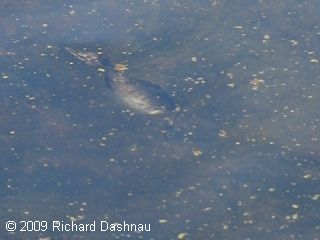
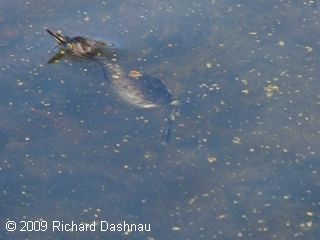
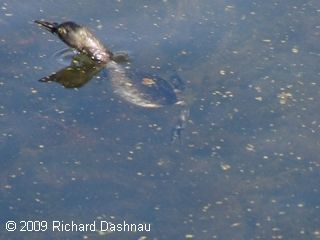
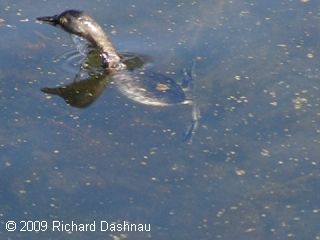
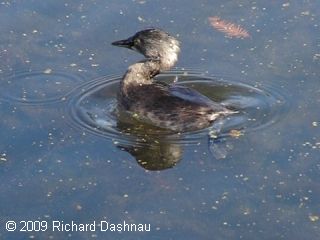
Below
is a sequence of frame-grabs form one of the clips showing a Least
Grebe
sufacing.
 -
- -
-
- -
-
I'm
also
amazed at the contortions that the legs are capable of while swimming.
They're doing a lot more than just "rowing" straight back or paddling
while
the Grebes are surfaced. They
push up, out, twist, and even seem to
brake
the Grebe when it surfaces. And those piercing yellow eyes are
brilliant.
The very last segment in the second clip shows them off.
I
was
able
to find one of my answers about behavior online. It seems that my
guess was correct, and that Least Grebes are
sunning themselves
when they bare their backsides.
At
least
(heh...
"least") it seems that they aren't mooning
us. Here are the
two links for the clips again: first
clip (wmv 18.8 mb) 2nd
clip (wmv 18.7 mb).
Here's
some links about the sunning: All
about birds. The following is
in a book that Google
has listed. If the links don't work, look on page 62 of this title:
Nesting
birds of a tropical frontier: the Lower Rio Grande Valley of Texas click
link
And
here
is the RICKUBISCAM picture of the Grebe showing its butt: 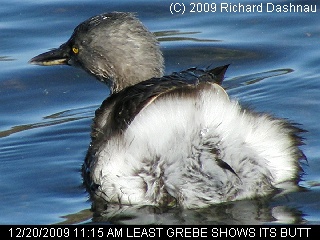
10/25/2009
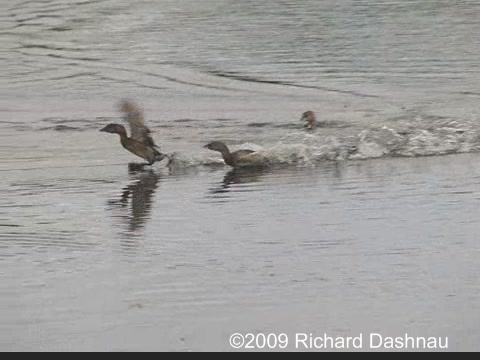
Grebes are small
swimming birds. Their legs are set far towards the rear of their body,
which makes them good swimmer. However, they are rather clumsy on land.
But, they
can
RUN ON WATER!! I shot a short video of one Pied-Bill Grebe
chasing another in Creekfield lake. The image below is a
frame-grab from this video clip.
10/25/2009
Least Grebes--Summer-Fall
2009
Grebes are small
swimming birds. Their legs are set far towards the rear of their body,
which makes them good swimmer. However, they are rather
clumsy on land.
At Brazos Bend State park, we usually see Pied-Billed Grebes. A few
years
ago, at least one family of Least Grebes has appeared at the park.
Least
Grebes have a very
limited range (according to Sibley's Field Guide to
Birds, page 29). The appearance of the Least Grebes at the park was big
news. Even more exciting was the fact that the Grebes have
apparently
remained
at the park, and produced chicks for at least 2 years. The Least Grebes
are small with narrow, short pointed beaks, and the adults are dark
grey
with bright yellow eyes.
The young are generally grey, but with
pronounced
black and grey stripes. Through this summer, I was able to get some
pictures
and video clips of these uncommon residents of the park.
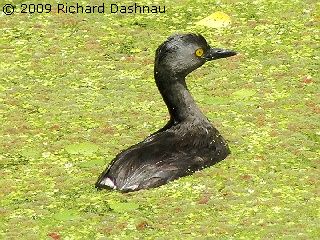
Today's
RICKUBISCAM
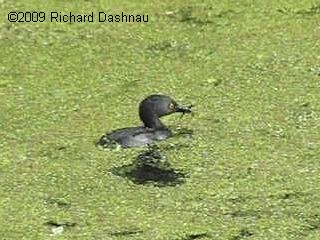
is one of those pictures from July 2009. During that session, the
single
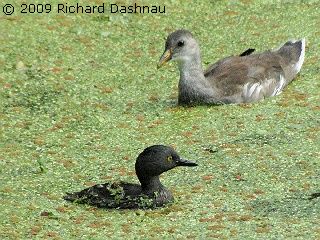
Least Grebe was hunting near the Spillway Trail. Passing juvenile
Moorhens
would
occasionally harass it, and try to take the food that it caught.
The last picture is a frame from the video clip. There are two sections
in the clip. First, the Grebe has an insect (probably a Water
Scorpion),
and one of the Moorhens attempts to steal it. The other section shows
the
Grebe snatching a dragonfly out of the air.
7/26/2009
 -
- -
-
POKING
IN THE
DUCKWEED
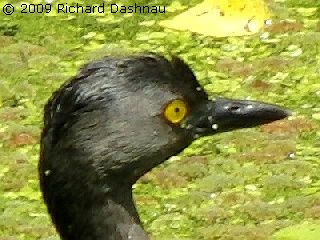
THE BRIGHT YELLOW EYE
YOUNG MOORHEN BEING A NUISANCE
HUNTING, 2 CLIPS, SLOW MOTION
-
video
clip (wmv, 11.9mb)
Later,
the Least Grebes appeared in Creekfield Lake. The remaining material
was
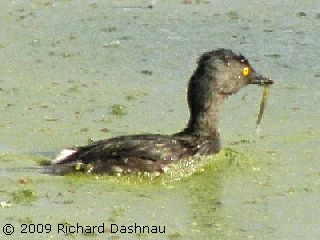
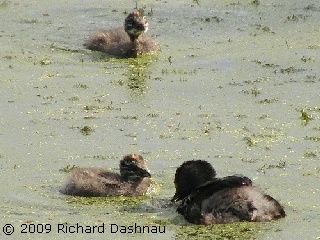
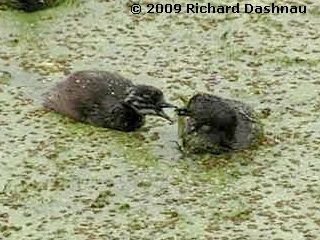
all shot there. The three images from 9/20/09 show one of the adult
Least
Grebes feeding the young ones.
Most of what they caught might be Water
Tigers--the larva of the Predacious Diving Beetle. The third image is a
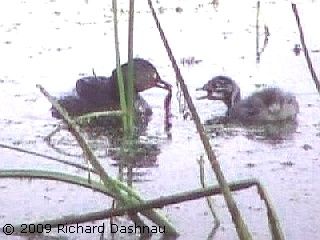
frame from the video clip. This clip was shot at normal speed, and
shows
the
Least Grebes and their young. The high peeping sounds are from the
chicks. The fourth image is from another video clip from 10/11/09. This
one was shot at 210 fps, so it shows a parent
feeding babies
in slow
motion.
9/20/2009
10/11/2009
 -
- -
-
-
WITH A WATER
TIGER
ADULT WITH
CHICKS
FEEDING THE YOUNG VIDEO
CLIP
THE HEAD FROM THE SIDE
video
clip (wmv, 14mb)
video
clip (wmv, 8.4mb)
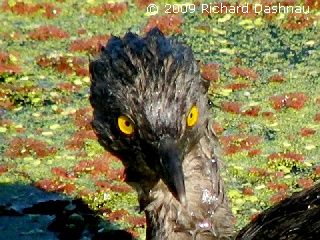
The
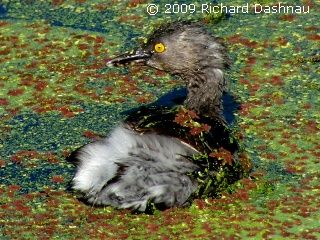
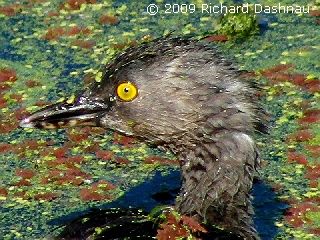
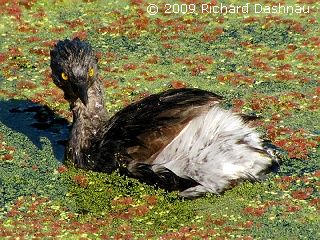
last four images are from 11/01/09. The Least Grebes were finally in
some
sun. The second and fourth images are just cropped closeups of the
first
and third images. Look at how
brilliant the eyes are!
 -
- -
-
GREBE
IN DUCKWEED AND
AZOLA
THE HEAD
CLOSEUP
GIVING ME THE
STARE
BOTH EYES CLOSER
If you'd like to know more about the park follow these links:
Brazos Bend State Park The main page.
Brazos
Bend State Park Volunteer's Page The
volunteer's main page.
Go back to my home page, Welcome
to rickubis.com
Go
back to the RICKUBISCAM
page.
Go
back to the See
the World
page.